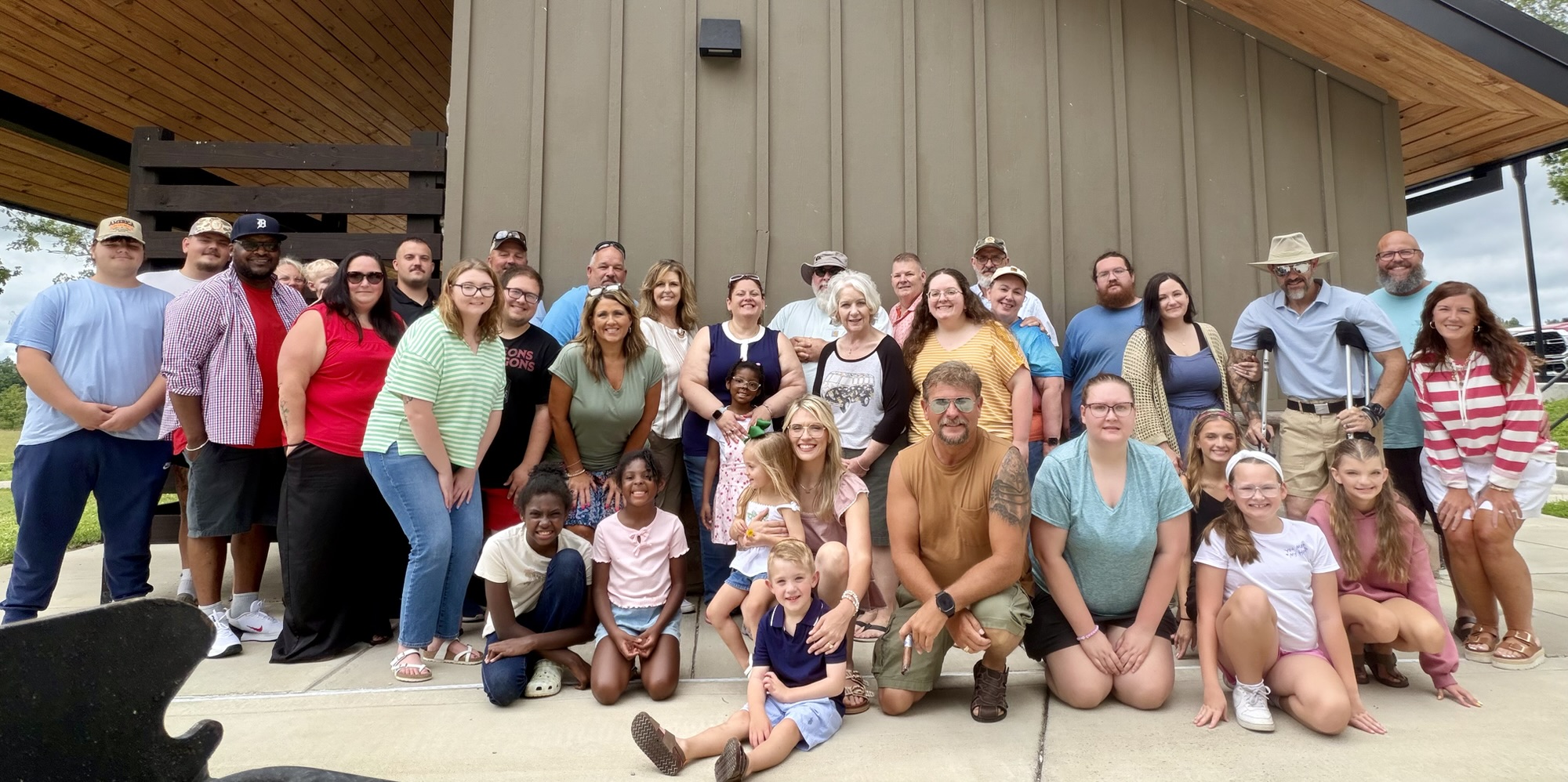
Today, Southeast Kentucky Behavioral Health gathered at Levi Jackson Wilderness Road Park for a wonderful day with our employees and their families. We enjoyed great food, played games, held a raffle, gave away prizes, shared plenty of laughter, and simply enjoyed spending time together outside of the workplace.
We were also proud to collect a large amount of school supplies that will be donated to children throughout Laurel County. We are grateful to everyone who contributed and helped us continue our commitment to supporting the communities we serve. 🎒✏️📚
Although not all of our employees and their families were able to attend, we had a great turnout. The weather was wonderful—but the company was even better.
Southeast Kentucky Behavioral Health is more than a workplace. We are a team, a community, and, in many ways, a work family. Days like today remind us of the importance of taking time to connect, laugh, build relationships, and celebrate the people who make our organization what it is.
Thank you to everyone who attended, brought food, donated school supplies, helped organize activities, and made today such a memorable event. I am already looking forward to more opportunities to gather and create memories with our SEKYBH work family! 💚🧡💙
Aphasia is a condition that makes it hard for people to speak, understand words, read, or write. It usually happens after a stroke or brain injury. Some people with aphasia have trouble finding the right words, while others may not understand what is being said to them. Even though aphasia can be frustrating, there are many ways to improve communication every day.
1. Practice Speaking Every Day
Using words as much as possible can help the brain heal and improve speech. Studies show that people who practice speaking often get better over time (Brady et al., 2016). Here are some simple ways to practice:
Read Out Loud: Reading books, newspapers, or even food labels can help with word recall.
Describe Objects: Look at things around you and try to name them. For example, if you see a chair, say “chair” out loud.
Sing Songs: Singing can help with speech. Many people with aphasia find it easier to sing than to talk (Racette, Bard, & Peretz, 2006).
2. Use Other Ways to Communicate
Speaking is not the only way to communicate. If words are hard to find, try using:
Gestures: Pointing, nodding, or using hand signs can help express thoughts.
Writing or Drawing: Writing words or drawing pictures can help show what you mean.
Apps or Picture Boards: Some people use pictures or apps on a tablet or phone to communicate (Kearns et al., 2019).
3. Take Your Time and Stay Calm
It’s important to stay relaxed when trying to talk. Rushing can make it harder to find the right words. Here are some helpful tips:
Pause and Breathe: If words don’t come right away, take a deep breath and try again.
Use Short Sentences: Speaking in short phrases can make talking easier.
Ask for Help: If a word is hard to remember, ask someone to help by giving hints.
4. Play Word Games and Puzzles
Games that involve words can help improve language skills. Some good options include:
Word Matching Games: Matching words with pictures can help with memory.
Crossword Puzzles: Easy crossword puzzles can help with word recall.
Talking with Friends and Family: Simple conversations every day help build confidence and speech skills.
5. Get Support from Others
Having support makes a big difference. Talking with family, friends, or a support group can help with communication. Studies show that people with aphasia who have support improve more than those who feel isolated (Elman & Bernstein-Ellis, 1999).
6. Work with a Speech Therapist
A speech-language pathologist (SLP) can help create a plan to improve communication. They use special exercises to help with speaking, understanding, and writing.
Conclusion
Aphasia can be challenging, but daily practice and support can help. By reading out loud, using gestures, playing word games, and staying patient, people with aphasia can improve their communication skills over time. Small steps each day can lead to big improvements!
John S. Collier, MSW, LCSW-S
Executive Director | Clinical Social Worker | Community Advocate
For more than two decades, John S. Collier has dedicated his career to strengthening individuals, families, and communities through compassionate behavioral healthcare, leadership, and advocacy. As the founder and Executive Director of Southeast Kentucky Behavioral Health, LLC, he has played a significant role in expanding access to mental health, case management, and community-based support services throughout Eastern Kentucky.
A graduate of the University of Kentucky College of Social Work, Mr. Collier earned his Master of Social Work degree in 2004 and subsequently became a Licensed Clinical Social Worker in the Commonwealth of Kentucky. Throughout his career, he has remained committed to serving individuals across the lifespan, including children, adolescents, adults, older adults, couples, and families.
Professional Leadership
As Executive Director of Southeast Kentucky Behavioral Health, Mr. Collier oversees a growing multidisciplinary behavioral health organization providing outpatient therapy, targeted case management, positive behavior support services, and community-based supports. He also maintains clinical and supervisory responsibilities, serving in multiple leadership and professional capacities within the organization, including clinical supervision, positive behavior support, staff development, program development, and community outreach.
His professional work includes:
Clinical psychotherapy and behavioral health treatment
Positive Behavior Support planning and consultation
Clinical supervision and staff development
Community mental health advocacy
Program development and organizational leadership
Behavioral assessment and intervention planning
Service coordination for individuals with complex behavioral and developmental needs
Clinical Philosophy
Mr. Collier’s clinical philosophy centers on treating the whole person rather than merely addressing symptoms. He utilizes evidence-based approaches while emphasizing dignity, respect, empowerment, and individualized treatment planning. His work incorporates cognitive-behavioral principles, trauma-informed care, person-centered planning, family involvement, and strengths-based interventions designed to help individuals reach their fullest potential.
He is particularly passionate about increasing access to behavioral healthcare in rural communities and ensuring individuals receive services that are practical, meaningful, and tailored to their unique strengths and needs.
Community Involvement
Beyond his clinical work, Mr. Collier has demonstrated a strong commitment to community engagement throughout his career. His efforts have included public education, outreach initiatives, advocacy for mental health awareness, and collaboration with schools, healthcare providers, and community organizations. He believes strong communities are built when mental health services are accessible, stigma is reduced, and individuals are empowered to succeed.
Author, Educator, and Advocate
In addition to his clinical and leadership roles, Mr. Collier has contributed to professional and community discussions through writing and education. Publicly available information indicates that he has been a published author in areas related to mental health, Freemasonry, and poetry. His work reflects a commitment to personal growth, community service, and the advancement of behavioral health knowledge.
Personal Values
Throughout his professional journey, Mr. Collier has remained grounded in the core values of social work: service, integrity, competence, dignity and worth of every person, the importance of human relationships, and social justice. Colleagues, clients, and community partners know him for his commitment to helping others achieve meaningful and lasting change while fostering an environment of compassion, respect, and accountability. This dedication continues to guide both his leadership and clinical practice today.
Contact Information
Southeast Kentucky Behavioral Health, LLC
202 West 7th Street
Suite 200
London, Kentucky 40741
Phone: (606) 657-0532 Ext. 101
References
Brady, M. C., Kelly, H., Godwin, J., Enderby, P., & Campbell, P. (2016). Speech and language therapy for aphasia following stroke. Cochrane Database of Systematic Reviews, (6).
Elman, R. J., & Bernstein-Ellis, E. (1999). The efficacy of group communication treatment in adults with chronic aphasia. Journal of Speech, Language, and Hearing Research, 42(2), 411-419.
Kearns, K. P., Lee, J. B., & Meigh, K. M. (2019). Communication strategies for adults with aphasia. American Journal of Speech-Language Pathology, 28(3), 1136-1148.
Racette, A., Bard, C., & Peretz, I. (2006). Making non-fluent aphasics speak: Sing along! Brain, 129(10), 2571-2584.