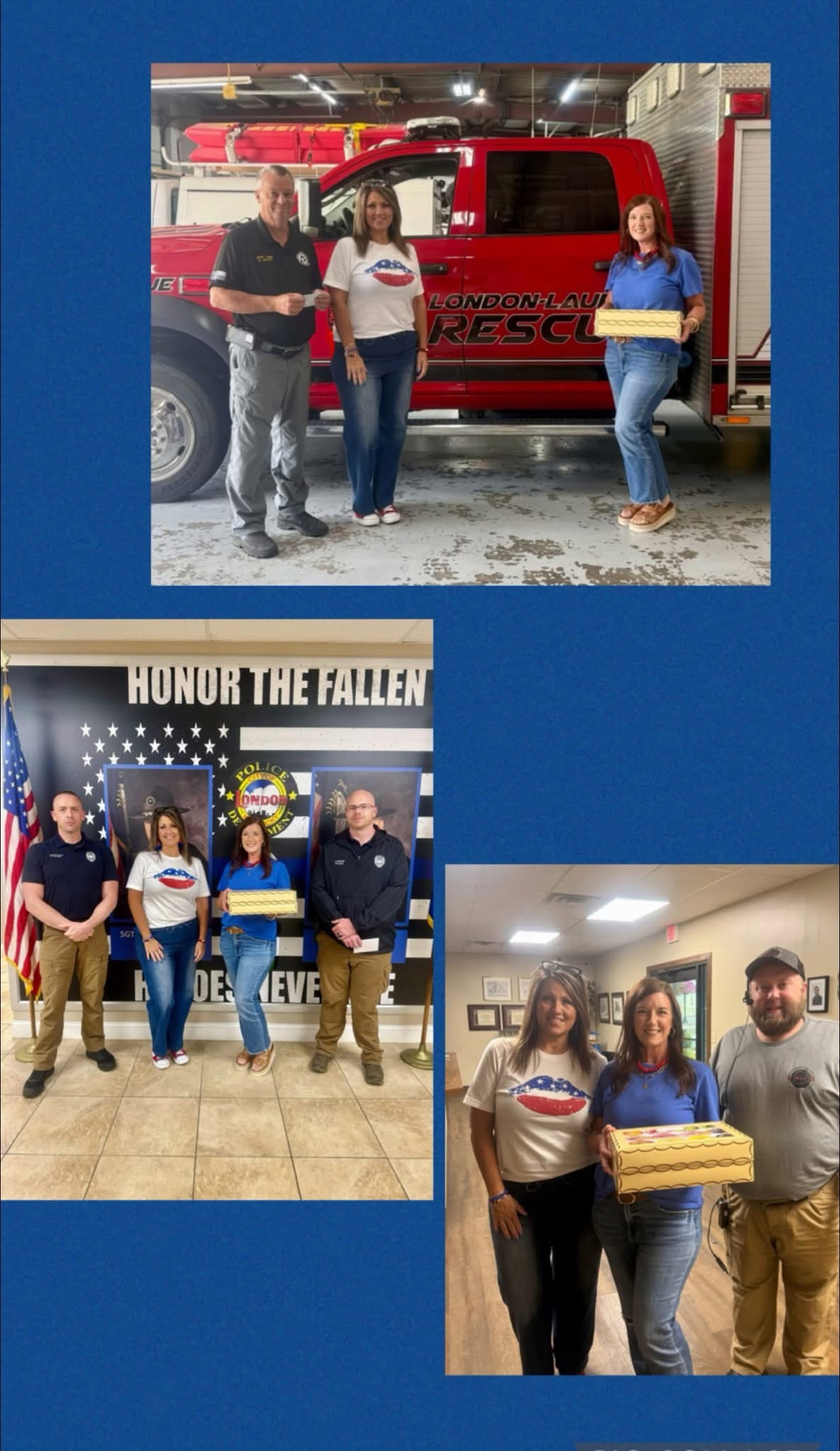
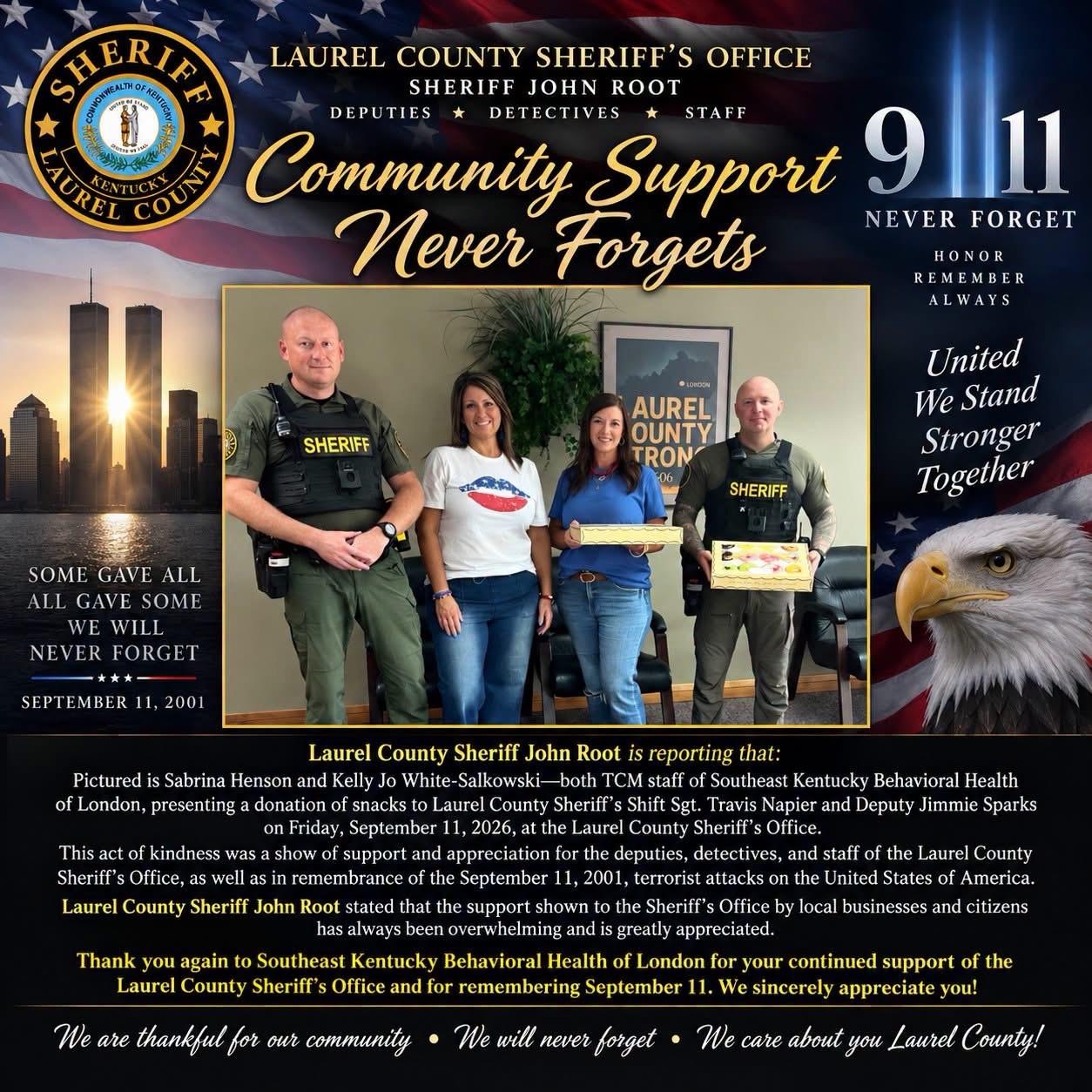
Sabrina Henson and Kellyjo Falkowski, two members of Southeast Kentucky Behavioral Health team in London, Kentucky, had the honor of visiting several local first responder offices on this important day of remembrance.
September 11 is a day to remember the innocent lives lost, honor the heroes who made the ultimate sacrifice, and recognize the courage and selflessness of first responders everywhere. We wanted to personally thank some of the brave men and women who serve and protect our local community each day.
Although we wish we could do more to express our appreciation, we were honored to provide them with fresh donuts as a small token of our gratitude.
To all first responders: Thank you for answering the call, running toward danger, and faithfully serving others. We see you, we appreciate you, and we are forever grateful for your service—not only today, but every day. A big Thank You to our amazing boss and supportive leader John S. Collier, MSW, LCSW S for making this day possible.
Every generation has moments that become permanently etched into memory. For many Americans, September 11, 2001, is one of those moments. It is a day marked by sorrow, sacrifice, courage, and unity. Twenty-five years later, we still remember where we were, how we felt, and the profound impact that day had on our nation and the world.
On the morning of September 11, 2001, nineteen terrorists hijacked four commercial aircraft. Two planes were flown into the Twin Towers of the World Trade Center in New York City, one struck the Pentagon, and a fourth crashed in Pennsylvania after passengers courageously fought back against the hijackers. Nearly 3,000 people lost their lives in what remains the deadliest foreign attack on American soil. Yet while the events of that day revealed unimaginable evil, they also revealed something else: the remarkable strength of the human spirit.
We remember the firefighters who climbed stairwells while others were descending to safety. We remember the police officers who rushed toward danger. We remember emergency medical personnel, military members, volunteers, and ordinary citizens who placed the lives of strangers above their own. More than 2,000 police officers and nearly 1,000 firefighters responded to the World Trade Center attacks, joining countless others in rescue and recovery efforts. Their actions remind us that heroism is not always found in grand speeches or celebrated victories. Often, it is found in quiet acts of service, in selfless sacrifice, and in the willingness to help another human being despite personal risk.
For me, September 11 carries an additional significance. It is the day my son was born.
Over the years, people have often asked what it was like to welcome a child into the world on a day overshadowed by national tragedy. The answer is difficult to put into words. While television screens showed devastation, uncertainty, and heartbreak, I was also witnessing one of the most meaningful moments of my life. The contrast was profound. A day of collective grief became, for me, a day forever intertwined with the gift of new life.
As my son grew older, each birthday became more than a celebration. It became an opportunity to pause and remember. Before the cake is cut, before gifts are opened, before the laughter begins, there is reflection. Reflection on those who never came home. Reflection on the families whose lives changed forever. Reflection on the heroes whose bravery continues to inspire generations.
The passage of time does not diminish the significance of September 11. If anything, it increases our responsibility to remember. A growing number of Americans were born after the attacks and have no personal memory of the events. The National September 11 Memorial & Museum has emphasized the importance of preserving the stories of loss, courage, compassion, and service for future generations so that the promise to “never forget” remains meaningful. Remembering is not about reliving tragedy. It is about honoring the humanity that emerged in its wake.
It is about remembering the office worker who helped a colleague down dozens of flights of stairs. It is about the passenger who made one final phone call to loved ones before confronting unimaginable danger. It is about the first responder who continued searching for survivors long after hope had faded. It is about the families who found the strength to carry on despite overwhelming loss.
Their stories teach us that courage is contagious. Compassion matters. Service matters. Community matters.
In a world that often feels divided, September 11 reminds us of a time when Americans stood together. Differences that normally separated people seemed insignificant in the face of shared grief and shared purpose. Neighbors helped neighbors. Communities rallied together. Strangers became family.
Those lessons remain relevant today.
As we observe another anniversary of September 11, may we remember the victims with dignity. May we honor the survivors with respect. May we thank the first responders, military personnel, medical professionals, volunteers, and countless others whose sacrifices demonstrated the very best of humanity.
And may we never lose sight of what they showed us: that even in our darkest hours, courage endures, compassion survives, and the human spirit remains stronger than fear.
Today, I remember those who were lost.
Today, I thank those who served.
And today, as I celebrate another year of my son’s life, I am reminded that remembrance and gratitude can exist side by side, honoring the past while appreciating the precious gift of the present.
About the Author
John S. Collier, MSW, LCSW-S is the Executive Director of Southeast Kentucky Behavioral Health (SEKYBH) and a Licensed Clinical Social Worker Supervisor with extensive experience in behavioral health, community services, clinical leadership, and organizational development. Throughout his career, he has been dedicated to strengthening individuals, families, and communities through compassionate care, advocacy, and service.
As a behavioral health professional, John believes that some of life’s most difficult moments often reveal the resilience, courage, and humanity that connect us all. His writing frequently explores themes of hope, remembrance, personal reflection, and the enduring strength of the human spirit.
In this article, John’s reflections on September 11 are both historical and deeply personal. September 11, 2001, is not only a day of national remembrance, but also the day his son was born. This unique intersection of public tragedy and personal joy has shaped his perspective on gratitude, service, sacrifice, and the importance of honoring those whose lives and actions continue to inspire future generations.
When not leading organizational initiatives or advocating for improved behavioral health services across Kentucky, John enjoys writing articles, poetry, and community-focused content that encourages reflection, understanding, and meaningful human connection.
Author Contact
John S. Collier, MSW, LCSW-S Executive Director Southeast Kentucky Behavioral Health (SEKYBH) London, Kentucky
“We honor the past not by dwelling in tragedy, but by remembering the lives, sacrifices, and lessons that continue to guide us forward.” – John S. Collier
References
National Commission on Terrorist Attacks Upon the United States. (2004). The 9/11 Commission Report: Final Report of the National Commission on Terrorist Attacks Upon the United States. U.S. Government Printing Office. National September 11 Memorial & Museum. (2026). September 11, 2001 Historical Exhibition. Retrieved from the National September 11 Memorial & Museum. National September 11 Memorial & Museum. (2026). Marking the 25th Anniversary. Retrieved from the National September 11 Memorial & Museum. National September 11 Memorial & Museum. (2026). Homepage and Educational Resources. Retrieved from the National September 11 Memorial & Museum.
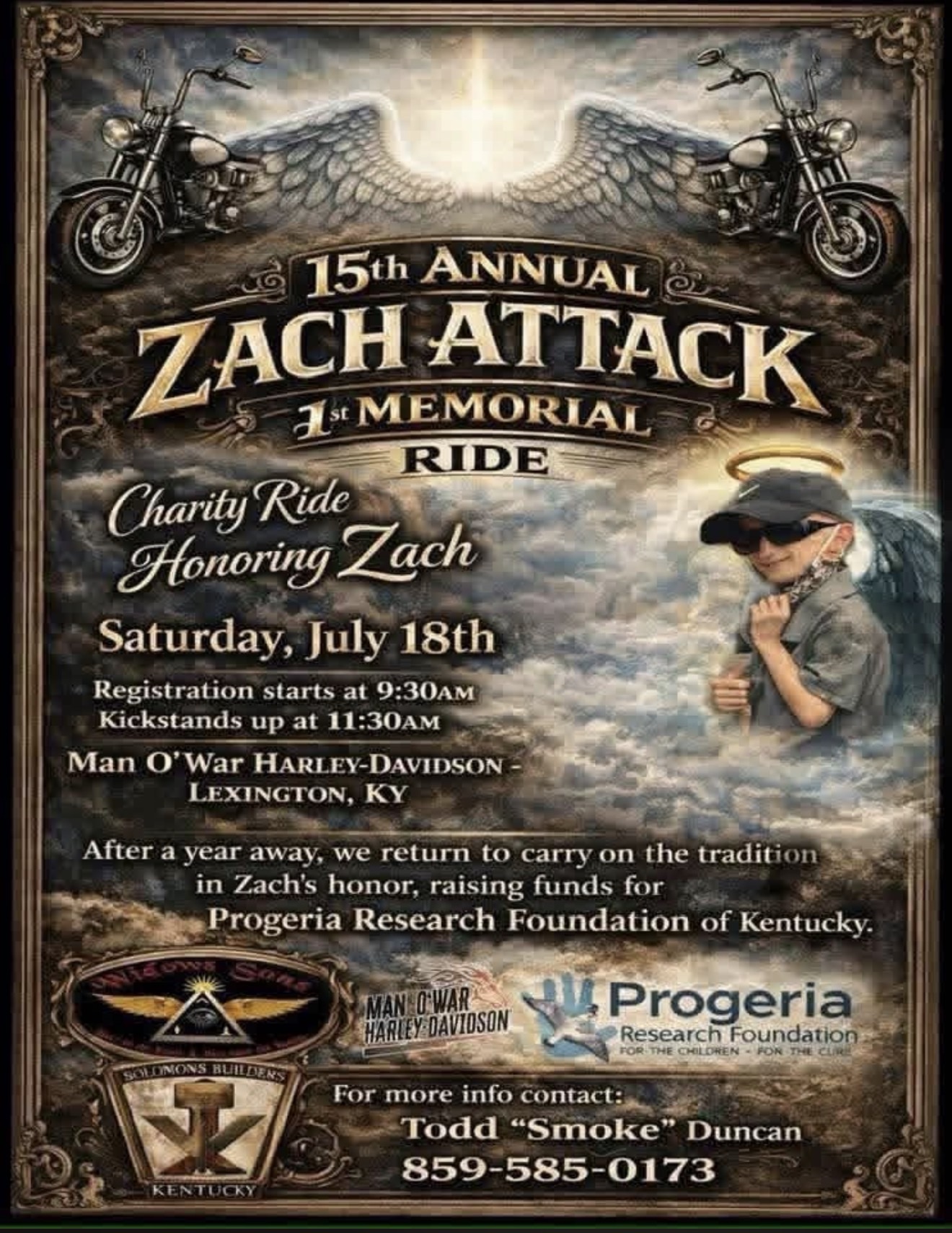
Community members and motorcycle riders recently gathered at Man O’ War Harley-Davidson in Lexington, Kentucky, for the 15th Annual Zach Attack Memorial Ride. The charity motorcycle ride was held in memory of Zach and helped support the important work of the Progeria Research Foundation.
More than simply a motorcycle ride, the event brought together families, friends, supporters, and members of the riding community for a shared purpose. Participants honored the life and legacy of Zach while raising awareness and funds for children and families affected by one of the world’s rarest genetic disorders.
What Is Progeria?
Progeria, formally known as Hutchinson-Gilford Progeria Syndrome, is an extremely rare genetic condition that causes children to experience rapid physical aging. Children with Progeria generally appear healthy at birth, but signs of the condition often begin to develop during the first few years of life.
Zack
Common characteristics may include slowed growth, loss of hair, changes in the appearance of the skin, joint stiffness, and other physical complications associated with accelerated aging. The most serious health concerns are connected to the cardiovascular system, including the early development of heart disease and an increased risk of stroke.
Although Progeria causes significant physical challenges, it does not generally affect a child’s intelligence. Children living with the condition attend school, develop friendships, enjoy hobbies, love their families, and dream about the future. Their courage, resilience, and positive outlook frequently inspire everyone fortunate enough to meet them.
Research Is Creating Hope
Medical research has increased understanding of Progeria and has led to treatments that may improve the health and quality of life of affected children. The Progeria Research Foundation plays an essential role in advancing research, identifying children throughout the world, supporting families, encouraging clinical studies, and pursuing more effective treatments and, ultimately, a cure.
Fundraising events such as the Zach Attack Memorial Ride help make this work possible. Every donation, registration fee, sponsorship, and mile traveled can contribute to continued research and greater public awareness.
Southeast Kentucky Behavioral Health Participates in the Ride
John Collier, Executive Director of Southeast Kentucky Behavioral Health, participated in the fundraiser ride as part of the organization’s commitment to community involvement, education, and awareness.
Southeast Kentucky Behavioral Health believes that promoting health and wellness extends beyond the walls of an office or treatment facility. The organization takes as many opportunities as possible to participate in events that educate the public, increase awareness of important health concerns, and support individuals and families facing difficult circumstances.
Participation in the Zach Attack Memorial Ride provided an opportunity to stand alongside families, riders, volunteers, and community supporters while helping bring attention to Progeria. It also demonstrated Southeast Kentucky Behavioral Health’s belief that meaningful community service includes showing up, listening, learning, and supporting causes that improve the lives of others.
Community education is an important part of reducing misunderstanding and helping people respond to health conditions with greater knowledge and compassion. Rare disorders may affect a comparatively small number of individuals, but each child and family deserves support, dignity, access to treatment, and hope for the future.
Motorcycles as Vehicles of Compassion
Events such as the Zach Attack Memorial Ride remind us that motorcycles can represent much more than recreation. They can become vehicles of compassion, fellowship, remembrance, and hope.
When riders come together for a charitable purpose, every motorcycle becomes part of a larger message. That message tells affected families that they are not alone. It honors the memory of those whose lives have touched others. It also gives community members a practical way to support research that may improve and extend the lives of children affected by Progeria.
Continuing Zach’s Legacy
As the motorcycles gathered and riders prepared to begin the journey, the purpose of the day was clear: to continue Zach’s legacy, support affected families, and help move Progeria research forward.
By working together, communities can transform remembrance into action. A memorial ride can fund research. A conversation can increase awareness. A shared article can introduce someone to a condition they had never heard of before. A single act of compassion can help a family feel seen and supported.
“Sometimes the longest journeys are measured not in miles, but in the lives they help change. Every mile ridden in Zach’s honor brings us one step closer to hope.”
Learn More and Support Progeria Research
To learn more about Progeria, current research, available treatments, and ways to support affected children and their families, visit the Progeria Research Foundation.
Southeast Kentucky Behavioral Health is committed to participating in educational, charitable, and community-awareness opportunities that promote compassion, understanding, and healthier communities.