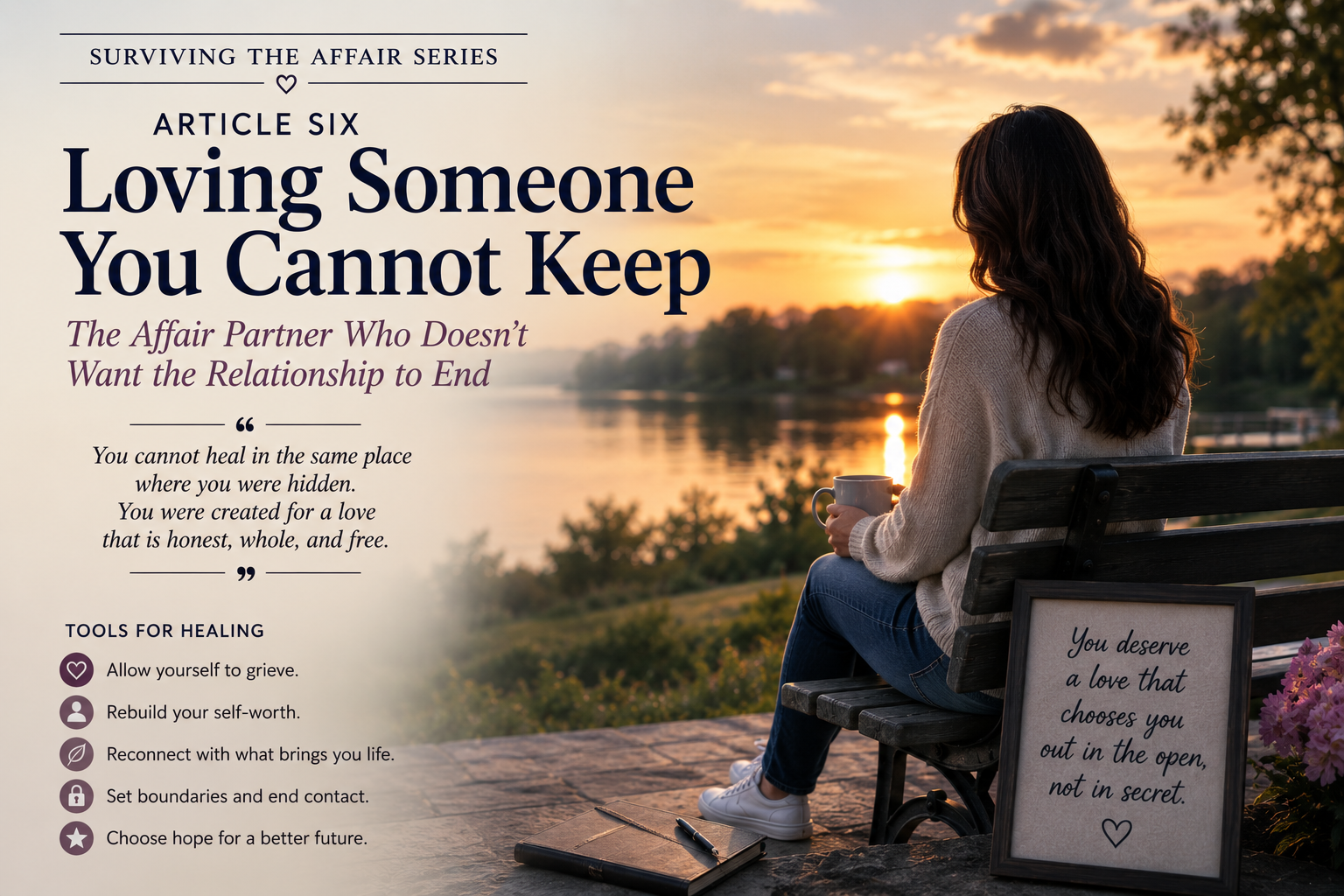
Healthy Love Starts with a Healthy Sense of Self
Most of us want to love and be loved. Healthy relationships can bring comfort, support, and joy. They help us through life’s challenges and give us someone to celebrate with during good times. Healthy relationships are built on trust, respect, honesty, and good communication (American Psychological Association [APA], 2024).
While relationships are important, they should not decide how much we value ourselves. Our worth should not depend on another person’s approval. Research shows that healthy relationships are strongest when both people bring their own strengths, values, and identity into the relationship (Bowen, 1978; Rodríguez-González et al., 2023).
What Is Self-Worth?
Self-worth is the way you see and value yourself. It is not based only on your job, your grades, your money, or whether someone else approves of you. Your worth does not disappear because you make a mistake or have a bad day.
People with a healthy sense of self-worth are often better able to handle stress, recover from setbacks, and build healthy relationships. They are also more likely to show themselves kindness instead of harsh criticism when life gets difficult (Neff, 2023).
Self-worth is not about believing you are better than other people. It is about knowing that you have value, just like everyone else.
When You Start Losing Yourself
Most people do not lose themselves all at once. It usually happens little by little. You may stop seeing friends as often. You may give up hobbies you once loved. You may stop chasing your own goals because all of your attention goes toward keeping someone else happy.
Some signs this may be happening include:
- • Feeling like every disagreement means you have failed.
- • Needing constant reassurance that you are loved.
- • Believing another person’s opinion decides your value.
- • Feeling responsible for someone else’s happiness.
- • Giving up your own interests just to avoid conflict.
These patterns can happen in any close relationship, including romantic relationships, friendships, and even family relationships. Recognizing these signs is the first step toward making healthy changes.
What Research Says
Family therapist Murray Bowen believed healthy people can stay close to the people they love without losing who they are. He called this differentiation of self (Bowen, 1978). Newer research continues to support this idea. People who keep their own identity while staying emotionally connected often report healthier and more satisfying relationships (Rodríguez-González et al., 2023).
Healthy Love Means Growing Together
Healthy relationships are built on interdependence. This simply means two people support one another while still being their own person. Healthy love does not require you to give up your dreams, your values, or your personality. Instead, it encourages both people to continue growing.
Healthy relationships often sound like this:
- • “I care about your opinion, but it does not define my worth.”
- • “We can disagree and still respect each other.”
- • “I want both of us to reach our goals.”
- • “We make each other stronger without changing who we are.”
Research on adult attachment shows that people who feel emotionally secure are often better able to communicate honestly, trust their partners, and work through conflict in healthy ways (Mikulincer & Shaver, 2016).
Helping Each Other Grow
Healthy relationships are not just about keeping your own identity. They are also about helping the other person grow.
When you truly care about someone, you want good things for them. You want them to reach their goals, learn new skills, build healthy friendships, and become the best version of themselves. A healthy relationship should make both people feel supported—not held back.
Supporting someone does not mean solving all of their problems or making every decision for them. Instead, it means believing in them, encouraging them, and standing beside them as they grow. Research shows that people are more likely to thrive when they have supportive relationships that encourage both personal growth and independence (Feeney & Collins, 2015).
Healthy support can look like this:
- • Encouraging them to finish school or continue learning.
- • Celebrating their accomplishments, both big and small.
- • Respecting their hobbies and interests, even if they are different from your own.
- • Encouraging healthy friendships and family relationships.
- • Supporting healthy habits, like getting enough rest, exercising, or asking for help when needed.
- • Believing in them during difficult times without trying to control their choices.
Sometimes growth can feel uncomfortable. One person may start a new job, go back to school, begin counseling, or work toward a personal goal. Healthy partners do not feel threatened by these changes. Instead, they celebrate them. They understand that one person’s growth does not take away from the other person’s success. In fact, when one person grows, the relationship often grows stronger too (Feeney & Collins, 2015; Rodríguez-González et al., 2023).
Healthy love is not about one person shining while the other stays in the background. It is about two people walking beside each other, encouraging one another, celebrating each other’s successes, and becoming stronger together.
Respect Without Losing Yourself
Respect is one of the most important parts of a healthy relationship. Respect means listening, speaking kindly, being honest, and trying to understand another person’s point of view. It also means treating one another as equals and respecting each other’s boundaries (American College of Obstetricians and Gynecologists [ACOG], 2025). Healthy relationships include respect, communication, honesty, independence, and equality. They allow both people to be themselves while feeling safe and supported.
Respect does not mean giving up your beliefs, your personality, or your values just to keep the peace. It is okay to have different opinions. Healthy relationships allow room for differences because both people know they can disagree without attacking each other’s character.
Every healthy relationship has disagreements. The goal is not to avoid conflict. The goal is to work through it with kindness, patience, and respect. Couples who communicate well, listen to one another, and solve problems as a team often have stronger and longer-lasting relationships (Gottman & Silver, 2015).
You can value another person’s opinion without letting it decide how you feel about yourself. Taking care of yourself is not selfish. In fact, it often makes relationships stronger.
Taking Care of Yourself Helps Your Relationship
When you care for your own physical, emotional, and mental health, you have more to give to the people around you. You are also better able to handle stress, communicate clearly, and support others. Research shows that practicing self-compassion is linked to better emotional well-being, healthier relationships, and greater resilience during difficult times (Neff, 2023).
Try to:
- • Spend time with supportive friends and family.
- • Keep hobbies that bring you joy.
- • Set personal goals.
- • Take care of your physical and mental health.
- • Speak to yourself with kindness.
- • Learn from mistakes instead of letting them define you.
- • Ask for help when you need it.
Remember, taking care of yourself is not taking away from the people you love. It helps you become a healthier partner, friend, parent, family member, or coworker.
A Few Questions to Think About
Take a minute to ask yourself:
- Do I still make time for the people and activities that matter to me?
- Can I disagree with someone I love without feeling like I have lost my value?
- Am I encouraging the people I care about to grow and follow their own goals?
- Do I speak to myself with the same kindness I show others?
- What is one thing I can do this week to care for myself and support someone I love?
There are no perfect answers. These questions are simply a way to check in with yourself and continue growing.
Final Thoughts
Healthy love is not about finding someone to complete you. It is about two whole people choosing to walk through life together.
When you have a healthy sense of self, you can love others without losing yourself. When you support the growth of the people you love, you help create a relationship where both people can thrive. Research shows that close relationships are strongest when they help people through difficult times and encourage them to pursue their goals, learn new skills, and become the best version of themselves (Feeney & Collins, 2015).
Healthy love should add to your life—not become your whole life.
Remember this:
Your worth is not something another person gives you. It is something you already have. Healthy love helps you recognize that worth, strengthen it, and share it with others. At the same time, it encourages you to help the people you love discover and grow into the best version of themselves.
About the Author

Julia Bruner, MSW, is a Clinical Associate at Southeast Kentucky Behavioral Health, where she is dedicated to supporting individuals and families as they work toward improved mental health and overall well-being. She recently earned her Master of Social Work degree from University of Pikeville, where she developed advanced clinical knowledge and a strong foundation in evidence-based therapeutic practices.
Julia is passionate about helping others navigate life’s challenges with compassion, empathy, and respect. She believes in creating a supportive and collaborative environment that empowers clients to build resilience, develop healthy coping skills, and achieve meaningful personal growth. Her approach emphasizes meeting individuals where they are while fostering hope, healing, and lasting positive change.
As an emerging mental health professional, Julia is committed to lifelong learning and providing high-quality, person-centered care. She values the importance of building trusting therapeutic relationships and is dedicated to helping those she serves discover their strengths and move toward healthier, more fulfilling lives.
References
American College of Obstetricians and Gynecologists. (n.d.). Healthy relationships. https://www.acog.org/womens-health/faqs/healthy-relationships
American Psychological Association. (n.d.). Marriage and relationships. https://www.apa.org/topics/marriage-relationships
Bowen, M. (1978). Family therapy in clinical practice. Jason Aronson.
Feeney, B. C., & Collins, N. L. (2015). A new look at social support: A theoretical perspective on thriving through relationships. Personality and Social Psychology Review, 19(2), 113–147. https://doi.org/10.1177/1088868314544222
Gottman, J. M., & Silver, N. (2015). The seven principles for making marriage work (Rev. ed.). Harmony Books.
Mikulincer, M., & Shaver, P. R. (2016). Attachment in adulthood: Structure, dynamics, and change (2nd ed.). Guilford Press.
Neff, K. D. (2023). Self-compassion: Theory, method, research, and intervention. Annual Review of Psychology, 74, 193–218. https://doi.org/10.1146/annurev-psych-032420-031047
Rodríguez-González, M., Bell, C. A., Pereyra, S. B., Martínez-Díaz, M. P., Schweer-Collins, M., & Bean, R. A. (2023). Differentiation of self and relationship attachment, quality, and stability: A path analysis of dyadic and longitudinal data from Spanish and U.S. couples. PLOS ONE, 18(3), e0282482. https://doi.org/10.1371/journal.pone.0282482