WELCOME
Understanding the Differences Between an Individualized Education Plan (IEP) and a 504 Plan

For parents of children with disabilities or special needs, understanding the options available under federal laws can be crucial for ensuring that their child receives appropriate educational support. Two common frameworks—Individualized Education Plans (IEPs) and 504 Plans—offer accommodating and services for students, but they serve different purposes and fall under separate laws. This article explains the key differences to help parents make informed decisions about their child’s education.

Overview of IEPs and 504 Plans

What is an IEP?

An Individualized Education Plan (IEP) is a customized program created for students who qualify for special education under the Individuals with Disabilities Education Act (IDEA). This plan is designed to meet the unique needs of a student with a qualifying disability that impacts their ability to learn in a general education setting.

• Legal Framework: Governed by IDEA, a federal law ensuring services for students with disabilities (U.S. Department of Education, 2021).

• Eligibility: Requires a specific disability as defined under IDEA (e.g., autism, ADHD, speech/language impairments) that adversely affects educational performance.

What is a 504 Plan?

A 504 Plan provides accommodations to ensure that students with disabilities have equal access to education. Unlike an IEP, it does not include specialized instruction but focuses on removing barriers in the learning environment.

• Legal Framework: Governed by Section 504 of the Rehabilitation Act of 1973, which prohibits discrimination based on disability (U.S. Department of Education, 2020).

• Eligibility: Covers a broader range of disabilities that substantially limit one or more major life activities, including learning.

Key Differences Between an IEP and a 504 Plan

Feature IEP 504 Plan

Law IDEA Section 504 of the Rehabilitation Act

Purpose Provides specialized instruction and related services. Provides accommodations to access the general education curriculum.

Eligibility Must have a qualifying disability under IDEA that impacts educational performance. Requires a disability that substantially limits one or more major life activities.

Services Includes specialized education services, therapies, and accommodations. Focuses solely on accommodations like extended time, preferential seating, or assistive devices.

Plan Development Developed by an IEP team, including parents, teachers, and specialists. Created by a school team, often with fewer formal requirements for input.

Review Process Reviewed annually, with a re-evaluation every three years. Typically reviewed annually but less formalized.

Examples of Support

IEP Services

• Specialized instruction in reading, math, or other subjects.

• Speech and language therapy.

• Behavioral interventions or supports.

• Physical or occupational therapy.

504 Plan Accommodations

• Extended time for tests and assignments.

• Preferential seating to reduce distractions.

• Access to assistive technology.

• Modified class schedules or reduced homework.

Which Plan is Right for My Child?

When to Consider an IEP

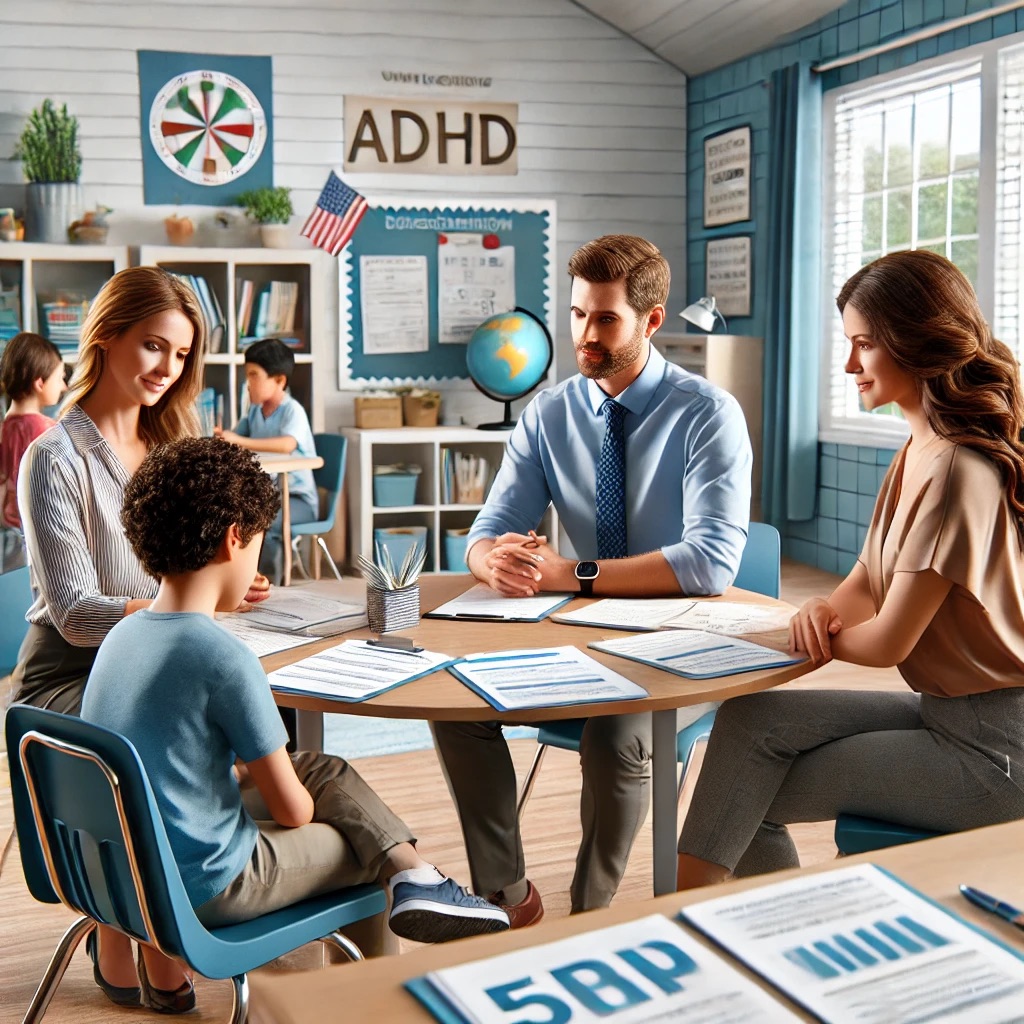
If your child has a disability that requires specialized instruction, an IEP might be the better option. This plan is tailored to address significant learning challenges and includes measurable goals and objectives to track progress.

When to Consider a 504 Plan

A 504 Plan may be appropriate for children who can succeed in a general education setting with specific accommodations. For example, a child with ADHD who needs extra time to complete tests but does not require specialized instruction could benefit from a 504 Plan.

How to Begin the Process

1. Request an Evaluation: Parents can request an evaluation through their child’s school to determine eligibility for an IEP or a 504 Plan.

2. Collaborate with the School Team: Work with teachers, counselors, and administrators to determine which plan best meets your child’s needs.

3. Review and Advocate: Regularly review the plan to ensure it continues to address your child’s needs. Do not hesitate to advocate for changes if necessary.

Both IEPs and 504 Plans are valuable tools to help students with disabilities succeed in school. Understanding the differences between these plans allows parents to better advocate for their child’s educational rights and ensure they receive the support they need to thrive.

This article has been written by John Collier, MSW, LCSW.

References

• U.S. Department of Education. (2021). Individuals with Disabilities Education Act (IDEA). Retrieved from https://www.ed.gov

• U.S. Department of Education. (2020). Section 504, Rehabilitation Act of 1973. Retrieved from https://www.ed.gov

• Wright, P. W. D., & Wright, P. (2020). Wrightslaw: Special Education Law, 2nd Edition. Harbor House Law Press.

• Bateman, B., & Linden, M. A. (2021). Better IEPs: How to Develop Legally Correct and Educationally Useful Programs. Attainment Company.

• Zirkel, P. A. (2022). The overlap and differences between Section 504 and IDEA. Journal of Special Education Leadership, 35(2), 88-96.

Does my teenager act “Entitled”? Understanding and Addressing Entitlement

Parents often encounter behavior in their teenagers that feels entitled—expecting special treatment, assuming privileges without effort, or displaying frustration when things don’t go their way. These behaviors can be confusing and frustrating, especially when parents aim to raise respectful, independent, and resilient young adults. Understanding what “entitlement” truly means, why it arises during adolescence, and how to address it can help parents navigate this challenging aspect of development.

1. Defining Entitlement in Teenagers

Entitlement is generally defined as an expectation of special treatment or privileges without reciprocal effort, responsibility, or appreciation. An “entitled” teenager may assume that their needs should come first, express frustration when they don’t get what they want, or expect rewards for minimal effort. This mindset can lead to struggles in relationships, academic settings, and future work environments if not addressed (Twenge & Campbell, 2009).

However, it’s important to distinguish normal adolescent self-focus from true entitlement. Adolescence is a time when teens are naturally centered on themselves as they explore their identities and seek independence. This phase of self-centeredness doesn’t always equal entitlement but can appear that way if certain behaviors aren’t balanced with empathy, responsibility, and appreciation.

2. Why Does Entitlement Develop in Teenagers?

Several factors contribute to the development of entitlement in teenagers, including societal influences, parenting styles, and the natural developmental processes of adolescence. Recognizing these influences can help parents understand the root causes and address entitlement more effectively.

A. Brain Development and the Adolescent Mindset

During the teenage years, the brain undergoes significant changes, particularly in areas responsible for impulse control and emotional regulation. This makes teens more focused on their immediate needs and desires, which can amplify entitled behaviors (Blakemore, 2018). Teens’ developing brains make it harder for them to weigh long-term consequences, so they may seek instant gratification and resist responsibility or hard work (Siegel, 2013).

B. Influence of Consumer Culture and Social Media

Teenagers are constantly exposed to social media and advertising that promotes instant gratification, materialism, and a “have-it-all” mentality. These messages can reinforce a sense of entitlement by suggesting that everyone deserves the latest trend, special treatment, or success without much effort (APA, 2019). Social media can also create unrealistic comparisons, making teens feel entitled to lifestyles or privileges similar to those they see online (Pew Research Center, 2018).

C. Parenting Styles and Overprotection

Overly permissive or “helicopter” parenting can unintentionally foster entitlement. When parents shield teens from responsibility or clear obstacles in their path, teens may begin to assume that life should always go smoothly and that they deserve special accommodations (Lythcott-Haims, 2015). While parental support is vital, balancing it with appropriate expectations and responsibilities is key to avoiding entitled attitudes.

3. Signs of Entitlement in Teenagers

Recognizing entitlement in teens can sometimes be tricky, as it may overlap with normal adolescent behaviors. However, certain patterns can indicate entitlement:

  • Lack of Appreciation: They rarely express gratitude or acknowledge the efforts others make on their behalf.
  • Avoiding Responsibilities: They expect privileges without putting in the required effort or fulfilling responsibilities, like household chores or academic work.
  • Resistance to “No”: They struggle to handle denial, setbacks, or limitations, often reacting with frustration or defiance.
  • Sense of Deserving Special Treatment: They expect special accommodations or assume they should receive rewards for minimal effort (Twenge & Campbell, 2009).

These behaviors can often lead to frustration and conflict within the family, as well as difficulties in other social settings, if left unchecked.

4. Addressing and Reducing Entitlement in Teens

Addressing entitlement doesn’t mean stripping teens of their independence or denying them privileges. Instead, it involves setting healthy boundaries, encouraging gratitude, and fostering resilience. Here are some practical strategies:

A. Teach Responsibility Through Consequences

It’s essential to allow teens to experience the natural consequences of their actions. When they make a mistake or avoid responsibilities, allow them to feel the results rather than rescuing them. This helps them understand that privileges and rewards are earned, not automatically granted (Kobliner, 2017).

B. Encourage Empathy and Perspective-Taking

Help your teen understand how their actions impact others by encouraging empathy. Discuss scenarios where they consider others’ perspectives, whether it’s the effort parents put into providing for them or the responsibilities their peers manage. Empathy-building exercises can shift their focus from self-centered expectations to a more balanced view of relationships and responsibilities (Gottman & DeClaire, 1998).

C. Model and Encourage Gratitude

Practicing gratitude has been shown to reduce entitlement and promote well-being. Encourage your teen to regularly acknowledge things they’re thankful for, whether through a gratitude journal or family discussions. When teens recognize what they have, they’re less likely to expect special treatment (Emmons, 2007).

D. Promote a “Growth Mindset”

Carol Dweck’s concept of a “growth mindset” encourages teens to value effort, learning, and resilience rather than expecting instant success or rewards. Emphasize the importance of persistence and improvement rather than immediate outcomes. This helps teens shift their focus from entitlement to personal growth and responsibility (Dweck, 2006).

E. Set Boundaries Around Privileges

Provide structure around privileges by connecting them to responsibilities. For instance, allow certain privileges only when chores, schoolwork, or other tasks are completed. Explain that privileges are not guaranteed but are earned through responsible behavior. This creates a sense of accountability and helps teens see the link between effort and reward (Kobliner, 2017).

5. Understanding Entitlement as a Phase, Not a Personality

It’s important to remember that entitlement in teens is often a temporary phase rather than a permanent personality trait. As teens grow and gain real-world experiences, many naturally outgrow entitlement, developing a greater sense of empathy, gratitude, and responsibility. With consistent guidance, you can support this growth and help them develop into resilient, respectful adults (Siegel, 2013).

Conclusion: Fostering Respect and Responsibility in Place of Entitlement

Navigating entitlement in teenagers can be challenging, but it’s possible to guide them toward a healthier outlook with understanding and the right strategies. By teaching responsibility, modeling gratitude, and promoting empathy, parents can help teens balance their needs with an appreciation for others. Recognizing that entitlement is often a developmental phase can help parents approach the issue with patience, knowing that with guidance, their teen can grow into a more self-aware and considerate young adult.

This article has been written by John S. Collier, MSW, LCSW. Mr. Collier has over 25 years of experience in the social work field and is based in London Kentucky through Southeast Kentucky Behavioral Health, LLC. Mr. Collier may be reached by phone at (606) 657–0532 extension 101 or by email at john@sekybh.com.

References

  • American Psychological Association. (2019). The Effects of Social Media on Children and Adolescents. APA.
  • Blakemore, S. J. (2018). Inventing Ourselves: The Secret Life of the Teenage Brain. PublicAffairs.
  • Dweck, C. S. (2006). Mindset: The New Psychology of Success. Random House.
  • Emmons, R. A. (2007). Thanks! How Practicing Gratitude Can Make You Happier. Houghton Mifflin.
  • Gottman, J., & DeClaire, J. (1998). Raising an Emotionally Intelligent Child. Simon & Schuster.
  • Kobliner, B. (2017). Make Your Kid a Money Genius (Even If You’re Not). Simon & Schuster.
  • Lythcott-Haims, J. (2015). How to Raise an Adult: Break Free of the Overparenting Trap and Prepare Your Kid for Success. Henry Holt and Company.
  • Pew Research Center. (2018). Teens, Social Media & Technology 2018. Pew Research Center.
  • Siegel, D. J. (2013). Brainstorm: The Power and Purpose of the Teenage Brain. TarcherPerigee.
  • Twenge, J. M., & Campbell, W. K. (2009). The Narcissism Epidemic: Living in the Age of Entitlement. Free Press.