
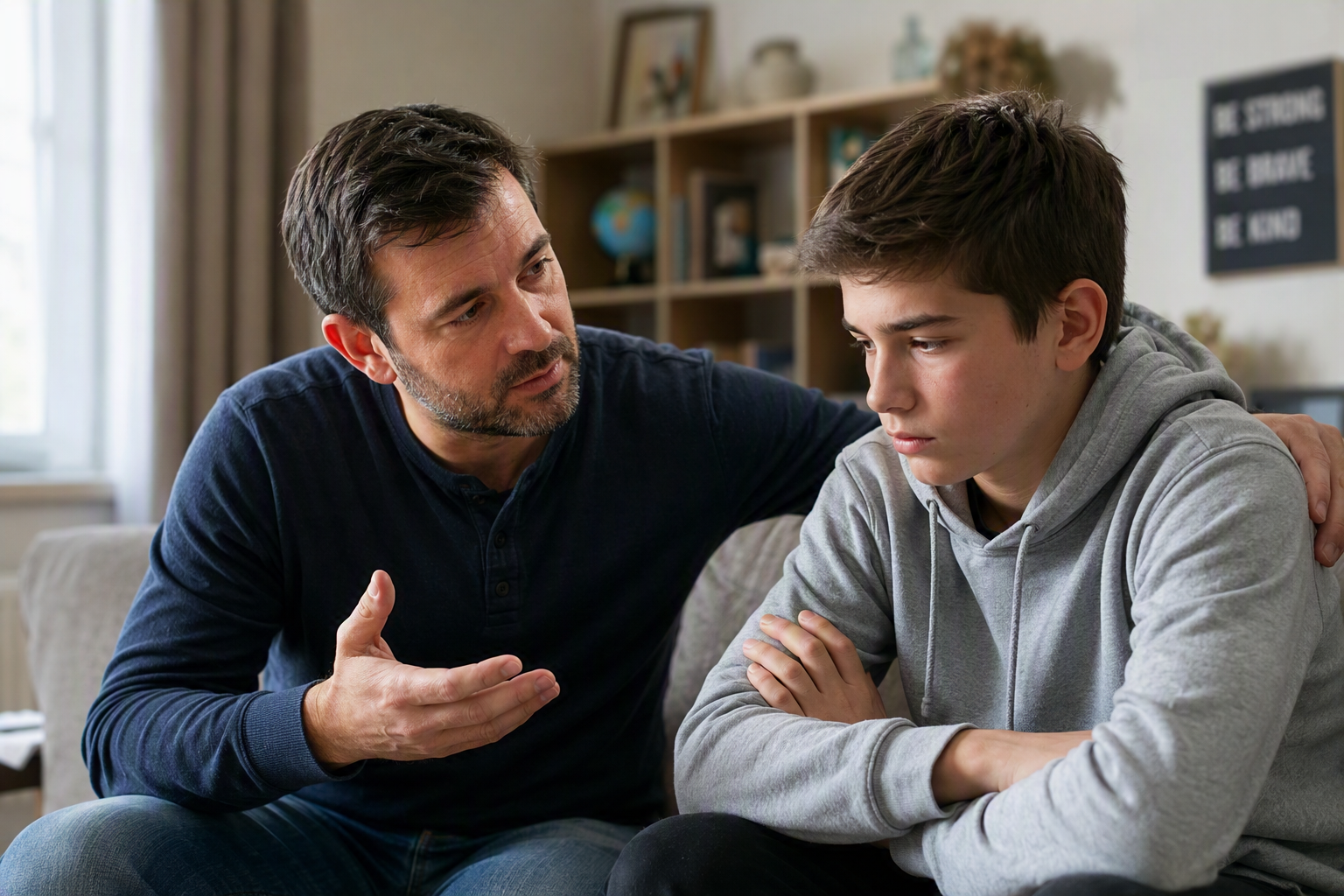
When Anger Meets Puberty: Understanding the preteen and young teenage – Boy
One of the most challenging periods for many families occurs when a boy enters puberty. Parents often describe feeling as though their once cheerful, affectionate child has become easily frustrated, argumentative, explosive, or emotionally distant seemingly overnight. While anger is not an inevitable part of adolescence, increased irritability and emotional intensity are common during the transition from childhood to adolescence. Understanding why this happens can help parents respond effectively and preserve a healthy relationship with their son.
Understanding What Is Happening
Around age 11 to 13, boys experience significant biological, emotional, and social changes. Testosterone levels increase, physical changes begin to emerge, and the brain undergoes substantial restructuring. During this period, the emotional centers of the brain develop more rapidly than the areas responsible for judgment, impulse control, and emotional regulation (Steinberg, 2014; National Institute of Mental Health, 2023).
As a result, a 12-year-old boy may experience emotions much more intensely than he did as a child while simultaneously lacking the skills needed to manage those emotions effectively. What appears to be defiance or disrespect may actually be emotional overwhelm.
Puberty can also create feelings of confusion and insecurity. Boys may worry about their appearance, athletic abilities, academic performance, friendships, or fitting in socially. Many boys have difficulty expressing vulnerable emotions such as embarrassment, fear, disappointment, sadness, or anxiety. Instead, these emotions are often expressed through irritability or anger (American Academy of Pediatrics, 2024).
Why Anger Often Becomes the “Go-To” Emotion
Anger is frequently referred to as a “secondary emotion.” This means it often covers more vulnerable feelings underneath.
For example:
- A boy who feels embarrassed may become angry.
- A boy who feels rejected may become angry.
- A boy who feels anxious may become angry.
- A boy who feels powerless may become angry.
Many boys grow up receiving social messages that it is acceptable to show anger but not acceptable to show sadness, fear, or emotional pain. Consequently, anger becomes the emotion they know how to display most readily (Siegel & Bryson, 2014).
When parents focus only on stopping the angry behavior without exploring the feelings underneath, opportunities for connection and growth may be missed.
Signs That Anger May Be Related to Puberty
Normal developmental anger may include:
- Increased irritability
- Mood swings
- Arguing more frequently
- Frustration with rules
- Emotional overreactions
- Needing more privacy
- Greater sensitivity to criticism
However, parents should seek professional support if anger is accompanied by:
- Physical aggression
- Threats of harm to self or others
- Property destruction
- Significant changes in sleep or appetite
- Persistent depression
- School refusal
- Substance use
- Social withdrawal
- Self-harming behaviors
These signs may indicate underlying mental health concerns requiring assessment and intervention (American Academy of Child & Adolescent Psychiatry, 2024).
What Parents Can Do to Help
1. Stay Calm During Emotional Storms
One of the most powerful tools a parent possesses is emotional regulation. When parents become angry in response to a child’s anger, the situation often escalates.
Instead of saying:
“Calm down right now!”
Try saying:
“I can see you’re really upset. Let’s talk when you’re ready.”
A calm response helps the adolescent nervous system begin to settle. Children often borrow emotional regulation from the adults around them before they develop it themselves (Siegel & Bryson, 2014).
2. Look Beyond the Behavior
When a child becomes angry, ask yourself:
- What happened before this?
- Is he hurt?
- Is he embarrassed?
- Is he feeling left out?
- Is he worried about something?
Understanding the underlying emotion does not excuse inappropriate behavior, but it does help address the true problem.
3. Teach Emotional Vocabulary
Many boys simply lack the language to describe their emotional experiences.
Help them identify feelings such as:
- Frustrated
- Disappointed
- Nervous
- Embarrassed
- Lonely
- Left out
- Overwhelmed
Research demonstrates that helping children name emotions improves emotional regulation and self-awareness (Siegel & Bryson, 2014).
4. Maintain Consistent Boundaries
Empathy and accountability should exist together.
Parents can communicate:
“It’s okay to be angry. It’s not okay to yell at people.”
Or:
“It’s okay to feel frustrated. It’s not okay to punch a wall.”
Children need to know that emotions are always acceptable, but certain behaviors are not.
5. Prioritize Physical Activity
Physical activity has consistently been shown to reduce stress, improve mood regulation, and decrease emotional reactivity among adolescents (Centers for Disease Control and Prevention, 2024).
Encourage activities such as:
- Basketball
- Football
- Hiking
- Martial arts
- Strength training
- Biking
- Running
Many boys process stress more effectively through movement than through conversation alone.
6. Protect Sleep
Sleep deprivation can significantly worsen irritability, impulsivity, and emotional regulation difficulties.
The American Academy of Sleep Medicine recommends that children aged 6 to 12 receive 9 to 12 hours of sleep per night (Paruthi et al., 2016).
Parents can help by:
- Limiting electronics before bed
- Establishing consistent bedtime routines
- Keeping devices out of bedrooms overnight
- Maintaining regular sleep schedules
7. Keep Communication Open
Many parents become discouraged when their son gives one-word answers.
Don’t give up.
Instead of asking:
“How was school?”
Try:
“What was the best part of your day?”
Or:
“What was the most annoying thing that happened today?”
Questions that invite discussion often receive better responses.
8. Model Healthy Anger Management
Children learn more from what parents do than from what parents say.
Demonstrate healthy coping strategies:
- Taking a walk
- Deep breathing
- Talking through problems
- Taking a break before responding
- Using respectful communication
Your child is constantly learning how to handle big emotions by watching you.
The Importance of Connection
One of the biggest mistakes parents make is assuming that angry behavior means their child no longer needs them. In reality, adolescence is a time of increased independence and increased need for parental support.
A 12-year-old boy may push a parent away verbally while desperately needing reassurance, structure, understanding, and connection.
The goal is not to eliminate anger. Anger is a normal human emotion. The goal is to help children develop the skills necessary to express anger safely, understand its causes, and respond constructively.
With patience, consistency, and support, most boys learn to navigate these difficult years successfully. Parents who remain calm, connected, and emotionally available provide one of the strongest protective factors against future behavioral and emotional difficulties.
Final Thoughts for Parents
If your son is struggling with anger during puberty, remember this: his behavior is communication. Behind the slammed door, the argumentative tone, or the emotional outburst is often a young person trying to make sense of a rapidly changing body, brain, and world.
Meet the emotion before correcting the behavior. Listen before lecturing. Stay connected even when it feels difficult.
The relationship you build during these years can become the foundation that guides your son safely into adulthood.
About the Author
John S. Collier, MSW, LCSW-S is a Licensed Clinical Social Worker Supervisor and the Executive Director of Southeast Kentucky Behavioral Health, LLC. With extensive experience in behavioral health, trauma-informed care, child and adolescent mental health, family systems, and organizational leadership, Mr. Collier has dedicated his career to helping children, adolescents, adults, and families navigate life’s challenges while building healthier and more resilient communities.
Throughout his clinical career, Mr. Collier has worked with children and adolescents experiencing emotional and behavioral difficulties, including anxiety, depression, trauma-related disorders, attention-deficit/hyperactivity disorder (ADHD), oppositional behaviors, anger management concerns, and family relationship challenges. His approach emphasizes understanding the underlying causes of behavior rather than focusing solely on symptoms, helping families develop practical strategies that strengthen communication, emotional regulation, and healthy relationships.

As a clinical supervisor, educator, and advocate for quality behavioral healthcare, Mr. Collier is committed to translating complex psychological and developmental concepts into practical guidance that parents and caregivers can readily understand and implement. His work reflects a belief that informed, supported, and empowered families play a critical role in promoting positive outcomes for children and adolescents.
In addition to his clinical practice and leadership responsibilities, Mr. Collier is the author of The Mind’s Trestle Board, where he regularly writes about mental health, personal growth, resilience, grief, family relationships, child development, and behavioral health topics. His writing combines evidence-based research with real-world clinical experience to provide readers with meaningful insights and actionable strategies.
Through his work, Mr. Collier continues to advocate for compassionate, person-centered care while helping individuals and families build the skills necessary to thrive through life’s challenges and transitions.
“Every behavior tells a story. When we seek to understand the story behind the behavior, we create opportunities for healing, growth, and connection.”
— John S. Collier, MSW, LCSW-S
References
American Academy of Child and Adolescent Psychiatry. (2024). Anger and children. Retrieved from https://www.aacap.org
American Academy of Pediatrics. (2024). HealthyChildren.org: Understanding puberty and adolescent development. Retrieved from https://www.healthychildren.org
Centers for Disease Control and Prevention. (2024). Physical activity guidelines for children and adolescents. Retrieved from https://www.cdc.gov
National Institute of Mental Health. (2023). The teen brain: Still under construction. Retrieved from https://www.nimh.nih.gov
Paruthi, S., Brooks, L. J., D’Ambrosio, C., Hall, W. A., Kotagal, S., Lloyd, R. M., … Wise, M. S. (2016). Recommended amount of sleep for pediatric populations: A consensus statement of the American Academy of Sleep Medicine. Journal of Clinical Sleep Medicine, 12(6), 785-786.
Siegel, D. J., & Bryson, T. P. (2014). No-drama discipline: The whole-brain way to calm the chaos and nurture your child’s developing mind. New York, NY: Bantam Books.
Steinberg, L. (2014). Age of opportunity: Lessons from the new science of adolescence. Boston, MA: Houghton Mifflin Harcourt.


