Learning to Live Without the Chaos
By John S. Collier, MSW, LCSW-S
Part of the Healing After Heartbreak Series
The Story
It is Saturday morning. Your phone is quiet. No one is accusing you of something. No argument is waiting to begin. You do not have to explain where you were, defend what you said, or guess what mood another person is in. This should feel peaceful.
Instead, you feel restless.
You check your phone several times. You walk from room to room. You begin thinking about your former partner. Part of you misses the excitement, the long talks, and the intense moments when everything felt close again. Then you wonder, Why do I feel empty now that the fighting has stopped?
The answer may be uncomfortable, but it is important. When you live with emotional chaos for a long time, your mind and body can become used to being on alert. Calm may feel strange because you have not yet learned how to live inside it. Peace is not always felt as peace at first. Sometimes, it feels like silence, boredom, loneliness, or even danger.
Takeaway: Feeling uncomfortable in the quiet does not mean you belong back in the chaos.
Your Body Learned to Stay Ready
Unhealthy relationships are not always painful every moment. They may move between conflict and closeness.
One day, your partner is loving and attentive. The next day, they seem distant or angry. A small disagreement becomes a major argument. After hours or days of tension, there may be an apology, affection, or promise to change. Then the cycle begins again.
When this pattern continues, you may start watching for changes in voice, facial expressions, text messages, or body language. You learn to notice every small sign that trouble may be coming.
Research shows that unpredictable threats can create longer-lasting anxiety than threats that are clearly signaled. When people do not know when something unpleasant might happen, their bodies may remain on alert for a longer period (Grillon et al., 2004).
This does not mean everyone leaving a difficult relationship has a trauma disorder. It means that repeated uncertainty can teach a person to stay watchful. After the relationship ends, the danger may be gone, but the habit of watching can remain.
Takeaway: Your body may still be preparing for problems that are no longer happening.
Calm May Feel Empty at First
Imagine living for years beside a busy highway. You hear cars, trucks, horns, and sirens throughout the day and night. Then you move to a quiet country road.
The same thing can happen emotionally.
On your first night, the silence may feel strange. You might have trouble sleeping because something seems missing. You became used to the noise, even though the noise was not good for your rest.
If your relationship was filled with arguments, breakups, reunions, accusations, apologies, and promises, your mind became used to strong emotional changes. When those changes stop, everyday life may seem flat. You might mistake the lack of chaos for a lack of love. You may begin to believe that peace is boring or that something must be wrong. But peace is not empty. It is simply quieter than conflict.
Takeaway: Quiet can feel uncomfortable because it is unfamiliar—not because it is unhealthy.
Intensity Is Not the Same as Intimacy
An intense relationship can feel deeply meaningful.
You may have stayed awake talking until morning. You may have shared painful secrets. You may have broken up and reunited many times. Each reunion may have felt powerful because it followed fear, anger, or loss. Those feelings were real. However, strong feelings do not always mean a relationship is strong.
Intensity is about how powerful a feeling is.
Intimacy is about how safely two people can know and trust each other.
Intensity says, “I cannot live without you.”
Intimacy says, “I can be honest with you and still feel respected.”
Intensity may rise quickly after a painful argument. Intimacy grows slowly through honesty, responsibility, trust, and steady behavior.
Studies of romantic conflict show that relationship arguments can create real physical stress responses. Attachment insecurity can also affect how strongly a person reacts during conflict and how quickly the body settles afterward (Powers et al., 2006; Taylor et al., 2018). That emotional rush can be mistaken for passion. Yet a racing heart is not always a sign of deep love. Sometimes it is a sign that your body is preparing for another painful moment.
Takeaway: A relationship can be emotionally intense without being emotionally safe.
You May Miss the Relief More Than the Conflict
Most people do not miss being criticized, ignored, controlled, or hurt. What they may miss is the relief that came when the conflict stopped. After a terrible argument, an apology can feel powerful. A hug may feel warmer. A peaceful evening may seem almost perfect because it follows hours or days of fear.
You may remember that relief as proof of love. But relief and safety are different. Relief happens when pain temporarily stops. Safety exists when you do not have to keep preparing for the pain to return.
It is similar to taking off a shoe that is too tight. The relief feels wonderful, but that does not mean the shoe was good for you. The relief was created by the discomfort that came before it. Healthy love should not require repeated emotional injury before kindness feels meaningful.
Takeaway: Sometimes what felt like deep connection was actually relief after distress.
Boredom May Be Hidden Grief
After a breakup, boredom is not always a lack of things to do. It can be grief wearing ordinary clothes.
You may miss having someone to think about all day. You may miss trying to solve the relationship. You may miss waiting for a call, planning your next conversation, or wondering what your partner meant.
Even painful relationships can give a person a sense of purpose:
How can I make this better?
How can I keep them happy?
How can I prevent another argument?
How can I get us back to the good part?
When the relationship ends, that job disappears. You are no longer managing the other person’s emotions. You are no longer trying to save the relationship.
The open space can feel like emptiness.
A breakup can also disturb your sense of identity. Research has found that partners often develop shared routines, activities, friendships, and ideas about who they are. When the relationship ends, a person may temporarily feel less sure of themselves (Slotter et al., 2010).
You may not need more excitement. You may need time to discover who you are when you are no longer trying to survive the relationship.
Takeaway: What feels like boredom may be grief, lost purpose, or an identity waiting to be rebuilt.
Do Not Create Problems to Feel Normal
When peace feels uncomfortable, some people unknowingly create new conflict. You might send a message you know will begin an argument. You might check your former partner’s social media until you find something upsetting. You may enter a new relationship quickly or become suspicious when the new person treats you well.
You may even test someone’s love by withdrawing, accusing, threatening to leave, or asking the same question many times. These actions are not always planned. They may be attempts to return to an emotional state that feels familiar. When your life becomes calm, pause before creating a problem. Ask yourself:
- Is something truly wrong, or does the quiet feel unusual?
- Am I responding to what is happening now or to what happened before?
- Do I need excitement, or do I need healthy connection?
- Am I protecting myself, or am I testing someone?
- What would a calm response look like?
Peace may feel unfamiliar, but you do not have to destroy it to make life feel normal again.
Takeaway: Do not mistake the discomfort of healing for proof that something is wrong.
A Simple Exercise: Peace or Disconnection?
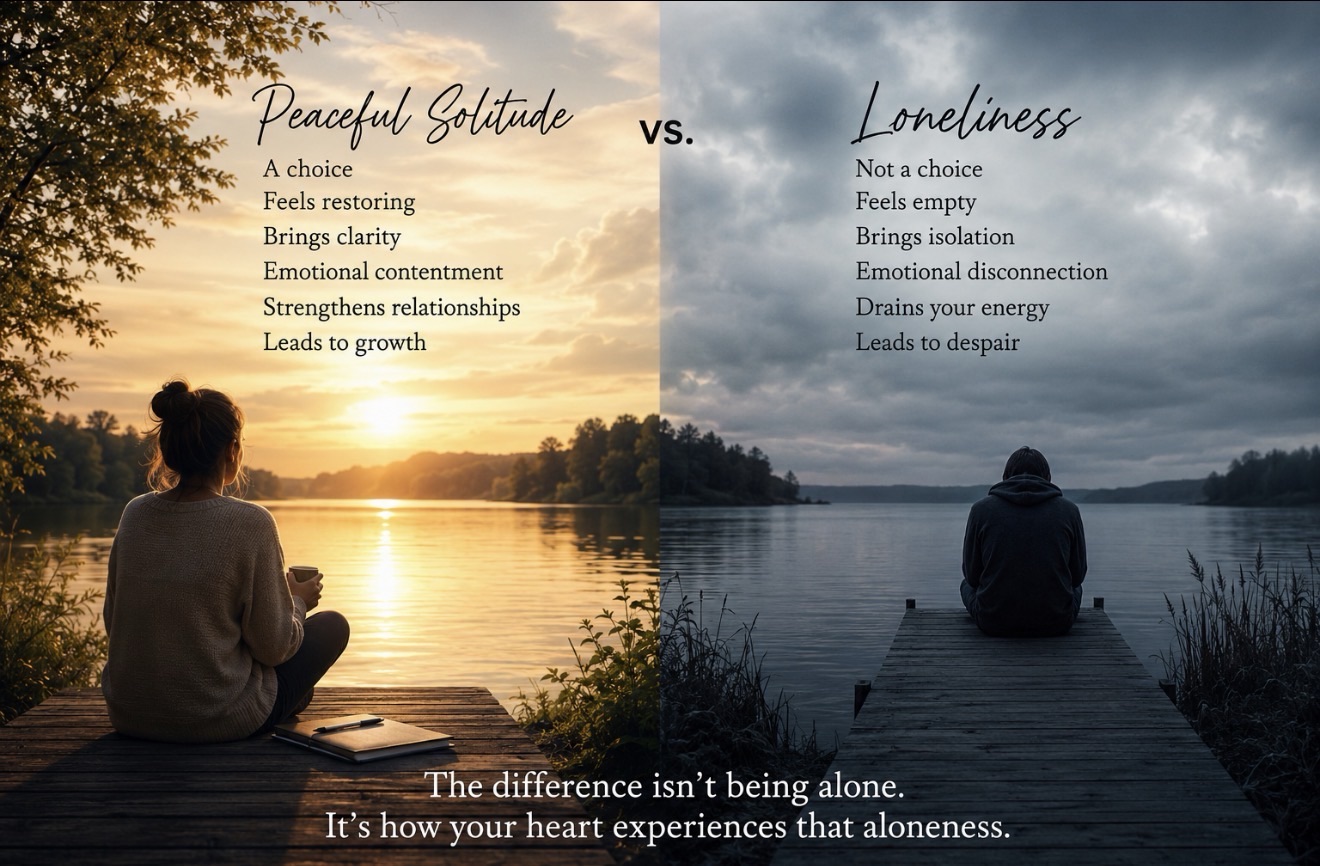
Not every quiet situation is healthy. Silence can sometimes come from avoidance, loneliness, or emotional neglect. The goal is not to accept every empty relationship in the name of peace.
Use this exercise to tell the difference.
Unfamiliar Peace
Unhealthy Disconnection
I can speak without fear.
I am ignored when I try to speak.
Problems are discussed calmly.
Problems are avoided or punished.
I have room to think and rest.
I feel invisible and emotionally abandoned.
Words and actions usually match.
I receive mixed messages and broken promises.
I do not have to earn basic kindness.
Affection is withheld to control me.
Calm feels strange because I am used to conflict.
Calm feels empty because there is no care, effort, or connection.
Look at what is happening, not only at how unfamiliar it feels.
A healthy relationship may be quieter than your former relationship, but it should not leave you unseen. Peace includes honesty, respect, warmth, effort, and room for both people to have a voice.
Takeaway: Healthy peace is calm and connected—not silent and uncaring.
Teaching Yourself That Peace Is Safe
You do not have to force yourself to feel peaceful. You can learn peace through small, repeated experiences.
Begin by building a few steady routines. Wake up at a regular time. Eat meals without checking your former partner’s page. Take a short walk. Call someone who makes you feel grounded. Sit quietly for five minutes without trying to solve your whole future.
Research on habit formation shows that repeated actions in a consistent setting can slowly become more automatic. The amount of time varies widely, and missing one day does not erase the progress already made (Lally et al., 2010).
You can also practice naming what you feel:
“Nothing bad is happening. The quiet simply feels unfamiliar.”
“I am not being abandoned. I am spending time alone.”
“I do not have to create a crisis to feel connected.”
“I can let this moment be calm.”
Mindfulness means paying attention to the present moment without quickly judging it. Research involving couples found that greater mindfulness during conflict was linked with better recovery from stress under some difficult interaction conditions (Laurent et al., 2016).
You are not trying to erase the past. You are teaching your mind and body that the present is different.
Takeaway: Peace becomes more comfortable when you experience it repeatedly without running from it.
🌿 Therapist’s Note
Healing may feel less exciting than the relationship that hurt you. There may be no dramatic apology, late-night reunion, sudden promise, or emotional rescue.
Do not confuse the absence of drama with the absence of progress.
Sometimes healing looks like sleeping through the night. It looks like eating without a knot in your stomach. It looks like going several hours without checking your phone. It looks like making a decision without wondering how another person will react.
These moments may seem small, but they are signs that your life is becoming your own again.
Slotter, E. B., Gardner, W. L., & Finkel, E. J. (2010). Who am I without you? The influence of romantic breakup on the self-concept. Personality and Social Psychology Bulletin, 36(2), 147–160.
Layout note: Place a 2” × 2.5” symbolic photograph on the right side of the Therapist’s Note with text wrapping. Use a warm, cinematic image of a steaming cup beside an open journal in a quiet room at sunrise. The mood should feel peaceful, reflective, and real.
When More Support May Be Needed
Some people settle into a calmer life with time, support, and new routines. Others continue to feel tense, frightened, or unable to rest.
Consider speaking with a qualified mental health professional if you regularly experience panic, nightmares, severe anxiety, depression, constant alertness, or a strong urge to return to a dangerous relationship.
You should also seek support if your former partner is threatening, stalking, controlling, or frightening you. In those situations, safety matters more than closure.
Getting help does not mean you are weak. It means you are taking your healing seriously.
Takeaway: You do not have to teach yourself peace without support.
Final Thoughts
Chaos can make you feel busy, needed, and emotionally alive. Peace asks you to slow down and face the feelings that the chaos once covered.
At first, that may feel lonely.
Stay with it.
The quiet is not punishing you. It is giving you room to hear yourself again. The slow days are not empty. They are giving your mind and body time to recover.
One day, you will stop waiting for the next argument. You will stop reading kindness as a warning. You will stop believing that love must hurt before it feels meaningful.
Peace may be unfamiliar today, but unfamiliar things can become home.
About the Author
John S. Collier, MSW, LCSW-S, is a Licensed Clinical Social Worker and the Executive Director of Southeast Kentucky Behavioral Health, LLC. With more than 25 years of experience in the behavioral health field, he has worked with individuals, couples, families, and communities facing some of life’s most difficult challenges. His clinical expertise includes trauma, grief, anxiety, depression, relationship issues, and life transitions. John believes that healing happens when people feel seen, heard, and supported with compassion and respect. He is passionate about translating psychological research into practical tools that empower people to understand their emotions, strengthen their relationships, and build healthier, more meaningful lives. As a therapist, speaker, and writer, John’s goal is simple: to offer hope, guidance, and practical solutions.
References
Grillon, C., Baas, J. P., Lissek, S., Smith, K., & Milstein, J. (2004). Anxious responses to predictable and unpredictable aversive events. Behavioral Neuroscience, 118(5), 916–924.
Lally, P., van Jaarsveld, C. H. M., Potts, H. W. W., & Wardle, J. (2010). How are habits formed: Modelling habit formation in the real world. European Journal of Social Psychology, 40(6), 998–1009.
Laurent, H. K., Hertz, R., Nelson, B., & Laurent, S. M. (2016). Mindfulness during romantic conflict moderates the impact of negative partner behaviors on cortisol responses. Hormones and Behavior, 79, 45–51.
Powers, S. I., Pietromonaco, P. R., Gunlicks, M., & Sayer, A. (2006). Dating couples’ attachment styles and patterns of cortisol reactivity and recovery in response to a relationship conflict. Journal of Personality and Social Psychology, 90(4), 613–628.
Taylor, N. C., Seedall, R. B., Robinson, W. D., & Bradford, K. (2018). The systemic interaction of attachment on psychophysiological arousal in couple conflict. Journal of Marital and Family Therapy, 44(1), 46–60.
Series Reminder
Healing doesn’t mean forgetting. It means carrying yesterday without letting it steal tomorrow.