

What Too Much Screen Time Does to Your Child’s Brain
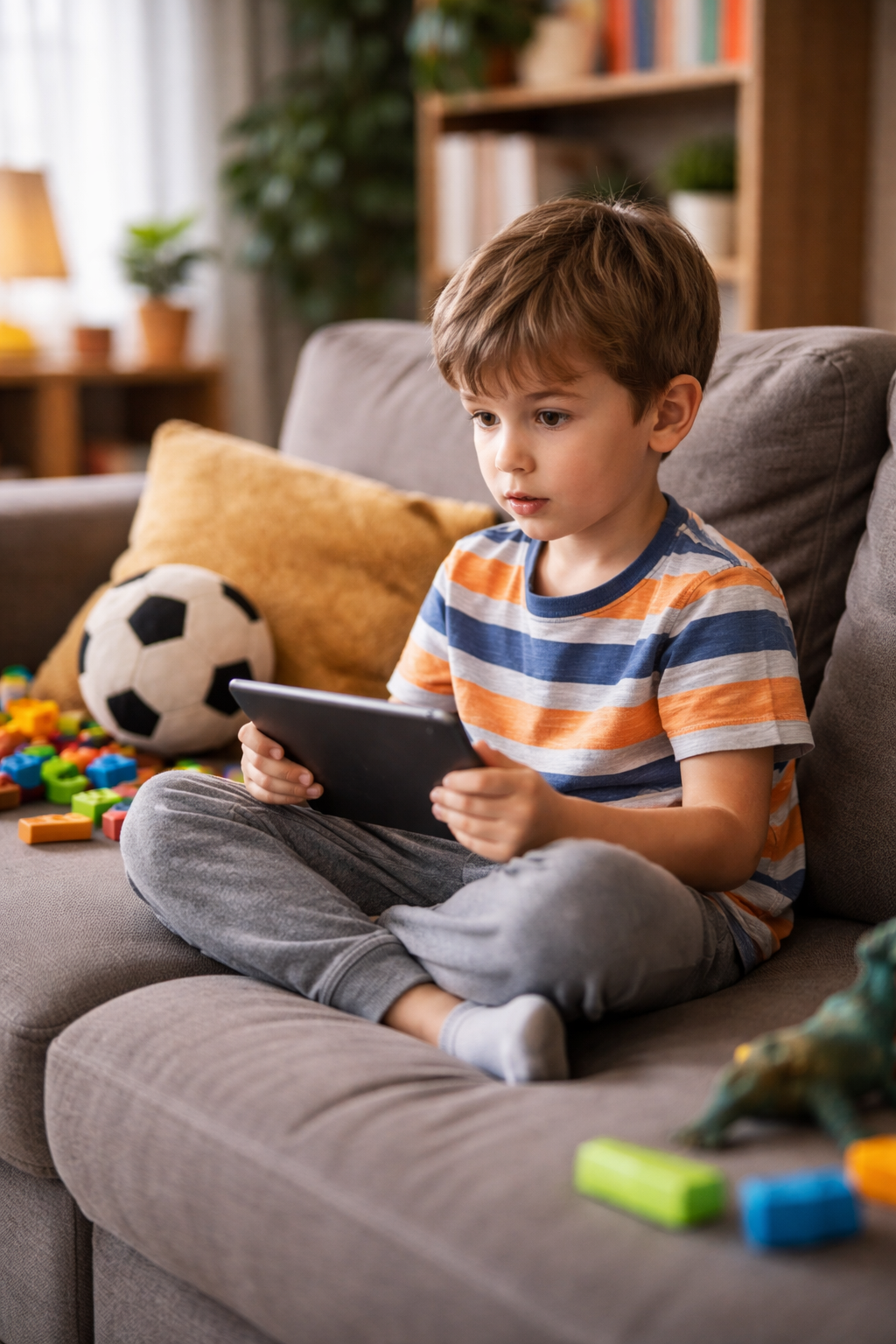
Many kids today spend a lot of time sitting on the couch watching TV, playing video games, or using a tablet. While screens can be fun and even helpful for learning, too much screen time can affect how a child’s brain grows and develops.
Let’s talk about what happens inside the brain.
🧠 The Brain Needs Activity to Grow
A child’s brain is always growing. It gets stronger when kids:
Play outside Talk with others Use their imagination Move their bodies
When a child sits still for a long time staring at a screen, the brain is not working in the same way. It becomes more passive, which means the brain is just watching instead of doing.
📺 Too Much Screen Time Can Affect Attention
Fast-moving shows and games can make the brain get used to constant excitement. This can make it harder for kids to:
Focus in school Sit still during class Pay attention to slower activities like reading
Over time, the brain may start to expect constant stimulation, making everyday tasks feel boring.
🗣️ It Can Slow Down Communication Skills
Kids learn to talk and understand others by:
Having conversations Listening to people Watching facial expressions
When a child spends too much time on a screen, they miss chances to practice these skills. This can make it harder for them to:
Express their feelings Understand others Build strong friendships
😴 Sleep Can Be Affected
Screens, especially before bedtime, can make it hard for the brain to relax. The bright light from screens can:
Trick the brain into thinking it’s still daytime Make it harder to fall asleep Lead to less restful sleep
Sleep is very important because the brain grows and heals during rest.
❤️ It Can Affect Emotions
When kids spend too much time on screens, they may:
Feel more irritable Get frustrated easily Have trouble handling boredom
This is because they are not learning how to manage their feelings through real-life experiences.
⚖️ Balance Is the Key
Screens are not bad by themselves. The key is balance. Healthy habits include:
Limiting screen time Taking breaks to move and play Spending time with family and friends Doing creative activities like drawing or building
🌱 Final Thoughts
A child’s brain grows best when it is active, engaged, and connected to the real world. Sitting on the couch staring at a screen for long periods can slow down important parts of development.
Helping kids balance screen time with play, conversation, and movement gives their brains the best chance to grow strong and healthy.
About the Author
John S. Collier, MSW, LCSW, is a behavioral health therapist dedicated to helping children and families build healthier habits, improve emotional well-being, and support strong brain development through practical, real-life strategies.
📚 References
American Academy of Pediatrics. (2016). Media and Young Minds. Centers for Disease Control and Prevention (CDC). (2021). Child Development Basics. National Institute of Child Health and Human Development. (2020). Screen Time and Children. World Health Organization. (2019). Guidelines on Physical Activity, Sedentary Behaviour and Sleep for Children.