Welcome to SOUTHEAST KENTUCKY BEHAVIORAL HEALTH
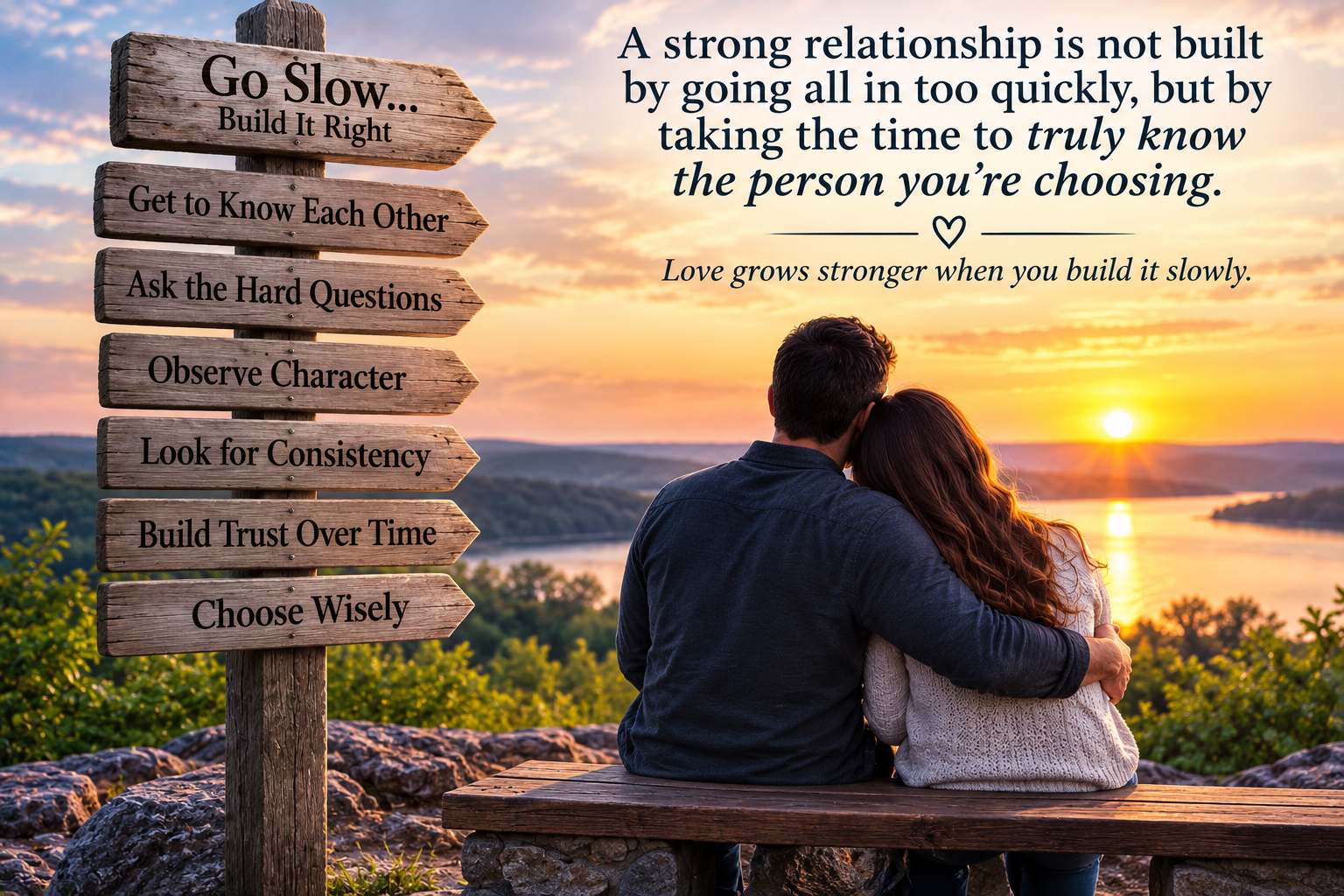
Going All In: The Hidden Risks of Rushing Into a Relationship

There is something undeniably romantic about the phrase “going all in.” Movies celebrate it. Love songs glorify it. Friends often admire people who seem fearless enough to dive headfirst into love. We are told that real love requires vulnerability, commitment, and complete investment.

While commitment is essential for a healthy relationship, there is an important distinction between healthy commitment and premature emotional investment. One is built on knowledge, trust, and experience. The other is often built on hope, attraction, and assumptions.

Many relationships don’t fail because two people were incompatible. They fail because they became emotionally committed long before they truly knew one another.


The Difference Between Attraction and Knowledge

Attraction happens quickly. Knowledge takes time. During the first weeks or months of dating, we naturally see the best version of another person. Psychologists sometimes refer to this as the honeymoon phase, where the brain is flooded with dopamine, oxytocin, and other neurochemicals that create excitement, optimism, and emotional attachment (Fisher, 2004). Unfortunately, these same chemicals can reduce our ability to evaluate a relationship objectively.

When people “go all in” too quickly, they often mistake:

  • Chemistry for compatibility
  • Passion for stability
  • Attention for commitment
  • Potential for reality

Those are not the same things.


We Fall in Love With Who We Think They Are

One of the greatest dangers of rushing a relationship is that we begin filling in the blanks ourselves. Instead of learning who someone truly is, we imagine who they could become. We overlook inconsistencies. We excuse red flags.

We create explanations for behaviors we don’t fully understand. Psychologists call this idealization—seeing another person through the lens of hope rather than reality (Murray, Holmes, & Griffin, 1996). The problem is that relationships are built on reality, not imagination. Eventually, every relationship moves from fantasy to reality. When that happens, many people don’t feel like their partner changed. Instead, they finally see what was there all along.


Emotional Investment Changes Your Judgment

Imagine buying a house. Would you purchase it after walking through the front door for five minutes? Probably not. You would inspect the foundation. Look at the roof. Check for water damage. Review the neighborhood. Ask difficult questions. Relationships deserve at least that much careful consideration. Yet emotionally, many people commit after only a handful of exciting conversations. Once we become emotionally invested, our brains begin protecting that investment.

Instead of asking, “Is this the right person?”

we begin asking, “How can I make this work?”

Those are completely different questions.


The Cost of Ignoring Red Flags

Red flags rarely appear as dramatic warning signs. Most begin as small moments. Perhaps they become irritated when they don’t get their way. Maybe they avoid accountability. Perhaps they speak disrespectfully about former partners. Maybe they struggle with honesty. Perhaps they become controlling in subtle ways. Someone who rushes into commitment often dismisses these concerns because the emotional reward feels greater than the potential risk. Unfortunately, ignored patterns rarely disappear. They usually become stronger. Dating is not primarily about convincing someone to stay. It is about discovering whether staying would be wise.


Love Needs Observation

Healthy relationships require curiosity. Observe how someone handles disappointment. Observe how they manage stress. Observe how they treat people who have nothing to offer them. Observe how they speak about family. Observe whether their words consistently match their actions. Character reveals itself over time. No conversation can replace experience. No promise can replace consistency. No chemistry can replace integrity.


Why Slow Relationships Often Last Longer

Research consistently suggests that relationships built gradually often develop stronger foundations because trust is earned rather than assumed (Stanley, Rhoades, & Markman, 2006). People sometimes fear moving slowly because they worry someone else will “take” the person they’re dating. Ironically, healthy people generally respect appropriate pacing. Individuals who pressure immediate commitment often reveal more about their own insecurity than about their love. Real intimacy grows. It cannot be rushed.


The Difference Between Commitment and Surrender

Healthy commitment says: “I’m choosing you because I know who you are.”

Unhealthy surrender says: “I’m choosing you because I hope you’ll become who I need.”

One is based on evidence. The other is based on emotion. One grows stronger over time. The other becomes increasingly fragile.


Questions Worth Asking Yourself

Before going “all in,” consider asking yourself:

  • What do I actually know about this person’s character?
  • Have I seen them during conflict?
  • How do they respond when they don’t get what they want?
  • Do their actions consistently match their words?
  • Am I attracted to who they are today or who I hope they’ll become?
  • If nothing about this person ever changed, would I still choose this relationship five years from now?

These questions may not feel romantic, but they are deeply loving—because they protect both people from building a relationship on unrealistic expectations.


A Better Way to Love

Moving slowly does not mean loving less. It means loving wisely. Healthy relationships are not races.

They are discoveries. Every shared experience reveals another layer of a person’s character. Trust is built 0through repeated consistency. Respect grows through mutual understanding. Love deepens through truth rather than fantasy.

Going “all in” is admirable when it follows genuine knowledge of another person. Going all in before you truly know someone is less an act of courage than a gamble. The strongest relationships are rarely built by those who rushed toward commitment. They are built by two people who allowed time to reveal character, chose honesty over fantasy, and discovered that lasting love is not found by moving faster—it is found by building a foundation strong enough to support a lifetime.


About the Author

John S. Collier, MSW, LCSW-S is a licensed clinical social worker, therapist, author, and educator with extensive experience helping individuals, couples, and families navigate relationship challenges, anxiety, trauma, and emotional well-being. Throughout his career, he has worked with people from diverse backgrounds, combining evidence-based psychological principles with practical, real-world applications that readers can immediately apply to their daily lives.

John’s writing bridges the gap between academic research and everyday experience, making complex psychological concepts understandable and useful. His work emphasizes emotional maturity, healthy communication, personal responsibility, and building relationships founded on trust, authenticity, and mutual respect. Whether writing about mental health, family dynamics, leadership, or personal growth, his goal is to provide readers with insights that encourage lasting change and healthier, more meaningful lives.

References

Fisher, H. (2004). Why We Love: The Nature and Chemistry of Romantic Love. Henry Holt.

Murray, S. L., Holmes, J. G., & Griffin, D. W. (1996). The benefits of positive illusions: Idealization and the construction of satisfaction in close relationships. Journal of Personality and Social Psychology, 70(1), 79–98.

Stanley, S. M., Rhoades, G. K., & Markman, H. J. (2006). Sliding versus deciding: Inertia and the premarital cohabitation effect. Family Relations, 55(4), 499–509.

Gottman, J. M., & Silver, N. (2015). The Seven Principles for Making Marriage Work (Revised ed.). Harmony Books.



What Does It Mean to Love Your Wife?

Loving one’s wife is a fundamental aspect of a strong and enduring marriage. It extends beyond mere words or fleeting emotions and is demonstrated through actions, commitment, and intentional effort. The concept of love within marriage has been explored in psychological, philosophical, and religious contexts, with varying interpretations of how love is best expressed. This article examines what it means to love one’s wife, drawing on research from psychology, relationship counseling, and philosophy.

Understanding Love in Marriage

Love in marriage is multidimensional, encompassing emotional, intellectual, and physical connections. Sternberg’s Triangular Theory of Love (1986) identifies three core components of love: intimacy, passion, and commitment (Sternberg, 1986). A balanced marriage integrates these elements, fostering a deep and fulfilling relationship.

  1. Intimacy – This involves deep emotional closeness, vulnerability, and a sense of connection. It is built through trust, empathy, and consistent communication (Gottman & Silver, 2015).
  2. Passion – Passion entails romantic attraction and physical affection. While it may fluctuate over time, intentional efforts to nurture attraction and express love physically are vital (Hatfield & Walster, 1978).
  3. Commitment – A long-term decision to prioritize the well-being and happiness of one’s spouse despite life’s challenges. This aspect of love is what sustains a relationship through difficulties (Stanley, 2005).

Demonstrating Love in Practical Ways

To truly love one’s wife means translating emotional affection into meaningful actions. Here are several key ways to do so:

1. Practicing Emotional Attunement :

Loving one’s wife requires actively listening and responding to her emotional needs. Dr. John Gottman, a renowned relationship expert, emphasizes the importance of turning toward one’s partner instead of away when discussing emotions (Gottman & Silver, 2015). This means being present, validating her feelings, and offering support rather than dismissing concerns.

2. Acts of Service and Sacrifice

Love often involves selflessness. Gary Chapman’s Five Love Languages (1992) identifies acts of service as a key way many individuals feel loved. Helping with household responsibilities, supporting her goals, and prioritizing her well-being are clear demonstrations of love.

3. Communicating Affection and Appreciation

Verbal affirmations, such as expressing gratitude and admiration, strengthen emotional intimacy (Chapman, 1992). Simple words of encouragement and affirmation, such as “I appreciate you” or “I love you,” reinforce a strong emotional bond.

4. Prioritizing Quality Time

Spending intentional time together, without distractions, cultivates closeness. Studies suggest that couples who engage in shared activities and date nights experience greater relationship satisfaction (Ogolsky, 2020).

5. Nurturing Physical and Romantic Connection

Physical intimacy, including affectionate gestures like holding hands, hugging, and maintaining a fulfilling sex life, plays a crucial role in sustaining a healthy marriage (Hatfield & Rapson, 1993). Physical touch is a powerful way to communicate love and security.

6. Supporting Her Growth and Well-Being

Loving one’s wife includes supporting her personal and professional aspirations. Encouraging her ambitions and well-being contributes to her happiness and strengthens the partnership (Aron et al., 2000).

7. Remaining Loyal and Trustworthy

Trust is the foundation of love. Maintaining honesty, faithfulness, and integrity in words and actions fosters a secure and lasting marriage (Stanley, 2005).

Loving one’s wife is an active and lifelong commitment. It requires effort, intentionality, and a deep understanding of her emotional and relational needs. By practicing emotional attunement, expressing love through actions, and prioritizing the relationship, a husband can create a marriage that thrives on deep, enduring love.

John S. Collier, MSW, LCSW, is a licensed clinical social worker based in London, Kentucky. With years of experience in behavioral health therapy, he specializes in relationship counseling, trauma-informed care, and family dynamics. Mr. Collier has worked extensively with couples, helping them build stronger emotional connections and develop healthy communication patterns. His expertise in marriage counseling is grounded in evidence-based therapeutic approaches, drawing from attachment theory, cognitive-behavioral therapy, and mindfulness practices. Passionate about strengthening relationships, John continues to provide guidance and support to individuals and couples navigating the complexities of love, commitment, and emotional well-being.

References

  • Aron, A., Aron, E. N., Tudor, M., & Nelson, G. (2000). Close relationships as including other in the self. Journal of Personality and Social Psychology, 78(4), 599-612.
  • Chapman, G. (1992). The Five Love Languages: How to Express Heartfelt Commitment to Your Mate. Northfield Publishing.
  • Gottman, J. M., & Silver, N. (2015). The Seven Principles for Making Marriage Work. Harmony.
  • Hatfield, E., & Rapson, R. L. (1993). Love, Sex, and Intimacy: Their Psychology, Biology, and History. HarperCollins.
  • Hatfield, E., & Walster, G. W. (1978). A New Look at Love. University Press of America.
  • Ogolsky, B. G. (2020). The Science of Couple and Family Relationships. Routledge.
  • Stanley, S. M. (2005). The Power of Commitment: A Guide to Active, Lifelong Love. Jossey-Bass.
  • Sternberg, R. J. (1986). A triangular theory of love. Psychological Review, 93(2), 119-135.

Healthy Forms of Validation: Recognizing and Seeking Supportive Affirmation

Validation is the process of understanding, affirming, and accepting one’s feelings, thoughts, or experiences. Receiving healthy validation plays an essential role in building self-esteem, enhancing relationships, and promoting emotional resilience. However, it’s essential to recognize and seek out validation that is healthy and constructive. Here’s an overview of different types of validation and strategies for recognizing and pursuing them effectively.

Why Validation Matters

Validation from others reassures us that our feelings and experiences are understood and accepted. Research shows that receiving consistent, positive validation from supportive people can lead to improved mental health, stronger relationships, and a more secure sense of self (Linehan, 1993). According to self-determination theory, validation can also foster autonomy, competence, and relatedness, which are essential for psychological well-being (Ryan & Deci, 2000).

However, relying solely on external validation can be harmful, leading to dependency and reduced self-esteem. Instead, it’s beneficial to balance seeking validation from others with developing self-validation practices.

1. Types of Healthy Validation

  • Emotional Validation: Emotional validation involves acknowledging and accepting someone’s feelings without judgment. This can be as simple as listening attentively, empathizing, and affirming that the other person’s feelings are understandable. Emotional validation reinforces that feelings are valid and that it’s okay to feel what one feels (Linehan, 1993).
  • Validation of Effort and Progress: Praising effort rather than outcomes is a powerful form of validation that can reinforce persistence, self-compassion, and growth. Validating someone’s efforts, even if they fall short of success, promotes a growth mindset, where challenges are seen as opportunities to learn rather than sources of failure (Dweck, 2006).
  • Authentic Affirmations: Authentic affirmations recognize specific qualities, skills, or positive contributions that a person has shown. This validation should be specific rather than generic to reinforce self-worth in an honest, meaningful way (Wood et al., 2008).

2. Recognizing Healthy Validation

Healthy validation has distinct characteristics that make it different from unhealthy or superficial validation. Here’s how to identify it:

  • Respectful and Non-Judgmental: Healthy validation acknowledges your experiences without judgment or dismissal. Research shows that people who validate respectfully build stronger, more trusting relationships (Kross et al., 2014).
  • Specific and Genuine: Unlike generic praise, specific and genuine validation is grounded in real examples. For example, instead of saying “You’re smart,” healthy validation might sound like “I noticed how thoughtful you were when you solved that problem.” This specificity makes the affirmation more meaningful and believable (Wood et al., 2008).
  • Supportive but Not Enabling: Healthy validation encourages personal growth and resilience. It acknowledges your feelings and experiences without enabling unhelpful behaviors, promoting personal accountability and independence (Ryan & Deci, 2000).

3. How to Seek Out Healthy Validation

While it can be challenging to seek validation directly, there are strategies to create environments and relationships where it naturally occurs:

  • Communicate Openly: Sharing how you feel and what kind of support you need can help others understand your perspective and respond in validating ways. Research suggests that people who openly communicate their feelings are more likely to receive affirming responses, as clear communication reduces misunderstandings (Gottman, 2011).
  • Seek Supportive Relationships: Prioritize connections with people who genuinely care about your well-being and listen to you. Friendships and relationships that emphasize empathy, understanding, and honest feedback are more likely to offer healthy validation (Reis & Shaver, 1988).
  • Set Boundaries Around Validation-Seeking: Being mindful of how and when you seek validation can help prevent over-dependence on others. Seeking validation when genuinely needed, rather than as a habit, can help you distinguish between healthy support and dependency (Neff, 2003).

4. Building Self-Validation Skills

Relying on oneself for validation is a healthy, empowering practice that can lead to greater self-confidence and resilience:

  • Practice Self-Compassion: Self-compassion is a form of self-validation that involves treating yourself kindly, especially during challenging times. According to Dr. Kristin Neff, practicing self-compassion can help you become your own source of validation, reducing dependency on external sources (Neff, 2003).
  • Acknowledge Your Own Efforts: Celebrating your progress, no matter how small, reinforces self-validation. This practice helps you recognize your own efforts, fostering a positive self-image and reducing the need for constant external approval (Dweck, 2006).
  • Mindfulness and Journaling: Reflecting on your experiences, thoughts, and emotions through mindfulness or journaling can help you recognize your feelings and validate them internally. This process strengthens self-awareness and helps you rely less on external feedback (Kabat-Zinn, 2003).

Conclusion

Validation is a powerful element of healthy relationships and self-esteem, but it’s essential to seek out healthy, constructive forms of affirmation. By recognizing the qualities of healthy validation, seeking it from supportive people, and building self-validation skills, individuals can enhance their emotional resilience and improve their overall well-being.

This article has been written by John S. Collier, MSW, LCSW. Mr. Collier has over 25 years of experience in the social work field and is based in London Kentucky through Southeast Kentucky Behavioral Health, LLC. Mr. Collier may be reached by phone at (606) 657–0532 extension 101 or by email at john@sekybh.com.

References

  • Dweck, C. S. (2006). Mindset: The New Psychology of Success. Random House.
  • Gottman, J. M. (2011). The Science of Trust: Emotional Attunement for Couples. W.W. Norton & Company.
  • Kabat-Zinn, J. (2003). Mindfulness-Based Stress Reduction (MBSR). American Psychological Association.
  • Kross, E., et al. (2014). Social rejection and the brain. Trends in Cognitive Sciences, 18(1), 15-21.
  • Linehan, M. M. (1993). Cognitive-Behavioral Treatment of Borderline Personality Disorder. Guilford Press.
  • Neff, K. D. (2003). The development and validation of a scale to measure self-compassion. Self and Identity, 2(3), 223-250.
  • Reis, H. T., & Shaver, P. (1988). Intimacy as an interpersonal process. In Handbook of Personal Relationships, 367-389.
  • Ryan, R. M., & Deci, E. L. (2000). Self-determination theory and the facilitation of intrinsic motivation, social development, and well-being. American Psychologist, 55(1), 68-78.
  • Wood, A. M., et al. (2008). The role of gratitude in the development of social support, stress, and depression: Two longitudinal studies. Journal of Research in Personality, 42(4), 854-871.

This article provides a guide to recognizing and seeking healthy forms of validation based on research and psychological theories. Let me know if there’s any area you’d like to explore in more depth.

Why Do I Always Tell My Children “No”: Understanding and Shifting the Habit

As a parent, you want the best for your children. But you may have noticed yourself often saying “No” automatically, even when it comes to requests that might be harmless. This habit is common among parents and often rooted in various psychological and situational factors. Understanding why we respond this way can help us build a more balanced approach to parenting, one that encourages open communication, nurtures independence, and helps children feel heard and respected.

 1. The “No” Habit and Parenting Stress

Saying “No” frequently can become an unconscious habit. With the demands of work, household responsibilities, and parenting, parents often operate on “auto-pilot” (Harris, 2009). “No” may seem like the easiest response because it quickly resolves the request, keeping daily tasks from being interrupted. However, constantly saying “No” can lead to a tense relationship with your child and make them feel their needs aren’t valued.

 Why This Happens

Stress and fatigue are significant factors here. When parents are overwhelmed, they tend to take shortcuts, often opting for immediate control over open discussions (APA, 2020). Unfortunately, this response can create a cycle where children either learn to stop asking or begin to push back, escalating power struggles.

 What You Can Do

Recognize when stress is affecting your interactions with your children. Taking a few deep breaths or a moment to think before responding can help you evaluate whether the “No” is necessary. Reflecting on why you’re saying “No” can help break the habit and introduce more flexibility in your responses.

 2. The Desire to Protect

One of the main reasons parents instinctively say “No” is the need to protect their children from potential harm, failure, or disappointment. Psychologically, this is known as “protective parenting,” a natural inclination that stems from love and a desire to keep children safe (Siegel & Bryson, 2012). But, when used too often, it can limit children’s opportunities to explore and grow.

 Why This Happens

The need to shield children from harm is deeply ingrained in parents, especially when it comes to risky situations. However, saying “No” to low-risk situations, like letting kids experiment with small tasks, can prevent them from developing resilience and confidence.

 What You Can Do

When your child asks for something, take a moment to consider if there’s a real risk. If it’s safe, try saying “Yes” or providing a compromise. For instance, instead of saying “No, you can’t go out in the rain,” you might say, “Yes, but let’s put on a raincoat and boots first.” Allowing children to safely navigate challenges can build their confidence and independence (Dweck, 2006).

 3. The Need for Control and Consistency

Parents often feel that frequent “No’s” maintain consistency and reinforce boundaries. While setting boundaries is crucial, constantly saying “No” can sometimes be less about discipline and more about maintaining a sense of control during chaotic moments (Gottman & DeClaire, 1998). This may unintentionally communicate rigidity rather than guidance.

 Why This Happens

Establishing order feels essential when parents have many responsibilities. However, too many “No’s” can restrict children’s ability to express themselves and explore their environment, which are important aspects of childhood development (Ginsburg, 2007).

What You Can Do

Try establishing a few firm boundaries while allowing flexibility in less critical areas. For instance, if your child wants to play before finishing their homework, consider a time-limited break rather than a strict “No.” Offering choices within boundaries helps children feel a sense of control and teaches decision-making skills.

 4. The Negativity Bias and Past Experiences

Parents’ own childhood experiences and memories can shape their instinctual reactions. If you grew up in a strict environment, you might find yourself unconsciously repeating similar patterns. Additionally, the human brain has a “negativity bias,” which means we naturally focus more on potential negative outcomes (Goleman, 2006). This bias can make it easier to focus on why something is a bad idea instead of the potential positives.

Why This Happens

Experiences from your own childhood can subconsciously shape how you react. For instance, if you were often told “No,” you may find yourself doing the same with your children, without fully realizing why.

What You Can Do

Reflect on how your own experiences may be influencing your parenting style. Are there situations where you can be more open? Journaling or talking with a counselor can help you become more aware of these patterns and make conscious choices to encourage a positive environment.

 5. The Desire for Predictability

Saying “No” often gives parents a feeling of predictability and control. Children can be unpredictable, and setting strict boundaries can feel like a way to keep things manageable. However, children’s development thrives in environments where they feel safe to explore, make choices, and occasionally make mistakes (Montessori, 2013).

 Why This Happens

When schedules are tight and parents are balancing many responsibilities, controlling the environment by saying “No” can feel like a quick fix. Unfortunately, this can also stifle curiosity and experimentation.

 What You Can Do

Embrace moments of “controlled unpredictability.” For instance, if your child wants to play with something messy like paint, plan it for a specific time when you can manage it. Being flexible helps children feel more comfortable trying new things and builds trust in the parent-child relationship.

 6. Building a More Balanced Approach: When to Say “Yes”

It’s important to remember that not every “Yes” has to be a big decision. Small “Yeses” can empower your child and strengthen your bond. Saying “Yes” doesn’t mean a lack of boundaries—it means choosing which requests to support and which to discuss more.

 What You Can Do

Start by saying “Yes” to safe, reasonable requests whenever possible. If something doesn’t work out perfectly, use it as a learning experience. This shift toward a more balanced approach can help your child feel heard, build trust, and even encourage more positive behavior.

Moving Away from “No” for a Healthier Connection

Saying “No” is sometimes necessary, but it doesn’t have to be the automatic response. By understanding why you might be inclined to say “No” and practicing a more flexible approach, you can encourage a more supportive, open relationship with your child. Remember, balanced guidance, mixed with the freedom to explore, is a powerful combination that can help your child grow with confidence and curiosity.

This article has been written by John S. Collier, MSW, LCSW. Mr. Collier has over 25 years of experience in the social work field and is based in London Kentucky through Southeast Kentucky Behavioral Health, LLC. Mr. Collier may be reached by phone at (606) 657–0532 extension 101 or by email at john@sekybh.com.

 References

  • American Psychological Association. (2020). Parenting in the Time of COVID-19. APA.
  • Dweck, C. S. (2006). Mindset: The New Psychology of Success. Random House.
  • Ginsburg, K. R. (2007). The Importance of Play in Promoting Healthy Child Development and Maintaining Strong Parent-Child Bonds. Pediatrics, 119(1), 182-191.
  • Goleman, D. (2006). Social Intelligence: The New Science of Human Relationships. Bantam.
  • Gottman, J., & DeClaire, J. (1998). Raising an Emotionally Intelligent Child. Simon & Schuster.
  • Harris, P. (2009). Parenting Without Stress: How to Raise Responsible Kids While Keeping a Life of Your Own. PuddleDancer Press.
  • Montessori, M. (2013). The Absorbent Mind. Start Publishing LLC.
  • Siegel, D. J., & Bryson, T. P. (2012). The Whole-Brain Child: 12 Revolutionary Strategies to Nurture Your Child’s Developing Mind. Bantam.