Welcome to SOUTHEAST KENTUCKY BEHAVIORAL HEALTH
When Anger Meets Puberty: Understanding the preteen and young teenage – Boy

One of the most challenging periods for many families occurs when a boy enters puberty. Parents often describe feeling as though their once cheerful, affectionate child has become easily frustrated, argumentative, explosive, or emotionally distant seemingly overnight. While anger is not an inevitable part of adolescence, increased irritability and emotional intensity are common during the transition from childhood to adolescence. Understanding why this happens can help parents respond effectively and preserve a healthy relationship with their son.

Understanding What Is Happening

Around age 11 to 13, boys experience significant biological, emotional, and social changes. Testosterone levels increase, physical changes begin to emerge, and the brain undergoes substantial restructuring. During this period, the emotional centers of the brain develop more rapidly than the areas responsible for judgment, impulse control, and emotional regulation (Steinberg, 2014; National Institute of Mental Health, 2023).

As a result, a 12-year-old boy may experience emotions much more intensely than he did as a child while simultaneously lacking the skills needed to manage those emotions effectively. What appears to be defiance or disrespect may actually be emotional overwhelm.

Puberty can also create feelings of confusion and insecurity. Boys may worry about their appearance, athletic abilities, academic performance, friendships, or fitting in socially. Many boys have difficulty expressing vulnerable emotions such as embarrassment, fear, disappointment, sadness, or anxiety. Instead, these emotions are often expressed through irritability or anger (American Academy of Pediatrics, 2024).

Why Anger Often Becomes the “Go-To” Emotion

Anger is frequently referred to as a “secondary emotion.” This means it often covers more vulnerable feelings underneath.

For example:

  • A boy who feels embarrassed may become angry.
  • A boy who feels rejected may become angry.
  • A boy who feels anxious may become angry.
  • A boy who feels powerless may become angry.

Many boys grow up receiving social messages that it is acceptable to show anger but not acceptable to show sadness, fear, or emotional pain. Consequently, anger becomes the emotion they know how to display most readily (Siegel & Bryson, 2014).

When parents focus only on stopping the angry behavior without exploring the feelings underneath, opportunities for connection and growth may be missed.

Signs That Anger May Be Related to Puberty

Normal developmental anger may include:

  • Increased irritability
  • Mood swings
  • Arguing more frequently
  • Frustration with rules
  • Emotional overreactions
  • Needing more privacy
  • Greater sensitivity to criticism

However, parents should seek professional support if anger is accompanied by:

  • Physical aggression
  • Threats of harm to self or others
  • Property destruction
  • Significant changes in sleep or appetite
  • Persistent depression
  • School refusal
  • Substance use
  • Social withdrawal
  • Self-harming behaviors

These signs may indicate underlying mental health concerns requiring assessment and intervention (American Academy of Child & Adolescent Psychiatry, 2024).

What Parents Can Do to Help

1. Stay Calm During Emotional Storms

One of the most powerful tools a parent possesses is emotional regulation. When parents become angry in response to a child’s anger, the situation often escalates.

Instead of saying:

“Calm down right now!”

Try saying:

“I can see you’re really upset. Let’s talk when you’re ready.”

A calm response helps the adolescent nervous system begin to settle. Children often borrow emotional regulation from the adults around them before they develop it themselves (Siegel & Bryson, 2014).

2. Look Beyond the Behavior

When a child becomes angry, ask yourself:

  • What happened before this?
  • Is he hurt?
  • Is he embarrassed?
  • Is he feeling left out?
  • Is he worried about something?

Understanding the underlying emotion does not excuse inappropriate behavior, but it does help address the true problem.

3. Teach Emotional Vocabulary

Many boys simply lack the language to describe their emotional experiences.

Help them identify feelings such as:

  • Frustrated
  • Disappointed
  • Nervous
  • Embarrassed
  • Lonely
  • Left out
  • Overwhelmed

Research demonstrates that helping children name emotions improves emotional regulation and self-awareness (Siegel & Bryson, 2014).

4. Maintain Consistent Boundaries

Empathy and accountability should exist together.

Parents can communicate:

“It’s okay to be angry. It’s not okay to yell at people.”

Or:

“It’s okay to feel frustrated. It’s not okay to punch a wall.”

Children need to know that emotions are always acceptable, but certain behaviors are not.

5. Prioritize Physical Activity

Physical activity has consistently been shown to reduce stress, improve mood regulation, and decrease emotional reactivity among adolescents (Centers for Disease Control and Prevention, 2024).

Encourage activities such as:

  • Basketball
  • Football
  • Hiking
  • Martial arts
  • Strength training
  • Biking
  • Running

Many boys process stress more effectively through movement than through conversation alone.

6. Protect Sleep

Sleep deprivation can significantly worsen irritability, impulsivity, and emotional regulation difficulties.

The American Academy of Sleep Medicine recommends that children aged 6 to 12 receive 9 to 12 hours of sleep per night (Paruthi et al., 2016).

Parents can help by:

  • Limiting electronics before bed
  • Establishing consistent bedtime routines
  • Keeping devices out of bedrooms overnight
  • Maintaining regular sleep schedules

7. Keep Communication Open

Many parents become discouraged when their son gives one-word answers.

Don’t give up.

Instead of asking:

“How was school?”

Try:

“What was the best part of your day?”

Or:

“What was the most annoying thing that happened today?”

Questions that invite discussion often receive better responses.

8. Model Healthy Anger Management

Children learn more from what parents do than from what parents say.

Demonstrate healthy coping strategies:

  • Taking a walk
  • Deep breathing
  • Talking through problems
  • Taking a break before responding
  • Using respectful communication

Your child is constantly learning how to handle big emotions by watching you.

The Importance of Connection

One of the biggest mistakes parents make is assuming that angry behavior means their child no longer needs them. In reality, adolescence is a time of increased independence and increased need for parental support.

A 12-year-old boy may push a parent away verbally while desperately needing reassurance, structure, understanding, and connection.

The goal is not to eliminate anger. Anger is a normal human emotion. The goal is to help children develop the skills necessary to express anger safely, understand its causes, and respond constructively.

With patience, consistency, and support, most boys learn to navigate these difficult years successfully. Parents who remain calm, connected, and emotionally available provide one of the strongest protective factors against future behavioral and emotional difficulties.

Final Thoughts for Parents

If your son is struggling with anger during puberty, remember this: his behavior is communication. Behind the slammed door, the argumentative tone, or the emotional outburst is often a young person trying to make sense of a rapidly changing body, brain, and world.

Meet the emotion before correcting the behavior. Listen before lecturing. Stay connected even when it feels difficult.

The relationship you build during these years can become the foundation that guides your son safely into adulthood.

About the Author

John S. Collier, MSW, LCSW-S is a Licensed Clinical Social Worker Supervisor and the Executive Director of Southeast Kentucky Behavioral Health, LLC. With extensive experience in behavioral health, trauma-informed care, child and adolescent mental health, family systems, and organizational leadership, Mr. Collier has dedicated his career to helping children, adolescents, adults, and families navigate life’s challenges while building healthier and more resilient communities.

Throughout his clinical career, Mr. Collier has worked with children and adolescents experiencing emotional and behavioral difficulties, including anxiety, depression, trauma-related disorders, attention-deficit/hyperactivity disorder (ADHD), oppositional behaviors, anger management concerns, and family relationship challenges. His approach emphasizes understanding the underlying causes of behavior rather than focusing solely on symptoms, helping families develop practical strategies that strengthen communication, emotional regulation, and healthy relationships.

As a clinical supervisor, educator, and advocate for quality behavioral healthcare, Mr. Collier is committed to translating complex psychological and developmental concepts into practical guidance that parents and caregivers can readily understand and implement. His work reflects a belief that informed, supported, and empowered families play a critical role in promoting positive outcomes for children and adolescents.

In addition to his clinical practice and leadership responsibilities, Mr. Collier is the author of The Mind’s Trestle Board, where he regularly writes about mental health, personal growth, resilience, grief, family relationships, child development, and behavioral health topics. His writing combines evidence-based research with real-world clinical experience to provide readers with meaningful insights and actionable strategies.

Through his work, Mr. Collier continues to advocate for compassionate, person-centered care while helping individuals and families build the skills necessary to thrive through life’s challenges and transitions.

“Every behavior tells a story. When we seek to understand the story behind the behavior, we create opportunities for healing, growth, and connection.”
John S. Collier, MSW, LCSW-S


References

American Academy of Child and Adolescent Psychiatry. (2024). Anger and children. Retrieved from https://www.aacap.org

American Academy of Pediatrics. (2024). HealthyChildren.org: Understanding puberty and adolescent development. Retrieved from https://www.healthychildren.org

Centers for Disease Control and Prevention. (2024). Physical activity guidelines for children and adolescents. Retrieved from https://www.cdc.gov

National Institute of Mental Health. (2023). The teen brain: Still under construction. Retrieved from https://www.nimh.nih.gov

Paruthi, S., Brooks, L. J., D’Ambrosio, C., Hall, W. A., Kotagal, S., Lloyd, R. M., … Wise, M. S. (2016). Recommended amount of sleep for pediatric populations: A consensus statement of the American Academy of Sleep Medicine. Journal of Clinical Sleep Medicine, 12(6), 785-786.

Siegel, D. J., & Bryson, T. P. (2014). No-drama discipline: The whole-brain way to calm the chaos and nurture your child’s developing mind. New York, NY: Bantam Books.

Steinberg, L. (2014). Age of opportunity: Lessons from the new science of adolescence. Boston, MA: Houghton Mifflin Harcourt.

How Teens Can Manipulate Their Parents and Why They May Do So

Teenagers are in a developmental stage marked by significant emotional, cognitive, and social growth. As they strive for independence, teens may sometimes use manipulation as a tool to influence their parents and achieve their desires. This article explores common manipulative tactics employed by teens, the psychological reasons behind such behaviors, and strategies parents can use to recognize and address manipulation.

Understanding Manipulative Behaviors

Manipulation is a way of influencing or controlling another person’s actions, emotions, or decisions, often through subtle or indirect means. Teens may manipulate their parents intentionally or unconsciously, employing tactics that exploit parental emotions or expectations.

Some common methods of manipulation include:

  1. Guilt-Tripping: Teens may remind parents of sacrifices made for them or accuse them of being unfair to induce guilt and compliance.
  2. Playing Parents Against Each Other: Also known as triangulation, this involves giving conflicting information to parents to gain an advantage.
  3. Emotional Outbursts: Using anger, tears, or withdrawal to wear down parental resistance.
  4. Feigning Helplessness: Pretending to be unable to complete tasks or solve problems independently to garner assistance or attention.
  5. Promises and Bargaining: Offering to behave better or fulfill obligations in the future in exchange for immediate rewards.

Why Teens Manipulate Their Parents

Manipulative behavior in teenagers often stems from a combination of psychological and environmental factors. The motivations behind such actions can be complex and multifaceted, including:

  1. Desire for Independence
    Adolescence is a time of seeking autonomy. Teens may manipulate parents to gain freedoms they perceive as a step toward adulthood, such as staying out later or having fewer rules. Cognitive Development: During adolescence, the prefrontal cortex (responsible for decision-making and impulse control) is still developing. This immaturity can lead to impulsive decisions, including manipulative behaviors (Blakemore, 2018).
  2. Testing Boundaries
    Teens often test limits to determine how much control they can exert in family dynamics. Manipulation allows them to assess which behaviors lead to favorable outcomes.
  3. Emotional Needs
    Manipulation may signal unmet emotional needs, such as a desire for attention, affection, or validation. Teens struggling with self-esteem or feelings of neglect may resort to manipulative tactics to secure parental involvement.
  4. Avoidance of Consequences
    By deflecting blame or appealing to emotions, teens can avoid facing the repercussions of their actions, such as punishment or accountability.
  5. Peer Influence
    Social dynamics and peer pressure may drive teens to manipulate parents to obtain material goods or freedoms that align with peer group norms.

Recognizing and Addressing Manipulation

Parents can mitigate manipulation by cultivating awareness and adopting strategies that foster healthy communication and boundaries.

  1. Recognize Patterns
    Identifying recurring manipulative behaviors is crucial. Parents should pay attention to tactics like guilt-tripping or emotional outbursts and consider whether their responses reinforce these behaviors.
  2. Set Clear Boundaries
    Establishing and consistently enforcing boundaries helps teens understand acceptable behaviors. Clear rules reduce ambiguity, minimizing opportunities for manipulation.
  3. Encourage Open Communication
    Teens may manipulate because they feel their needs or opinions are not heard. Creating a safe space for honest conversations fosters trust and reduces the likelihood of deceptive tactics.
  4. Model Assertive Behavior
    Parents can demonstrate assertiveness by responding calmly and firmly to manipulation. Refraining from emotional reactions helps de-escalate situations.
  5. Teach Emotional Regulation
    Supporting teens in managing their emotions equips them with healthier ways to express their needs and frustrations without resorting to manipulation.
  6. Seek Professional Support
    If manipulation stems from deeper issues, such as anxiety or trauma, consulting a therapist can provide valuable insights and interventions.

Teen manipulation is often a natural byproduct of adolescence, reflecting their developmental quest for independence and self-expression. While such behavior can challenge parental authority, it also offers opportunities to strengthen family relationships through improved communication and boundary-setting. By understanding the reasons behind manipulative actions and addressing them constructively, parents can guide their teens toward healthier interpersonal skills.

This article was written by John S. Collier, MSW, LCSW. Mr. Collier has over 25 years of experience in the social work field. He currently serves as the executive director and outpatient therapist for Southeast Kentucky Behavior Heath, LLC based out of London Kentucky. He may be reached by phone at (606) 657-0532 extension 101 or by email at john@sekybh.com.

References

  • Blakemore, S.-J. (2018). Inventing Ourselves: The Secret Life of the Teenage Brain. PublicAffairs.
  • Steinberg, L. (2014). Age of Opportunity: Lessons from the New Science of Adolescence. Houghton Mifflin Harcourt.
  • Grolnick, W. S., & Seal, K. (2020). Parenting Practices that Promote Intrinsic Motivation in Adolescents. Journal of Adolescence and Youth Development, 42(3), 295–310.
  • American Psychological Association. (2020). Understanding Adolescents: The Importance of Brain Development. Retrieved from www.apa.org
Do I Manipulate My Parents?

Have you ever convinced your parents to change their minds by making them feel guilty, throwing a tantrum, or promising something you didn’t intend to follow through on? If so, you might be using manipulation. Don’t worry—you’re not alone, and this doesn’t make you a bad person. Understanding why you might manipulate and how to communicate better with your parents can make your relationships stronger and healthier.

What is Manipulation?

Manipulation means influencing someone to do what you want, often by using guilt, emotions, or other tactics. For example:

  • Complaining about how unfair rules are until your parents give in.
  • Saying, “You never let me do anything,” to make them feel bad.
  • Pitting your parents against each other to get a “yes” when one says “no.”

Sometimes manipulation happens without you even realizing it!


Why Do Teens Manipulate Their Parents?

It’s normal to want freedom, and you might think manipulating is the best way to get it. Here are some common reasons:

  1. Independence: You’re growing up and want to make your own decisions, but you might not know how to ask for it directly.
  2. Avoiding Conflict: Manipulation can feel easier than talking about what you really need or want.
  3. Testing Boundaries: You might be figuring out how far you can push the rules.
  4. Emotional Needs: If you feel misunderstood or ignored, manipulation might seem like the only way to get attention.

According to psychologist Dr. Laurence Steinberg, teens are still developing their ability to think long-term. This can make quick fixes like manipulation more appealing (Steinberg, 2014).


How to Tell If You’re Manipulating

Here are some signs to look for:

  • You often feel guilty after conversations with your parents.
  • You make promises you don’t plan to keep, like saying, “I’ll clean my room later,” but never do.
  • You use your emotions (anger, crying, etc.) to get what you want instead of calmly explaining why you need it.

If these behaviors sound familiar, it’s a good idea to try a different approach.


How to Communicate Instead of Manipulate

Healthy communication can help you get what you want without hurting your relationship with your parents. Here’s how to start:

  1. Be Honest
    Instead of twisting the truth, explain how you feel and what you need. For example, “I feel left out when my friends are allowed to go out, and I’m not. Can we talk about it?”
  2. Listen to Their Side
    Parents have reasons for their decisions, even if they seem unfair. Listening can help you understand their perspective.
  3. Compromise
    Negotiating, like agreeing to finish homework before hanging out with friends, shows responsibility.
  4. Stay Calm
    Even if you’re upset, try to speak calmly instead of yelling or crying. It helps them take you seriously.

Why It’s Important to Stop Manipulation

When you manipulate your parents, it might work temporarily, but it can hurt your relationship in the long run. Manipulation can make your parents feel disrespected or tricked, which can lead to mistrust. Learning to communicate honestly helps you build a relationship based on trust and mutual respect.


Figuring out how to get what you want without manipulation is a part of growing up. It might take practice, but learning to be open, honest, and calm with your parents will help them see you as mature and responsible. And remember, everyone makes mistakes—what matters is trying to do better.

This article has been written by John S. Collier, MSW, LCSW. Mr. Collier has over 25 years experience in the social work field. He currently serves as the Executive Director and Outpatient Behavioral Health Therapist through Southeast Kentucky Behavioral Health, LLC based out of London Kentucky. He may be reached by phone (606) 657-0532 extension 101 or by email at john@sekybh.

References:

  1. Siegel, D. J., & Bryson, T. P. (2012).The Whole-Brain Child: 12 Revolutionary Strategies to Nurture Your Child’s Developing Mind. Delacorte Press.
    • Explores how understanding brain development can improve parent-teen communication.
  2. Ginsburg, K. R. (2011).Building Resilience in Children and Teens: Giving Kids Roots and Wings. American Academy of Pediatrics.
    • Provides insights into fostering resilience and healthy relationships in teens.
  3. American Academy of Pediatrics. (2018).Parenting Your Teenager: Strategies for Building Trust and Respect.
    • Offers guidance on managing common challenges in adolescence and fostering mutual respect.
  4. Berk, L. E. (2020).Development Through the Lifespan (7th ed.). Pearson.
    • A comprehensive textbook on human development, including insights into the teenage years.
  5. Maccoby, E. E., & Martin, J. A. (1983). “Socialization in the Context of the Family: Parent-Child Interaction.” Handbook of Child Psychology.
    • Discusses how family dynamics influence adolescent behavior.
  6. Arnett, J. J. (2014).Emerging Adulthood: The Winding Road from the Late Teens Through the Twenties. Oxford University Press.
    • Explores the transition from adolescence to adulthood and its effects on behavior and relationships.
  7. American Psychological Association. (2020).
    • Articles and resources on adolescent development and communication strategies. Visit www.apa.org.
  8. Santrock, J. W. (2021).Adolescence (17th ed.). McGraw Hill.
    • Covers the psychological and social changes teens experience and their implications for family relationships.

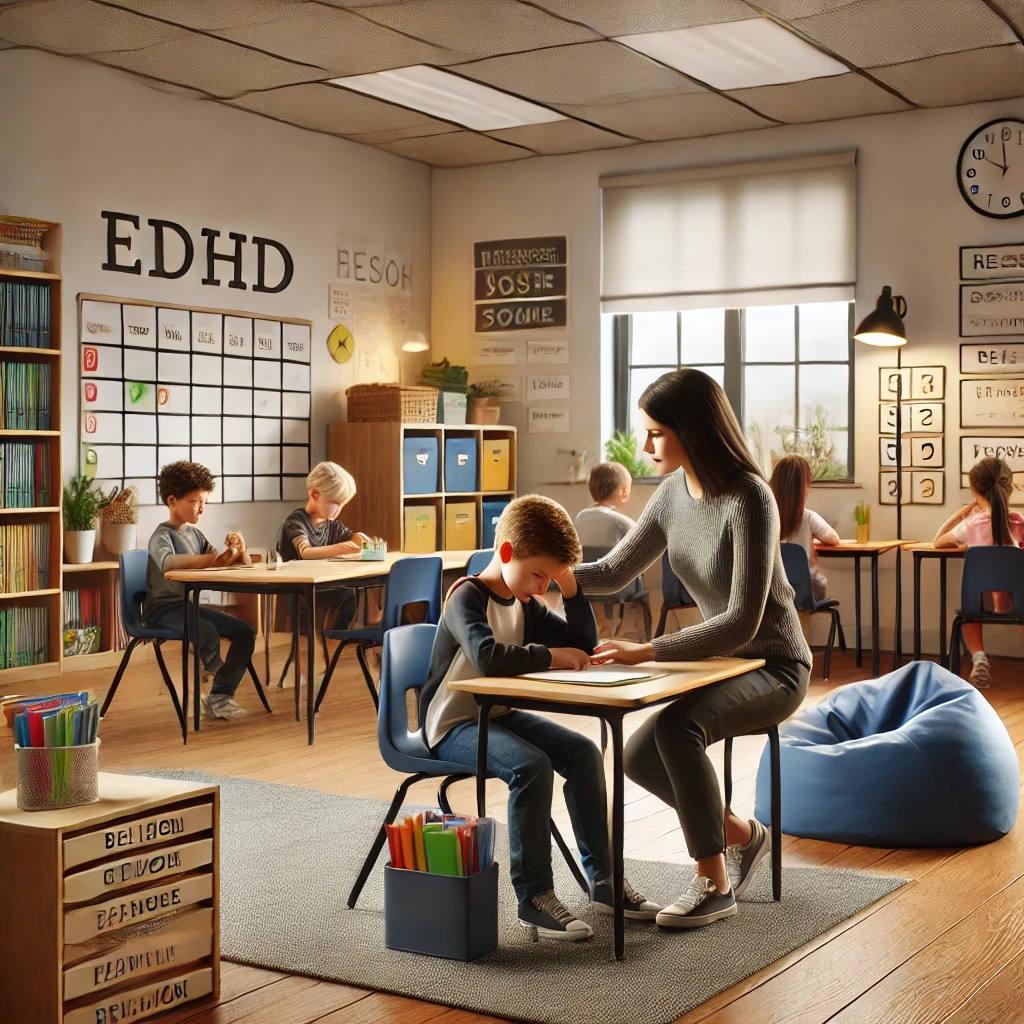
Supporting Children with ADHD in Schools: Strategies for Educational Success

Attention-Deficit/Hyperactivity Disorder (ADHD) affects many children and can present challenges in educational settings, including difficulties with focus, organization, and emotional regulation. However, with proper support, schools can play a crucial role in helping children with ADHD thrive academically and socially. This article outlines evidence-based strategies that educators and administrators can implement to support children with ADHD in achieving educational success.

1. Provide Structured and Predictable Routines

Children with ADHD benefit from consistent routines that reduce uncertainty and help them focus.

• Why it works: Predictable schedules minimize distractions and promote self-regulation (Barkley, 2021).

• Implementation: Schools can use visual schedules, consistent class routines, and clear transitions between activities. Providing a daily agenda at the beginning of the day can help students anticipate tasks and prepare mentally.

2. Use Individualized Education Plans (IEPs) and 504 Plans

For students with ADHD, accommodations through IEPs or 504 Plans can address their unique needs.

• Why it works: These plans allow for tailored interventions, helping students access the curriculum effectively (DuPaul & Stoner, 2014).

• Implementation: Accommodations may include extended test time, preferential seating, or modified assignments to reduce cognitive overload.

3. Incorporate Movement Breaks

Frequent physical activity helps children with ADHD regulate their energy and improve focus.

• Why it works: Research shows that movement increases dopamine levels, enhancing attention and motivation (Halperin et al., 2020).

• Implementation: Integrate short movement breaks, such as stretching, walking, or classroom yoga, between lessons. Schools can also provide fidget tools or standing desks for students who struggle with sitting still.

4. Offer Clear and Concise Instructions

Children with ADHD often struggle with processing lengthy or complex directions.

• Why it works: Simplifying instructions reduces cognitive strain and helps students stay focused (Zentall, 2015).

• Implementation: Use step-by-step directions, written instructions, and visual aids. Check for understanding by having students repeat instructions back to the teacher.

5. Provide Positive Reinforcement

Reinforcing positive behavior can motivate students with ADHD to stay on task and meet expectations.

• Why it works: Positive reinforcement fosters a growth mindset and builds self-esteem (Millichap, 2021).

• Implementation: Use praise, reward systems, or token economies to celebrate small successes. Focus on effort and improvement rather than solely on outcomes.

6. Create an ADHD-Friendly Classroom Environment

A well-structured and minimally distracting classroom can help students stay focused.

• Why it works: Environmental adjustments reduce sensory overload and support sustained attention (Pfeiffer, 2022).

• Implementation: Use organizational tools like color-coded folders, labeled bins, and clutter-free desks. Position students away from high-traffic areas and provide quiet zones for focused work.

7. Teach Executive Function Skills

Children with ADHD often need support developing skills such as time management and organization.

• Why it works: Strengthening executive function helps students manage their workload and responsibilities (Zelazo & Lyons, 2012).

• Implementation: Introduce tools like planners, checklists, and digital calendars. Teach students to break down assignments into smaller steps and set achievable goals.

8. Foster Open Communication with Families

Collaboration with parents ensures consistency in strategies used at home and school.

• Why it works: A team-based approach improves problem-solving and creates a unified support system (DuPaul et al., 2011).

• Implementation: Schedule regular parent-teacher conferences, send home progress reports, and maintain open lines of communication via email or apps.

9. Provide Social-Emotional Support

Children with ADHD often face challenges with peer relationships and emotional regulation.

• Why it works: Social-emotional learning (SEL) programs improve self-awareness, empathy, and interpersonal skills (Elias et al., 2015).

• Implementation: Incorporate SEL lessons into the curriculum and provide access to school counselors for emotional support. Use role-playing activities to teach conflict resolution and social skills.

10. Leverage Technology

Technology can help students with ADHD stay organized and engaged in their learning.

• Why it works: Digital tools cater to diverse learning styles and help students track tasks and deadlines (Radesky et al., 2020).

• Implementation: Use apps like ClassDojo for behavior tracking, Google Calendar for scheduling, or gamified learning platforms to maintain engagement.

Schools have a vital role in supporting children with ADHD by creating inclusive environments, providing individualized accommodations, and teaching skills that foster independence. Through structured routines, positive reinforcement, and open communication with families, schools can empower children with ADHD to succeed academically and socially.

This article was written by John S. Collier, MSW, LCSW. Mr. Collier has over 25 years experience in the social work field. He currently serves as the executive Director and outpatient behavioral health therapist through Southeast Kentucky Behavioral health based out of London Kentucky. John may be reached by phone at 606-657-0532 extension 101 or by email at john@sekybh.com.

References

• Barkley, R. A. (2021). Taking Charge of ADHD: The Complete, Authoritative Guide for Parents. Guilford Press.

• DuPaul, G. J., & Stoner, G. (2014). ADHD in the Schools: Assessment and Intervention Strategies. Guilford Publications.

• DuPaul, G. J., et al. (2011). Home-school collaboration in ADHD management. School Psychology Review, 40(4), 494-512.

• Elias, M. J., et al. (2015). Promoting Social and Emotional Learning: Guidelines for Educators. ASCD.

• Halperin, J. M., et al. (2020). Physical activity intervention improves sustained attention and executive functioning in children with ADHD. Journal of Attention Disorders, 24(10), 1408-1415.

• Millichap, J. G. (2021). Attention Deficit Hyperactivity Disorder Handbook: A Physician’s Guide to ADHD. Springer.

• Pfeiffer, S. (2022). Routines for children with ADHD: Why they matter and how to build them. Psychology Today.

• Radesky, J., et al. (2020). Digital technology and ADHD: Benefits and risks. Pediatrics, 145(S2), S157-S162.

• Zentall, S. S. (2015). Environmental support for children with ADHD. Behavioral Interventions, 30(3), 153-164.

• Zelazo, P. D., & Lyons, K. E. (2012). Mindfulness training in childhood. Developmental Psychology, 48(5), 1023-1031.