Welcome to SOUTHEAST KENTUCKY BEHAVIORAL HEALTH
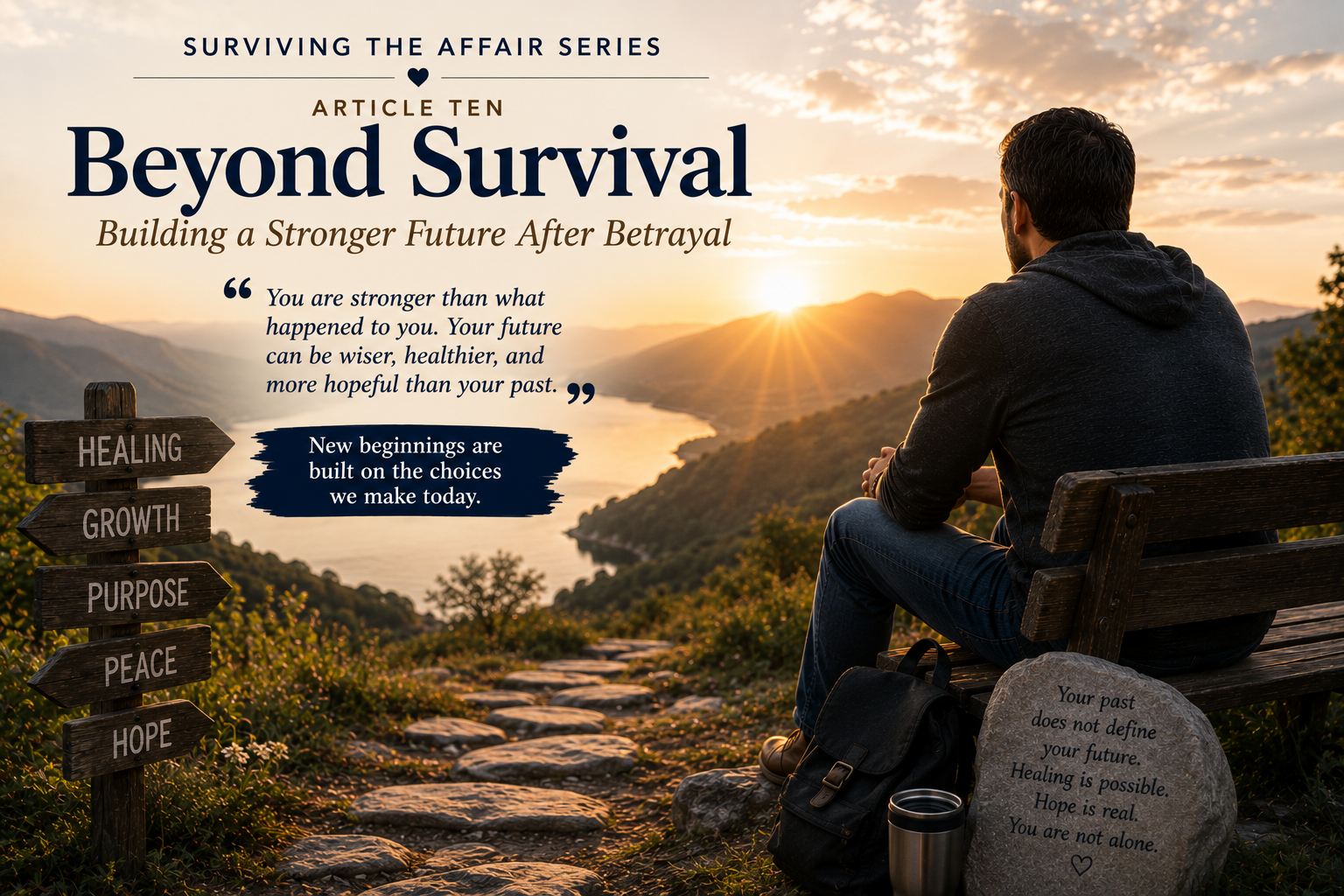
Surviving the Affair: Beyond Survival

Part Ten: Building a Stronger Future After Betrayal

At some point, nearly every person recovering from an affair asks the same question:

“Will I ever feel normal again?”

It is a deeply human question. After months—or sometimes years—of emotional turmoil, counseling appointments, difficult conversations, sleepless nights, and painful decisions, people naturally long for the day when life no longer revolves around the affair. They want peace. They want joy. They want to stop measuring every conversation against the past. They want to wake up without immediately remembering what happened.

The encouraging truth is this:

For many people, that day does come. Not because the affair is forgotten. Not because the pain never existed. But because healing gradually becomes stronger than the wound. Recovery is not simply about surviving betrayal. It is about becoming someone healthier, wiser, and emotionally stronger than you were before the crisis began. This final chapter is not about ending a painful story. It is about beginning a new one.


Healing Changes You

Many people begin counseling hoping to become the person they were before the affair. Ironically, the healthiest outcome is often something different. Healthy recovery does not recreate the past. It creates growth. People frequently discover strengths they never knew they possessed. They become better communicators. They establish healthier boundaries. They learn emotional regulation. They become more intentional in relationships. They deepen their spiritual lives.

While no one would choose the pain of betrayal, many eventually recognize that the healing process transformed them into someone more emotionally mature than they had ever been before. This is what psychologists often describe as post-traumatic growth—positive psychological change that emerges from successfully navigating profound adversity. Growth does not justify suffering. It demonstrates that suffering does not have the final word.


If You Rebuild the Marriage

Some marriages survive infidelity. A smaller number become healthier than they were before. Not because the affair improved the relationship. Rather, because the crisis forced both spouses to confront unhealthy patterns that had existed long before the affair occurred. Healthy reconciled marriages often develop:

  • Honest communication.
  • Emotional transparency.
  • Greater empathy.
  • Consistent accountability.
  • Shared spiritual growth.
  • Intentional quality time.
  • Renewed commitment to protecting the relationship.

Trust returns slowly. Sometimes over several years. Each truthful conversation becomes another brick in rebuilding the foundation. Eventually, trust becomes less about forgetting the past and more about confidence in today’s choices.


If the Marriage Ends

For others, healing continues outside the marriage. Divorce does not automatically mean failure. Sometimes it reflects the difficult reality that one or both partners were unwilling or unable to rebuild a healthy relationship. Life after divorce often begins with grief. Then comes adjustment. Eventually, many discover hope. New routines develop. Children adapt. Friendships deepen. Purpose returns. Life begins to feel possible again. Although the family structure has changed, healing remains available. Your future is not cancelled because your marriage ended.


Learning to Trust Again

One of the greatest fears after betrayal is trusting another person. Some decide they will never become vulnerable again. While understandable, emotional isolation often prolongs suffering. Healthy trust develops gradually. It begins with yourself. Can I recognize unhealthy patterns? Can I communicate honestly? Can I establish healthy boundaries? Can I respond to red flags instead of ignoring them? Confidence grows as these questions receive healthier answers. Eventually, trusting others becomes less frightening because you trust your own wisdom.


Your Identity Is More Than Your Pain

Perhaps the greatest danger after an affair is allowing the betrayal to become your identity. Some introduce themselves internally as:

  • “I am the one who was cheated on.”
  • “I am the one who destroyed my marriage.”
  • “I am the affair partner.”

Those descriptions may explain part of your story. They should never define your entire life. You are more than your worst decision. You are more than someone else’s worst decision. Healing allows identity to shift from victimhood toward purpose. From shame toward dignity. From regret toward wisdom. From survival toward flourishing.


Choosing Healthy Relationships Going Forward

Whether you remain married, remarry someday, or remain single, healthy relationships share common characteristics. They include:

  • Mutual respect.
  • Honest communication.
  • Emotional safety.
  • Shared responsibility.
  • Healthy conflict resolution.
  • Appropriate boundaries.
  • Genuine friendship.
  • Spiritual and emotional intimacy.

Healthy love is not built upon perfection. It is built upon consistency.


Your Story Can Help Someone Else

Many people initially want to hide every part of their experience. Over time, some discover that their greatest pain becomes one of their greatest opportunities to serve. Their story encourages another struggling couple. Their wisdom comforts someone newly betrayed. Their experience offers hope to someone who believes healing is impossible. Scars often become testimonies. Not because suffering was good. But because healing became visible.


Tools for Living Beyond Betrayal

As you continue moving forward, these practices support lasting emotional health:

  • Continue investing in personal growth long after the crisis has passed.
  • Prioritize honest communication in every important relationship.
  • Maintain healthy emotional and physical boundaries.
  • Practice forgiveness without abandoning wisdom.
  • Develop consistent spiritual disciplines through prayer and Scripture.
  • Stay connected to supportive family, friends, and community.
  • Celebrate progress rather than expecting perfection.
  • Seek counseling whenever new challenges arise.
  • Remember that healing is ongoing, not a destination.
  • Live intentionally rather than reactively.

A Christian Perspective

Scripture repeatedly reminds us that God specializes in restoration. Joel 2:25 contains one of the Bible’s most hopeful promises:

“I will restore to you the years that the locusts have eaten…” (ESV)

Restoration does not always mean restoring the same marriage. Sometimes it means restoring the same person. Sometimes it means restoring hope. Sometimes it means restoring purpose. Sometimes it means restoring faith. God’s greatest work often begins after our greatest heartbreak. No matter how your story concludes, His invitation remains the same:

Walk forward with Him.


A Therapist’s Reflection

If I could leave every reader with one final thought, it would be this:

Do not measure your life by the day the affair happened.

Measure it by the person you are becoming because you refused to stay there. Healing is rarely dramatic. It is usually quiet. It is choosing honesty one conversation at a time. Forgiveness one day at a time. Healthy boundaries one decision at a time. Faith one prayer at a time. Eventually, those small choices become a transformed life. The affair may always be one chapter of your story. It does not have to be the title. Your future is still unwritten. Your relationships can still be healthy. Your heart can still know peace. Your family can still experience joy. And your life can still reflect hope. You have survived. Now it is time to live.


About the Author

John S. Collier, MSW, LCSW-S is a licensed clinical social worker, psychotherapist, author, educator, and speaker with decades of experience helping individuals, couples, and families navigate life’s most difficult emotional challenges. Throughout his career, he has worked extensively with people struggling with relationship conflict, betrayal, anxiety, depression, trauma, grief, addiction, and life transitions. His counseling approach combines evidence-based psychological practices with practical wisdom, compassion, and a deep respect for each person’s unique journey.

John has devoted much of his professional life to understanding the complexities of human relationships. He has counseled couples working to rebuild trust after infidelity, individuals recovering from betrayal, and families seeking healing after painful life events. His clinical experience has reinforced one enduring truth: while relationships can be profoundly wounded, people possess an extraordinary capacity for growth, resilience, forgiveness, and transformation when they are equipped with the right tools and support.

As an author, John seeks to bridge the gap between professional mental health knowledge and everyday life. His writing translates complex psychological concepts into practical guidance that readers can understand and apply immediately. Whether addressing marriage, parenting, emotional wellness, trauma recovery, or spiritual growth, his goal is to provide resources that are both clinically sound and personally encouraging.

Surviving the Affair reflects John’s commitment to approaching infidelity with both honesty and compassion. Rather than reducing people to labels or stereotypes, he explores the emotional realities experienced by everyone affected—the betrayed spouse, the unfaithful partner, the affair partner, and the families whose lives are forever changed. Drawing upon years of therapeutic experience, he emphasizes accountability without condemnation, healing without minimizing pain, and hope without offering unrealistic promises.

John believes that healing begins when people are willing to face the truth with courage. While not every relationship can or should be restored, every individual has the capacity to grow beyond betrayal, rediscover integrity, and build a healthier future. His passion is helping readers move from surviving life’s greatest wounds to living with renewed purpose, emotional strength, and hope.

Through his books, speaking engagements, and counseling work, John continues to encourage others to pursue emotional health, healthy relationships, personal responsibility, and lasting transformation—one step at a time.ountability, and restoration. Through his clinical work and writing, he equips readers with practical tools to build emotionally healthy relationships, strengthen resilience, and discover hope after life’s most difficult experiences.

References

American Psychological Association. (2023). Clinical Practice Guideline for the Treatment of Posttraumatic Stress Disorder.

Calhoun, L. G., & Tedeschi, R. G. (2014). Handbook of Posttraumatic Growth: Research and Practice. Routledge.

Gottman, J. M., & Gottman, J. S. (2015). 10 Principles for Doing Effective Couples Therapy. W. W. Norton & Company.

Snyder, D. K., Baucom, D. H., & Gordon, K. C. (2007). Getting Past the Affair. Guilford Press.

Spring, J. A. (2012). After the Affair (2nd ed.). Harper.

Tedeschi, R. G., & Calhoun, L. G. (2004). “Posttraumatic Growth: Conceptual Foundations and Empirical Evidence.” Psychological Inquiry, 15(1), 1–18.

The Holy Bible, English Standard Version. Crossway.


Articles in this Series:

This series has been written for every person whose life has been altered by an affair. Each article focuses on one unique perspective because healing looks different depending upon where someone stands.

Surviving the Affair: Forgiveness, Reconciliation, and Letting Go

Part Nine: When Healing Doesn’t Always Mean Staying Together

Perhaps no word creates more confusion after an affair than the word forgiveness. Some people believe forgiveness means forgetting. Others believe it means trusting again. Some think it requires reconciliation. Others refuse to forgive because they believe doing so somehow excuses what happened.

In my years of counseling individuals and couples after infidelity, I have discovered that very few people actually struggle with the idea of forgiveness. They struggle with what they think forgiveness means. If we misunderstand forgiveness, we either demand it too quickly or avoid it altogether. Neither response promotes healing. Forgiveness is one of the most misunderstood concepts in psychology, relationships, and Christianity. Understanding it correctly often becomes one of the most important turning points in recovery.


Forgiveness Is Not Saying It Didn’t Matter

Some wounds permanently change a person’s life. An affair may result in divorce. Children may experience years of emotional pain. Friendships may end. Financial stability may disappear. Trust may never fully return. Acknowledging these realities does not mean forgiveness is impossible. It means forgiveness begins with honesty. Real forgiveness never minimizes the seriousness of betrayal. It fully recognizes the depth of the wound. Only then can healing begin.


Forgiveness Is Not Reconciliation

This distinction cannot be overstated. Forgiveness and reconciliation are related. They are not identical. Forgiveness is something one person can choose. Reconciliation requires two people. One person can forgive. Both people must rebuild trust. Reconciliation requires:

  • Genuine repentance.
  • Radical honesty.
  • Transparency.
  • Accountability.
  • Emotional safety.
  • Consistent trustworthy behavior.
  • Mutual willingness to rebuild the relationship.

Without these elements, reconciliation becomes unsafe. Forgiveness may still occur. Reconciliation may not.


Forgiveness Is Not Trust

One of the most painful mistakes couples make is expecting forgiveness to immediately restore trust. Trust is earned. Forgiveness is given. Trust grows through repeated demonstrations of honesty. Forgiveness grows through emotional healing. A spouse may forgive today. Trust may require months—or years—to return. That is normal. Healthy forgiveness never ignores wisdom.


Bitterness Is a Heavy Burden

Many people refuse forgiveness because they believe it protects them. “If I stay angry, I’ll never be hurt again.” Unfortunately, bitterness rarely protects. It imprisons. Bitterness quietly occupies emotional space that could otherwise be filled with peace. It influences future relationships. It affects physical health. It changes the way we see ourselves. It changes the way we see others. Eventually, bitterness begins hurting the person carrying it more than the person who caused it. Forgiveness is not setting someone else free. It is refusing to remain emotionally chained to what they did.


What If They Never Apologize?

One of the most difficult realities is that some people never receive the apology they deserve. The unfaithful spouse may deny responsibility. The affair partner may never acknowledge the harm. Some people simply disappear. Waiting for another person’s remorse before healing often leaves us emotionally dependent upon someone who has already demonstrated unreliability. Healing cannot depend upon another person’s choices. Your recovery belongs to you.


Forgiveness Is a Process, Not a Moment

Many people expect forgiveness to happen all at once. Instead, it often unfolds gradually. One day you notice the anger feels slightly less intense. Months later, the memories no longer dominate every conversation. Years later, you discover the affair has become part of your history rather than your identity. Forgiveness usually grows quietly. Like physical healing, it often happens so gradually that we fail to notice until we compare where we are today with where we once were.


When Reconciliation Isn’t Healthy

Not every marriage should continue. Repeated affairs. Abuse. Manipulation. Addiction without treatment. Chronic dishonesty. Refusal to accept responsibility. These situations may make reconciliation unsafe. Choosing divorce in such circumstances is not necessarily evidence of unforgiveness. Sometimes healthy boundaries require ending the relationship. God values truth and safety as much as He values reconciliation. Wisdom requires knowing the difference.


What Letting Go Really Means

Letting go does not mean pretending the affair never happened. It means releasing your need to control what cannot be changed. You cannot rewrite yesterday. You can choose how yesterday influences tomorrow. Letting go means:

  • Releasing revenge.
  • Releasing constant rumination.
  • Releasing the need to make the other person suffer.
  • Releasing unrealistic expectations.
  • Choosing emotional freedom instead of emotional captivity.

That process rarely happens overnight. It is practiced one decision at a time.


Tools for Moving Forward

Whether your marriage survives or ends, these practices encourage emotional healing:

  • Work with a therapist experienced in betrayal trauma.
  • Journal your thoughts and emotional progress.
  • Practice mindfulness when intrusive memories arise.
  • Establish healthy emotional and physical boundaries.
  • Learn the difference between forgiveness and trust.
  • Invest in supportive friendships.
  • Develop daily spiritual practices through prayer and Scripture.
  • Focus on becoming emotionally healthy rather than emotionally vindicated.
  • Celebrate progress rather than demanding perfection.
  • Give yourself permission to heal at your own pace.

A Christian Perspective

When Jesus taught about forgiveness, He never suggested that wrongdoing should be ignored. Rather, He demonstrated that forgiveness is an act of surrender to God rather than an approval of sin. Ephesians 4:31–32 encourages believers:

“Get rid of all bitterness, rage and anger… Be kind and compassionate to one another, forgiving each other, just as in Christ God forgave you.”

Biblical forgiveness is rooted in freedom. Freedom from bitterness. Freedom from revenge. Freedom to trust God’s justice rather than carrying the burden yourself. Forgiveness is not weakness. It is spiritual strength.


A Therapist’s Reflection

One question I frequently ask clients is this:

“If the affair could no longer control your emotional life, what kind of person would you become?”

At first, many struggle to answer. Their identity has become intertwined with the betrayal. Over time, however, something beautiful begins to happen. They stop defining themselves by what someone did to them. They begin defining themselves by who they are becoming. That is healing. Forgiveness does not erase scars. It changes what those scars represent. Instead of reminders of permanent defeat…They become evidence that you survived. Whether your marriage continues or ends… Whether the apology comes or never arrives…Whether trust is rebuilt or permanently broken…Your future is still yours to write.

Do not allow another person’s choices to become the author of the rest of your life. Healing is possible. Freedom is possible. And forgiveness—properly understood—may become one of the greatest gifts you ever give yourself.


About the Author

John S. Collier, MSW, LCSW-S is a licensed clinical social worker, psychotherapist, author, educator, and speaker with decades of experience helping individuals, couples, and families navigate life’s most difficult emotional challenges. Throughout his career, he has worked extensively with people struggling with relationship conflict, betrayal, anxiety, depression, trauma, grief, addiction, and life transitions. His counseling approach combines evidence-based psychological practices with practical wisdom, compassion, and a deep respect for each person’s unique journey.

John has devoted much of his professional life to understanding the complexities of human relationships. He has counseled couples working to rebuild trust after infidelity, individuals recovering from betrayal, and families seeking healing after painful life events. His clinical experience has reinforced one enduring truth: while relationships can be profoundly wounded, people possess an extraordinary capacity for growth, resilience, forgiveness, and transformation when they are equipped with the right tools and support.

As an author, John seeks to bridge the gap between professional mental health knowledge and everyday life. His writing translates complex psychological concepts into practical guidance that readers can understand and apply immediately. Whether addressing marriage, parenting, emotional wellness, trauma recovery, or spiritual growth, his goal is to provide resources that are both clinically sound and personally encouraging.

Surviving the Affair reflects John’s commitment to approaching infidelity with both honesty and compassion. Rather than reducing people to labels or stereotypes, he explores the emotional realities experienced by everyone affected—the betrayed spouse, the unfaithful partner, the affair partner, and the families whose lives are forever changed. Drawing upon years of therapeutic experience, he emphasizes accountability without condemnation, healing without minimizing pain, and hope without offering unrealistic promises.

John believes that healing begins when people are willing to face the truth with courage. While not every relationship can or should be restored, every individual has the capacity to grow beyond betrayal, rediscover integrity, and build a healthier future. His passion is helping readers move from surviving life’s greatest wounds to living with renewed purpose, emotional strength, and hope.

Through his books, speaking engagements, and counseling work, John continues to encourage others to pursue emotional health, healthy relationships, personal responsibility, and lasting transformation—one step at a time.onal pain toward lives marked by integrity, resilience, and hope. Through his writing and counseling, he encourages readers to embrace accountability while believing that lasting personal transformation is always possible. with practical tools for healing, resilience, and lasting personal growth.

References

American Psychiatric Association. (2022). Diagnostic and Statistical Manual of Mental Disorders (5th ed., text rev.). American Psychiatric Association Publishing.

Baucom, D. H., Snyder, D. K., & Gordon, K. C. (2009). Helping Couples Get Past the Affair: A Clinician’s Guide. Guilford Press.

Enright, R. D. (2001). Forgiveness Is a Choice: A Step-by-Step Process for Resolving Anger and Restoring Hope. American Psychological Association.

Glass, S. P. (2003). Not “Just Friends”: Rebuilding Trust and Recovering Your Sanity After Infidelity. Free Press.

Spring, J. A. (2012). After the Affair: Healing the Pain and Rebuilding Trust When a Partner Has Been Unfaithful (2nd ed.). Harper.

Worthington, E. L. (2006). Forgiveness and Reconciliation: Theory and Application. Routledge.

Worthington, E. L. (2013). Moving Forward: Six Steps to Forgiving Yourself and Breaking Free from the Past. WaterBrook.

The Holy Bible, New International Version. (2011). Zondervan.


Articles in this Series:

This series has been written for every person whose life has been altered by an affair. Each article focuses on one unique perspective because healing looks different depending upon where someone stands.

Surviving the Affair: Choosing Hope After Betrayal

Part Three: Choosing Hope After Betrayal

The Betrayed Spouse Who Wants to Save the Marriage

For many people, the greatest surprise after discovering an affair is not the depth of their anger—it is the realization that, despite everything that has happened, they still love their spouse. That realization often brings confusion. Friends may tell you to leave. Family members may never trust your spouse again. Your own emotions may change from hour to hour. Yet somewhere beneath the heartbreak remains a quiet thought:

“I still want to save my marriage.”

Wanting to reconcile does not mean you are weak. It does not mean you approve of what happened. It does not mean you lack self-respect. It simply means you believe that one terrible chapter does not always have to become the final chapter. Choosing reconciliation is one of the most courageous decisions a betrayed spouse can make—but it is also one of the hardest. Rebuilding trust after betrayal requires honesty, patience, humility, accountability, and an unwavering commitment from both spouses. One person cannot repair a marriage alone.


Reconciliation Is Not Returning to the Old Marriage

Many couples believe their goal is to “get back to the way things were.” Ironically, that should never be the goal. The marriage that existed before the affair contained vulnerabilities, unhealthy patterns, unmet needs, or broken boundaries that allowed betrayal to become possible. While those factors never excuse infidelity, they do reveal that simply returning to the past would leave the relationship vulnerable again. Healthy reconciliation means building an entirely new marriage—one characterized by greater honesty, emotional safety, communication, transparency, and mutual respect.


Trust Is Rebuilt in Inches, Not Miles

Trust does not return because someone apologizes. Trust grows when words and actions become consistently aligned over time. Every kept promise becomes another brick in rebuilding the foundation. Every truthful conversation repairs another crack. Every act of transparency communicates safety. Eventually the betrayed spouse begins noticing something remarkable. They are no longer checking because they are afraid. They are beginning to believe again.


What Genuine Remorse Looks Like

There is a significant difference between regret and remorse.

Regret says: “I’m sorry I got caught.”

Remorse says: “I’m devastated by what my choices have done to you.”

A spouse who truly desires reconciliation accepts responsibility without defensiveness. They answer difficult questions honestly. They understand that healing occurs on the betrayed spouse’s timetable rather than their own. Real remorse remains patient even when forgiveness has not yet arrived.


Four Foundations for Rebuilding a Marriage

Healthy reconciliation is built upon four essential foundations:

  • Radical honesty. Secrets must end completely.
  • Complete transparency. Phones, schedules, finances, and communication become open rather than hidden.
  • Emotional accountability. Both spouses learn healthier ways of expressing hurt, fear, disappointment, and needs.
  • Mutual commitment. Both partners actively participate in rebuilding the relationship.

Without these foundations, reconciliation becomes little more than wishful thinking.


Healing Is Not Linear

Many couples become discouraged because healing does not happen in a straight line. There will be good weeks. Then difficult days. There will be moments of laughter followed by unexpected tears. Triggers may appear months after the affair. This does not mean reconciliation has failed. Healing is often like recovering from a serious physical injury. Some days the wound barely hurts. Other days it aches unexpectedly. Progress should be measured over months, not moments.


Healthy Boundaries Protect Love

Many people mistakenly believe boundaries push people apart. Healthy boundaries actually protect intimacy. Examples include:

  • Complete no-contact with the affair partner.
  • Open access to electronic devices when rebuilding trust.
  • Honest discussions about emotional needs.
  • Clear expectations regarding friendships with others.
  • Immediate disclosure of situations that could threaten trust.

Boundaries are not punishments. They are safeguards.


When Hope Feels Fragile

There will be days when you question whether reconciliation is worth the effort. During those moments, remember that hope is rarely a feeling. Hope is often a decision. It is choosing to continue today’s work without demanding tomorrow’s certainty. Hope says:

“I cannot change yesterday, but I can influence what happens next.”


Tools for Healing

  • Participate in couples therapy with a clinician experienced in affair recovery.
  • Maintain individual counseling to process betrayal trauma.
  • Schedule weekly conversations focused on emotional connection rather than conflict.
  • Develop healthy communication skills using active listening and empathy.
  • Establish accountability practices that build trust.
  • Journal progress rather than focusing only on setbacks.
  • Pray together, even when conversations feel difficult.
  • Celebrate small victories as trust gradually returns.

A Christian Perspective

Scripture never minimizes the seriousness of betrayal. At the same time, it repeatedly demonstrates God’s ability to redeem broken lives and broken relationships.

Ephesians 4:32 reminds believers: “Be kind and compassionate to one another, forgiving each other, just as in Christ God forgave you.”

Forgiveness does not erase consequences. Grace does not eliminate accountability. Instead, both create the possibility for transformation. Marriage restoration is not guaranteed. But where humility, repentance, truth, and sacrificial love exist, remarkable healing can occur.


A Therapist’s Reflection

Some of the strongest marriages I have witnessed are not those that never experienced crisis. They are the marriages that refused to let crisis become the final word. These couples learned to communicate more honestly than ever before. They became emotionally safer than they had ever been. They developed deeper compassion because they had walked together through profound pain. Not every marriage survives an affair. Some should not. But when two emotionally healthy people become fully committed to truth, accountability, and growth, reconciliation becomes more than possible.

It becomes a testimony that broken things can sometimes become stronger where they were once fractured. The affair may always be remembered. It does not have to define the remainder of your marriage.


About the Author

John S. Collier, MSW, LCSW-S is a licensed clinical social worker, psychotherapist, author, educator, and speaker with decades of experience helping individuals, couples, and families navigate life’s most difficult emotional challenges. Throughout his career, he has worked extensively with people struggling with relationship conflict, betrayal, anxiety, depression, trauma, grief, addiction, and life transitions. His counseling approach combines evidence-based psychological practices with practical wisdom, compassion, and a deep respect for each person’s unique journey.

John has devoted much of his professional life to understanding the complexities of human relationships. He has counseled couples working to rebuild trust after infidelity, individuals recovering from betrayal, and families seeking healing after painful life events. His clinical experience has reinforced one enduring truth: while relationships can be profoundly wounded, people possess an extraordinary capacity for growth, resilience, forgiveness, and transformation when they are equipped with the right tools and support.

As an author, John seeks to bridge the gap between professional mental health knowledge and everyday life. His writing translates complex psychological concepts into practical guidance that readers can understand and apply immediately. Whether addressing marriage, parenting, emotional wellness, trauma recovery, or spiritual growth, his goal is to provide resources that are both clinically sound and personally encouraging.

Surviving the Affair reflects John’s commitment to approaching infidelity with both honesty and compassion. Rather than reducing people to labels or stereotypes, he explores the emotional realities experienced by everyone affected—the betrayed spouse, the unfaithful partner, the affair partner, and the families whose lives are forever changed. Drawing upon years of therapeutic experience, he emphasizes accountability without condemnation, healing without minimizing pain, and hope without offering unrealistic promises.

John believes that healing begins when people are willing to face the truth with courage. While not every relationship can or should be restored, every individual has the capacity to grow beyond betrayal, rediscover integrity, and build a healthier future. His passion is helping readers move from surviving life’s greatest wounds to living with renewed purpose, emotional strength, and hope.

Through his books, speaking engagements, and counseling work, John continues to encourage others to pursue emotional health, healthy relationships, personal responsibility, and lasting transformation—one step at a time.


References

Baucom, D. H., Snyder, D. K., & Gordon, K. C. (2009). Helping Couples Get Past the Affair: A Clinician’s Guide. Guilford Press.

Glass, S. P. (2003). Not “Just Friends”: Rebuilding Trust and Recovering Your Sanity After Infidelity. Free Press.

Gordon, K. C., Baucom, D. H., & Snyder, D. K. (2004). An integrative intervention for promoting recovery from extramarital affairs. Journal of Marital and Family Therapy, 30(2), 213–231.

Gottman, J. M., & Gottman, J. S. (2015). 10 Principles for Doing Effective Couples Therapy. W. W. Norton.

Johnson, S. M. (2019). Attachment Theory in Practice. Guilford Press.

Snyder, D. K., Baucom, D. H., & Gordon, K. C. (2007). Getting Past the Affair. Guilford Press.

Spring, J. A. (2012). After the Affair (2nd ed.). Harper.

The Holy Bible, New International Version. (2011). Zondervan.


Turbulent ocean waves crashing under dark storm clouds with sunset light
Surviving the Affair

Part Two: When Forgiveness Feels Impossible

The Betrayed Spouse Who Cannot Forgive

There are few moments in life that permanently divide time into “before” and “after.” The discovery of an affair is one of them.

Many betrayed spouses remember the exact moment they found out. It becomes etched into memory with remarkable clarity. They remember where they were standing, the expression on their spouse’s face, the phone call, the text message, the photograph, the receipt, or the confession that forever changed their world. The details become frozen in time because betrayal is not simply painful—it is traumatic.

For many people, the greatest struggle after an affair is not deciding whether to stay or leave. It is the overwhelming realization that they cannot forgive. They may desperately want to forgive. Their faith may tell them they should forgive. Friends may encourage forgiveness. Their spouse may plead for forgiveness.

Yet every time they attempt it, the memories return. The images replay. The questions begin again. The anger resurfaces. Forgiveness seems to disappear as quickly as it came. If this describes your experience, you are not abnormal. You are traumatized. Understanding the difference is the first step toward healing.


Betrayal Is More Than Heartbreak

When someone you trust violates the foundation of your relationship, the injury reaches far beyond hurt feelings. An affair attacks several of our deepest psychological needs simultaneously:

  • Safety
  • Trust
  • Identity
  • Security
  • Self-worth
  • Emotional attachment
  • Future expectations

The person who once represented comfort suddenly becomes the source of fear. The person who promised protection becomes the one who caused the injury. This contradiction places the brain into survival mode.

Researchers have increasingly recognized betrayal trauma as a unique form of psychological injury because the source of comfort becomes the source of danger. This creates confusion that often resembles post-traumatic stress disorder (PTSD).


The What-If Loop

One of the most exhausting symptoms of betrayal is what therapists often call the “What-If Loop.” The mind searches endlessly for answers.

What if I had noticed sooner?
What if I had been more affectionate?
What if I had worked less?
What if I had looked different?
What if they loved the other person more?

The questions become relentless. Unfortunately, the human brain mistakenly believes that if it can answer every question, it will somehow eliminate the pain. It rarely does. Instead, each answer usually creates three new questions. Healing begins when we recognize that certainty is not always available. Sometimes recovery requires learning to live without complete explanations. (For more on the What If Loop, Click Here)


The Mind Replays What the Eyes Never Saw

Many betrayed spouses become haunted by mental movies. They imagine conversations. Hotel rooms. Vacations. Private messages. Laughter. Physical intimacy. These images may never have actually been witnessed, yet they feel vividly real. This is how trauma attempts to fill in missing information. The brain dislikes incomplete stories. It creates them. Unfortunately, the stories are usually worse than reality. This explains why intrusive thoughts continue months or even years after disclosure. They are symptoms of trauma—not weakness.


Anger Is Often Love’s Last Defense

People frequently apologize for being angry.

“I know I shouldn’t still be this angry.”
“I’ve prayed about it.”
“I’ve tried to let it go.”
“I don’t want to feel this way anymore.”

Anger often protects something much more vulnerable. Beneath the anger is grief. Beneath the grief is love. Beneath the love is loss. When we understand anger as protection instead of failure, we stop fighting our emotions and begin listening to them. Anger asks important questions:

“Am I safe?”
“Can I trust again?”
“Will this happen again?”

These questions deserve honest answers.


Why Forgiveness Cannot Be Forced

Forgiveness is one of the most misunderstood concepts in both psychology and Christianity. Forgiveness is not pretending it didn’t happen. It is not forgetting. It is not excusing betrayal. It is not immediately trusting again. It is not removing consequences. Forgiveness is gradually releasing the desire to remain emotionally imprisoned by another person’s actions. That process often takes considerable time. When people pressure themselves into premature forgiveness, they frequently experience what psychologists call pseudo-forgiveness. Outwardly they say, “I forgive you.” Internally, nothing has healed. The resentment simply becomes hidden. Authentic forgiveness grows naturally from healing. It rarely precedes it.


The Difference Between Forgiveness and Reconciliation

Many betrayed spouses fear that forgiving means they must remain in the marriage. It does not. Forgiveness concerns your heart. Reconciliation concerns the relationship. The two are related but not identical. Reconciliation requires:

  • Genuine remorse
  • Complete honesty
  • Transparency
  • Consistent trustworthy behavior
  • Patience
  • Accountability
  • Mutual commitment

One person can forgive. Two people must reconcile.


Common Triggers

Recovery rarely follows a straight line. Many seemingly ordinary experiences suddenly reopen emotional wounds. Common triggers include:

  • Anniversary dates
  • Holidays
  • Love songs
  • Hotel advertisements
  • Social media
  • Text notification sounds
  • Unexpected schedule changes
  • Certain perfumes or colognes
  • Particular restaurants
  • Movies involving infidelity

Triggers do not mean healing has failed. They simply remind us that the nervous system remembers what the mind wishes it could forget.


Tools for Healing

Healing requires more than waiting for time to pass. Intentional practices help the brain regain emotional stability. Consider these strategies:

  • Work with a therapist trained in betrayal trauma or couples counseling.
  • Practice grounding exercises when intrusive thoughts become overwhelming.
  • Develop healthy sleep, nutrition, and exercise routines.
  • Limit repetitive questioning that no longer produces useful information.
  • Build a support system of emotionally healthy people.
  • Journal difficult emotions rather than suppressing them.
  • Establish boundaries that increase emotional safety.
  • Pray honestly rather than pretending to be spiritually stronger than you feel.

Healing rarely happens accidentally. It happens intentionally.


A Christian Perspective on Forgiveness

Jesus calls believers to forgive. He also never minimizes sin. Throughout Scripture we see both mercy and justice. Repentance and restoration. Truth and grace. Forgiveness does not require pretending evil never occurred. Rather, forgiveness entrusts justice to God while refusing to allow bitterness to define one’s future.

Romans 12:19 reminds believers: “Do not take revenge, my dear friends, but leave room for God’s wrath…”

Forgiveness becomes possible not because betrayal was small. It becomes possible because Christ has shown us that even great wounds can be redeemed. That redemption, however, is often a journey—not a single moment.


A Therapist’s Reflection

One of the most common statements I hear in my office is this:

“I don’t know if I’ll ever forgive them.”

My response often surprises people. I tell them not to make forgiveness today’s assignment. Today’s assignment is breathing. Sleeping. Eating. Staying emotionally safe. Understanding what happened. Learning that trauma changes the brain. Finding healthy support. Forgiveness may come months later. Sometimes years later.

Sometimes forgiveness arrives quietly—not because the memories disappeared, but because the memories no longer control your life. Healing is rarely about forgetting. It is about remembering differently. The affair may always remain part of your story. It does not have to remain the author of your future.


About the Author

John S. Collier, MSW, LCSW-S is a licensed clinical social worker, psychotherapist, author, educator, and speaker with decades of experience helping individuals, couples, and families navigate life’s most difficult emotional challenges. Throughout his career, he has worked extensively with people struggling with relationship conflict, betrayal, anxiety, depression, trauma, grief, addiction, and life transitions. His counseling approach combines evidence-based psychological practices with practical wisdom, compassion, and a deep respect for each person’s unique journey.

John has devoted much of his professional life to understanding the complexities of human relationships. He has counseled couples working to rebuild trust after infidelity, individuals recovering from betrayal, and families seeking healing after painful life events. His clinical experience has reinforced one enduring truth: while relationships can be profoundly wounded, people possess an extraordinary capacity for growth, resilience, forgiveness, and transformation when they are equipped with the right tools and support.

As an author, John seeks to bridge the gap between professional mental health knowledge and everyday life. His writing translates complex psychological concepts into practical guidance that readers can understand and apply immediately. Whether addressing marriage, parenting, emotional wellness, trauma recovery, or spiritual growth, his goal is to provide resources that are both clinically sound and personally encouraging.

Surviving the Affair reflects John’s commitment to approaching infidelity with both honesty and compassion. Rather than reducing people to labels or stereotypes, he explores the emotional realities experienced by everyone affected—the betrayed spouse, the unfaithful partner, the affair partner, and the families whose lives are forever changed. Drawing upon years of therapeutic experience, he emphasizes accountability without condemnation, healing without minimizing pain, and hope without offering unrealistic promises.

John believes that healing begins when people are willing to face the truth with courage. While not every relationship can or should be restored, every individual has the capacity to grow beyond betrayal, rediscover integrity, and build a healthier future. His passion is helping readers move from surviving life’s greatest wounds to living with renewed purpose, emotional strength, and hope.

Through his books, speaking engagements, and counseling work, John continues to encourage others to pursue emotional health, healthy relationships, personal responsibility, and lasting transformation—one step at a time.healing and growth. His writing combines psychological research, clinical experience, and Christian principles to provide readers with hope, insight, and realistic pathways toward emotional recovery and healthier relationships.

References

American Psychiatric Association. (2022). Diagnostic and Statistical Manual of Mental Disorders (5th ed., text rev.). American Psychiatric Association Publishing.

Baucom, D. H., Snyder, D. K., & Gordon, K. C. (2009). Helping Couples Get Past the Affair: A Clinician’s Guide. Guilford Press.

Glass, S. P. (2003). Not “Just Friends”: Rebuilding Trust and Recovering Your Sanity After Infidelity. Free Press.

Gordon, K. C., Baucom, D. H., & Snyder, D. K. (2004). An integrative intervention for promoting recovery from extramarital affairs. Journal of Marital and Family Therapy, 30(2), 213–231.

Johnson, S. M. (2019). Attachment Theory in Practice. Guilford Press.

Snyder, D. K., Baucom, D. H., & Gordon, K. C. (2007). Getting Past the Affair. Guilford Press.

Spring, J. A. (2012). After the Affair (2nd ed.). Harper.

The Holy Bible, New International Version. (2011). Zondervan.

Part One

The Wounds No One Sees
An overview of betrayal, trauma, grief, and the emotional complexity of affairs.

Part Two (This Article)

The Betrayed Spouse Who Cannot Forgive
Understanding intrusive memories, resentment, trauma, and why forgiveness cannot be forced.

Part Three

The Betrayed Spouse Who Wants to Save the Marriage
Learning how trust is rebuilt, boundaries are established, and reconciliation becomes possible.

Part Four

The Betrayer Who Does Not Want to Stay
Navigating honesty, responsibility, guilt, and ending a marriage with integrity rather than continued deception.

Part Five

The Betrayer Who Wants to Reconcile
Understanding genuine remorse, rebuilding trust, transparency, and becoming trustworthy again.

Part Six

The Affair Partner Who Doesn’t Want the Relationship to End
Exploring attachment, hope, grief, and accepting that loving someone does not always justify continuing the relationship.

Part Seven

The Affair Partner Who Ends the Relationship Because It Is Morally Wrong
Examining grief, guilt, loneliness, moral conflict, and healing after choosing integrity over desire.

Part Eight

When Children, Families, and Friends Are Caught in the Middle
Understanding the wider ripple effects of infidelity and protecting those who never chose to be part of the story.

Part Nine

When Forgiveness Comes…and When It Doesn’t
Separating forgiveness from reconciliation and understanding what emotional freedom truly means.

Part Ten

Life After the Affair
Whether the marriage survives or ends, discovering how people rebuild identity, hope, purpose, and healthy relationships again.