Surviving the Affair: Choosing Integrity Over Desire
Part Seven: The Affair Partner Who Ends the Relationship but Struggles with the Loss
Sometimes the strongest act of love is walking away.
That statement may seem impossible to believe when your heart is breaking, yet it has proven true for countless people who have found themselves involved in an affair. There comes a moment when some affair partners reach a painful realization. They recognize that regardless of how deeply they care for the other person, the relationship has become inconsistent with the kind of life they want to live.
They may have prayed. They may have wrestled with guilt. They may have tried repeatedly to convince themselves that love justified continuing the relationship. Eventually, however, another voice became louder. The voice of conscience. Walking away rarely feels victorious.
It feels like grief. It feels like losing someone you genuinely loved while simultaneously believing that ending the relationship was the right thing to do. That emotional conflict creates one of the most complicated forms of grief a person can experience. You are mourning someone who is still alive. You are grieving a relationship that ended because you chose integrity over desire. Those two realities can coexist.
When Your Values Finally Catch Up
Many people involved in affairs describe living with constant internal conflict. They enjoyed the conversations. They cherished the emotional connection. They imagined a future together. Yet underneath every happy moment lived another emotion. Uneasiness. They knew they were participating in something that conflicted with their deepest values.
Psychologists often refer to this experience as cognitive dissonance—the emotional discomfort that develops when behavior and personal values no longer agree.
Over time, that discomfort becomes exhausting. Eventually something must change. Either values are abandoned. Or behavior changes. Healthy healing begins when our actions once again align with our convictions.
Why Doing the Right Thing Can Feel So Wrong
Many people assume that making the morally right decision should immediately produce peace. Real life is rarely that simple. Choosing integrity often hurts before it heals. You may wake each morning wondering how they are doing. You may instinctively reach for your phone before remembering there will be no message. Certain songs, places, holidays, and routines suddenly become painful reminders. Your heart may continue longing for someone your conscience knows you cannot pursue.
This does not mean your decision was wrong. It means you are grieving. Grief is not evidence that you chose incorrectly. It is evidence that something meaningful ended.
Missing Someone Does Not Mean You Should Return
One of the greatest temptations after ending an affair is confusing longing with direction. You miss them. You think about them. You dream about them. You wonder if they miss you. These emotions are normal.
They are not instructions. Emotions provide information. They should not always determine our decisions. Every healthy relationship requires more than intense feelings. It requires honesty, freedom, trust, and mutual integrity. When those qualities are absent, returning often recreates the very pain you worked so hard to escape.
Learning to Forgive Yourself
Many affair partners carry enormous guilt. Some believe they permanently damaged another family. Others feel ashamed for compromising their own standards. Still others struggle because they believe they should have ended the relationship much sooner. Healthy guilt can motivate growth. Unhealthy shame keeps people trapped in the past. Self-forgiveness is not pretending your choices had no consequences. It is accepting responsibility while believing that one chapter of your life does not have to define the entire story. Growth begins when accountability is joined with grace.
Rediscovering the Person You Were Becoming
Affairs often consume emotional energy. Life gradually begins revolving around secret conversations, uncertain plans, emotional highs, and heartbreaking disappointments. When the relationship ends, many people discover they no longer recognize themselves. Healing includes rediscovering interests, friendships, dreams, and personal goals that existed before the affair. Ask yourself:
- Who do I want to become five years from now?
- What kind of relationships reflect my deepest values?
- What qualities do I want people to remember about my life?
Your future deserves more attention than your past.
Grief Can Become Growth
Loss changes people. The question is whether it changes them toward wisdom or toward bitterness. Every painful experience offers an invitation. Some people become harder. Others become healthier. Use this season to develop:
- Emotional maturity.
- Healthy relationship boundaries.
- Spiritual depth.
- Honest communication.
- Self-respect.
- Patience.
- Integrity.
The relationship may have ended. Your personal growth does not have to.
Tools for Healing
If you have ended the affair but continue struggling emotionally, consider these practices:
- Maintain complete no-contact with your former partner.
- Work with a therapist experienced in relationship and attachment issues.
- Journal both your grief and your personal growth.
- Resist romanticizing the relationship by remembering both its joys and its costs.
- Rebuild healthy friendships and community.
- Develop meaningful daily routines.
- Invest in your spiritual life through prayer, worship, and Scripture.
- Practice self-compassion while remaining accountable for your choices.
- Set clear standards for future relationships.
- Allow yourself time to heal before pursuing another romantic relationship.
A Christian Perspective
One of the most beautiful themes throughout Scripture is restoration. God repeatedly meets people at the intersection of failure and repentance. Not to condemn them forever. But to invite them into something better. First John 1:9 reminds us:
“If we confess our sins, he is faithful and just and will forgive us our sins and purify us from all unrighteousness.”
Confession is not merely admitting wrongdoing. It is choosing a new direction. Sometimes the greatest act of faith is believing that God’s future is greater than your past. Walking away from an unhealthy relationship may feel like losing everything. In reality, it may become the first step toward becoming the person God created you to be.
A Therapist’s Reflection
One of the most moving conversations I have with former affair partners usually begins with tears. They quietly say,
“I knew ending it was the right thing…but I still miss them every day.”
I often respond with a simple observation. Doing the right thing does not always feel good immediately. Integrity frequently hurts before it heals. The pain you feel today is not necessarily punishment. Sometimes it is evidence that your conscience is becoming stronger than your impulses. Do not mistake temporary loneliness for permanent loss. You have not simply ended a relationship. You have begun building a life that no longer requires secrecy, divided loyalties, or compromise. One day you may look back on this season not as the time you lost someone…But as the moment you found yourself.
That is a different kind of love. One worth choosing.
About the Author

John S. Collier, MSW, LCSW-S is a licensed clinical social worker, psychotherapist, author, educator, and speaker with decades of experience helping individuals, couples, and families navigate life’s most difficult emotional challenges. Throughout his career, he has worked extensively with people struggling with relationship conflict, betrayal, anxiety, depression, trauma, grief, addiction, and life transitions. His counseling approach combines evidence-based psychological practices with practical wisdom, compassion, and a deep respect for each person’s unique journey.
John has devoted much of his professional life to understanding the complexities of human relationships. He has counseled couples working to rebuild trust after infidelity, individuals recovering from betrayal, and families seeking healing after painful life events. His clinical experience has reinforced one enduring truth: while relationships can be profoundly wounded, people possess an extraordinary capacity for growth, resilience, forgiveness, and transformation when they are equipped with the right tools and support.
As an author, John seeks to bridge the gap between professional mental health knowledge and everyday life. His writing translates complex psychological concepts into practical guidance that readers can understand and apply immediately. Whether addressing marriage, parenting, emotional wellness, trauma recovery, or spiritual growth, his goal is to provide resources that are both clinically sound and personally encouraging.
Surviving the Affair reflects John’s commitment to approaching infidelity with both honesty and compassion. Rather than reducing people to labels or stereotypes, he explores the emotional realities experienced by everyone affected—the betrayed spouse, the unfaithful partner, the affair partner, and the families whose lives are forever changed. Drawing upon years of therapeutic experience, he emphasizes accountability without condemnation, healing without minimizing pain, and hope without offering unrealistic promises.
John believes that healing begins when people are willing to face the truth with courage. While not every relationship can or should be restored, every individual has the capacity to grow beyond betrayal, rediscover integrity, and build a healthier future. His passion is helping readers move from surviving life’s greatest wounds to living with renewed purpose, emotional strength, and hope.
Through his books, speaking engagements, and counseling work, John continues to encourage others to pursue emotional health, healthy relationships, personal responsibility, and lasting transformation—one step at a time.onal pain toward lives marked by integrity, resilience, and hope. Through his writing and counseling, he encourages readers to embrace accountability while believing that lasting personal transformation is always possible.
References
American Association for Marriage and Family Therapy. (2015). Infidelity. https://www.aamft.org
Brown, B. (2012). Daring Greatly. Gotham Books.
Frankl, V. E. (2006). Man’s Search for Meaning. Beacon Press. (Original work published 1946)
Glass, S. P. (2003). Not “Just Friends”: Rebuilding Trust and Recovering Your Sanity After Infidelity. Free Press.
Johnson, S. M. (2019). Attachment Theory in Practice: Emotionally Focused Therapy (EFT) with Individuals, Couples, and Families. Guilford Press.
Levine, A., & Heller, R. (2010). Attached: The New Science of Adult Attachment and How It Can Help You Find—and Keep—Love. TarcherPerigee.
Perel, E. (2017). The State of Affairs: Rethinking Infidelity. Harper.
The Holy Bible, New International Version. (2011). Zondervan.
- Part One: The Wounds No One Sees
An overview of betrayal, trauma, grief, and the emotional complexity of affairs. - Part Two: When Forgiveness Feels Impossible
Understanding intrusive memories, resentment, trauma, and why forgiveness cannot be forced. - Part Three: Choosing Hope
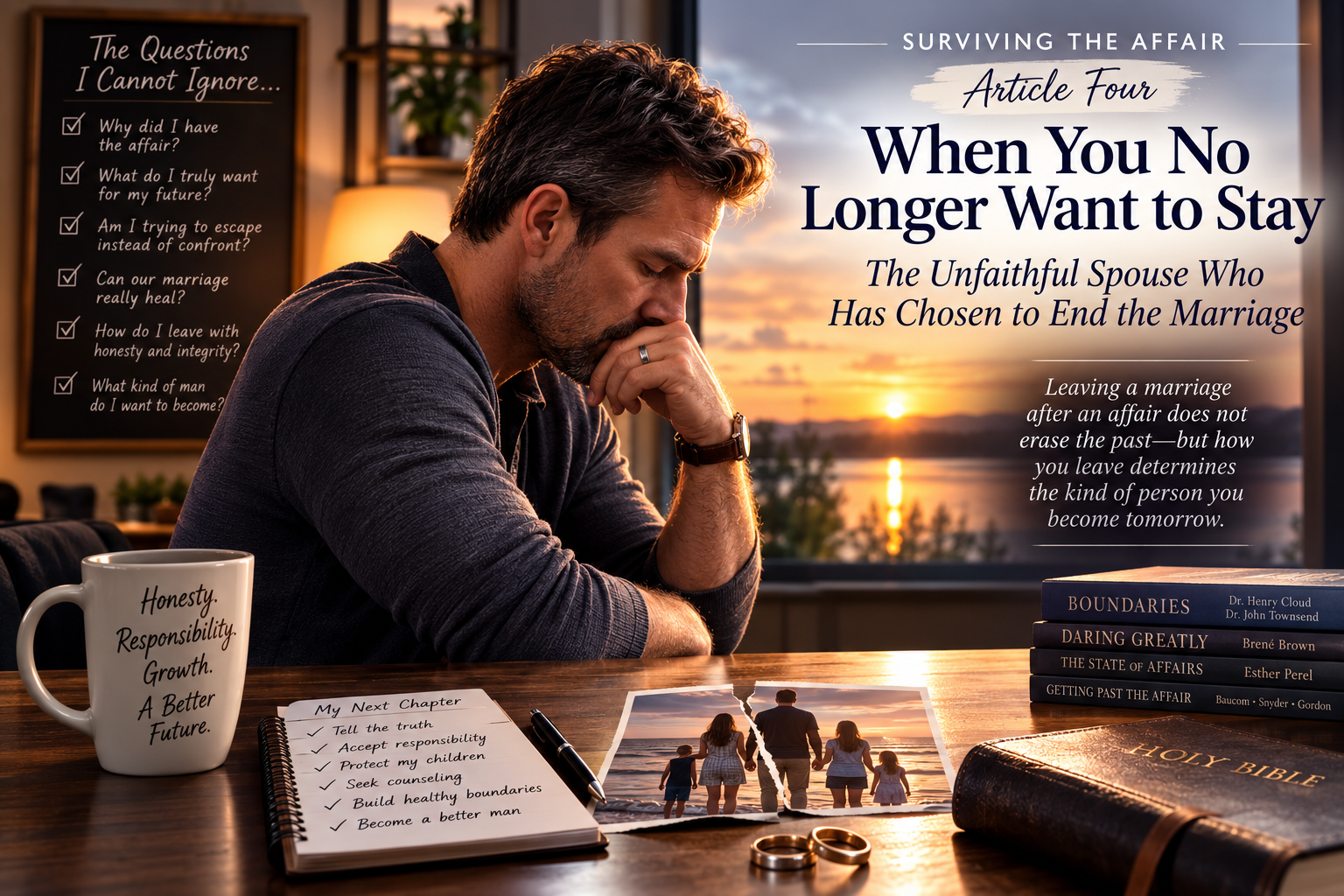
Learning how trust is rebuilt, boundaries are established, and reconciliation becomes possible. - Part Four: When You No Longer Want to Stay
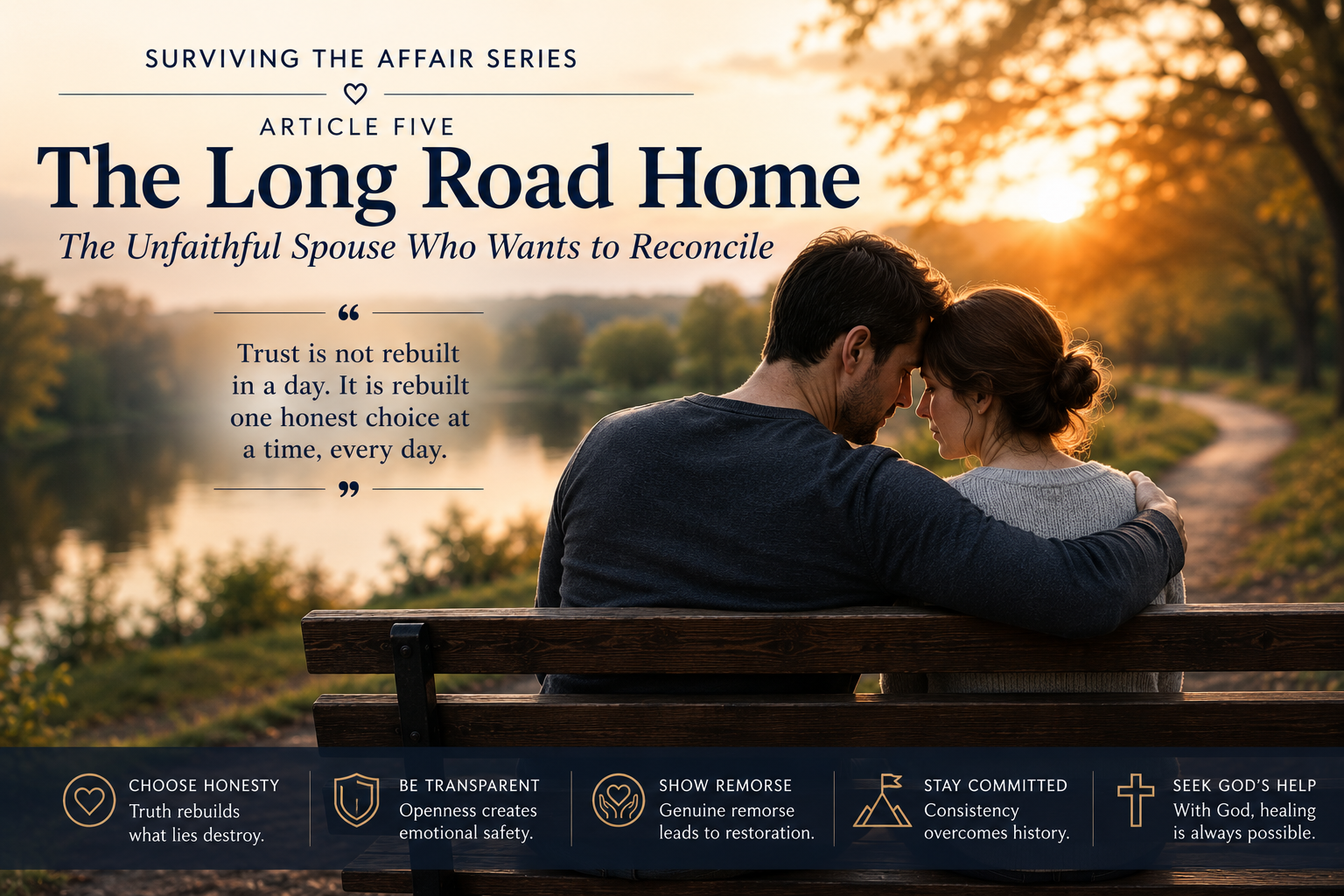
Navigating honesty, responsibility, guilt, and ending a marriage with integrity rather than continued deception. - Part Five: The Long Road Home
Understanding genuine remorse, rebuilding trust, transparency, and becoming trustworthy again. - Part Six: Loving Somone You Cannot Keep
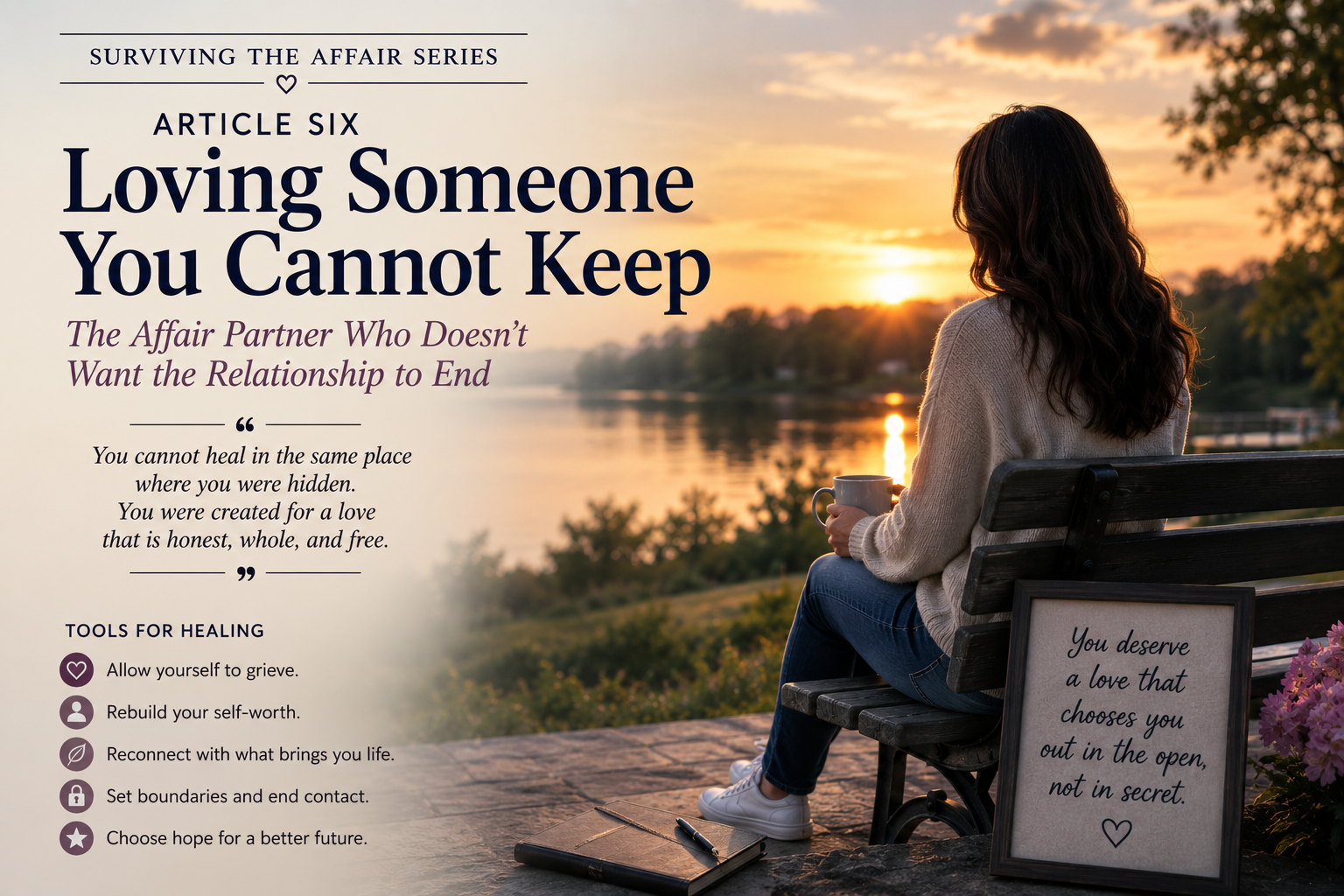
Exploring attachment, hope, grief, and accepting that loving someone does not always justify continuing the relationship. - Part Seven: Choosing Integrity Over Desire
Examining grief, guilt, loneliness, moral conflict, and healing after choosing integrity over desire. - Part Eight: The Ripple Affect
Understanding the wider ripple effects of infidelity and protecting those who never chose to be part of the story. - Article Nine: Forgiveness, Reconciliation, and Letting Go
Separating forgiveness from reconciliation and understanding what emotional freedom truly means. - Part Ten: Beyond Survival
Whether the marriage survives or ends, discovering how people rebuild identity, hope, purpose, and healthy relationships again.