You Should Never Have to Play Detective: How Healthy Relationships Create Security Instead of Suspicion
One of the most exhausting experiences in a romantic relationship is feeling like you have to become an investigator rather than a partner. You begin analyzing text messages, studying social media activity, questioning changes in routine, replaying conversations in your mind, and searching for hidden meanings behind every word or behavior. Instead of experiencing peace, your emotional energy is consumed by uncertainty.
Many people mistakenly believe that this constant vigilance is proof of how deeply they love someone. In reality, it is often evidence that something fundamental is missing: emotional security.
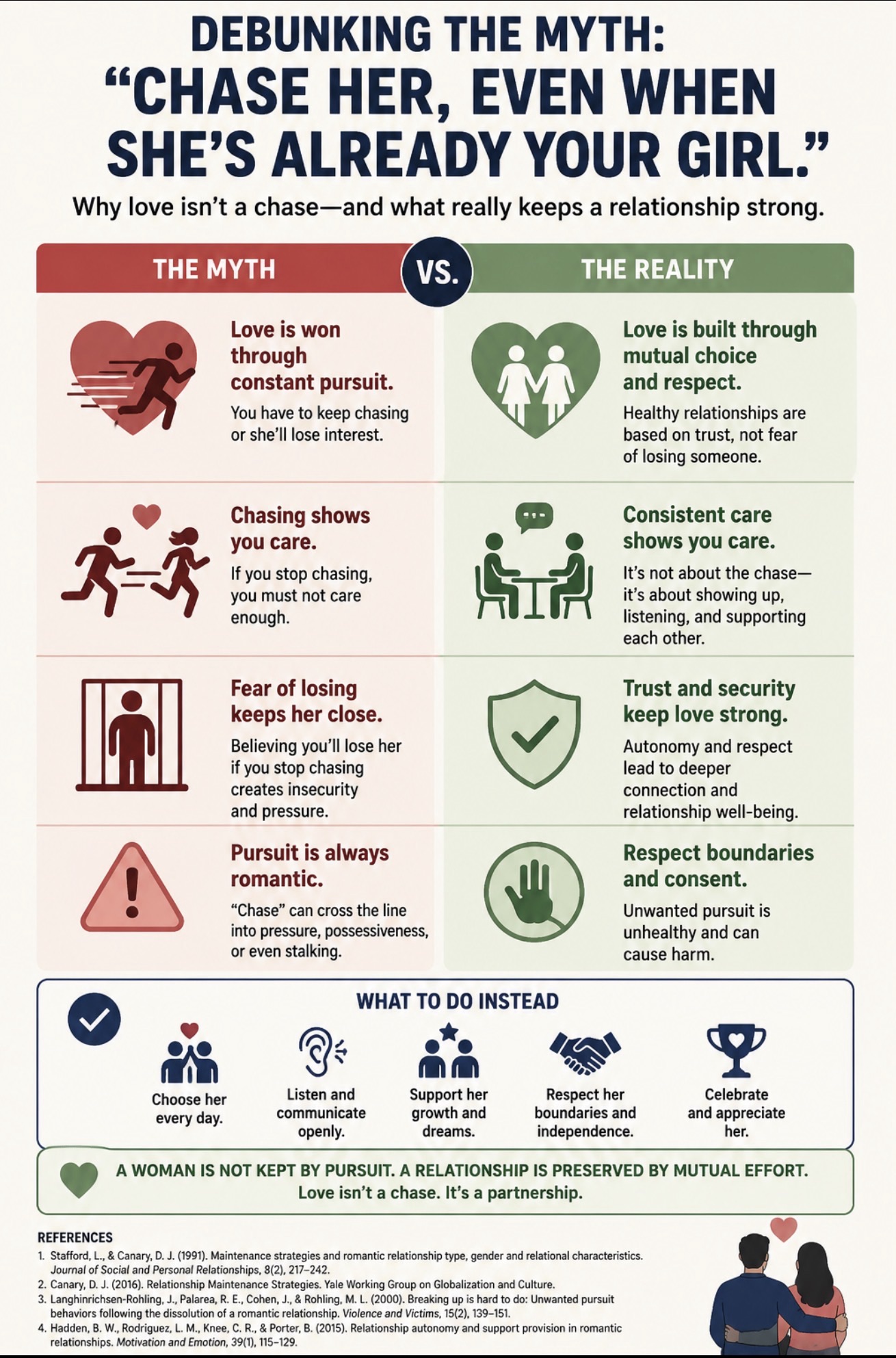
A healthy relationship does not require detective work. It naturally cultivates trust through consistency, honesty, transparency, and emotional safety. Security is not something one partner repeatedly demands; it is something both partners consistently create.
The statement, “A healthy relationship doesn’t make you feel like you have to play detective. It makes you feel secure without asking,” captures one of the clearest indicators of relational health. Security is not created through endless reassurance alone—it develops because a person’s actions repeatedly demonstrate reliability and integrity.
Why People Become Detectives
When trust begins to erode, the human brain naturally attempts to fill in missing information. From an evolutionary perspective, uncertainty represents potential danger. The brain would rather create explanations—even inaccurate ones—than tolerate ambiguity.
Psychologists refer to this as uncertainty reduction, the natural tendency to seek information when situations feel unpredictable (Berger & Calabrese, 1975).
This often leads individuals to:
- Check phones
- Monitor social media
- Question every delay
- Replay conversations repeatedly
- Search for inconsistencies
- Compare current behavior with past patterns
- Read hidden meanings into ordinary events
Ironically, the more someone investigates, the less secure they often become. Every unanswered question creates three new questions.
The relationship gradually shifts from connection to surveillance.
The Difference Between Healthy Curiosity and Hypervigilance
Healthy partners ask questions. – Hypervigilant partners conduct investigations.
The difference lies in motivation.
Healthy curiosity seeks understanding. – Hypervigilance seeks protection from anticipated betrayal.
Individuals who have experienced betrayal, abandonment, inconsistent caregiving, or previous infidelity frequently develop heightened sensitivity to potential threats (Mikulincer & Shaver, 2016). Their nervous system learns that safety cannot be assumed.
As a result, they begin searching for evidence that confirms their fears. Unfortunately, anxiety rarely says,
“Everything is probably okay.”
Instead it whispers,
“Look again. You probably missed something.”
What Creates Emotional Security?
Security is not created by grand romantic gestures. It is created by ordinary consistency repeated over time. Research by psychologist John Gottman has consistently shown that trust develops through countless small interactions in which partners repeatedly choose honesty, responsiveness, and emotional availability (Gottman & Silver, 2015).
Security grows when someone:
- Does what they say they will do.
- Keeps promises.
- Is emotionally available.
- Answers difficult questions honestly.
- Communicates openly.
- Shows consistency between words and actions.
- Makes their partner feel valued rather than tolerated.
Trust is not built in dramatic moments. It is built in ordinary Tuesdays.
Transparency Is Different Than Surveillance
Some people mistakenly believe that complete surveillance creates trust. It does not. Knowing every password does not automatically produce security. Tracking someone’s location does not automatically eliminate fear. Reading every text message does not automatically heal betrayal. Transparency is voluntarily offered. Surveillance is demanded. Healthy couples willingly share information because they have nothing to hide—not because they are forced to prove their innocence every day. Trust cannot survive when one partner constantly feels like they are on trial.
Insecure Relationships Create Constant Guessing
When emotional safety is absent, people begin asking themselves questions like:
- “Why haven’t they texted?”
- “Why did they seem distant?”
- “Who liked that picture?”
- “Why did they smile at that person?”
- “Why did they suddenly become protective of their phone?”
Over time these questions become mentally exhausting. The relationship slowly becomes less about love and more about gathering evidence. Instead of enjoying each other’s presence, partners begin managing each other’s suspicions. This is emotionally unsustainable.
Secure Relationships Reduce Mental Noise
One of the most overlooked benefits of a healthy relationship is mental quietness. You stop wondering where you stand. You stop wondering if you’re enough. You stop wondering whether affection will disappear tomorrow. Secure attachment provides what psychologists call a safe haven and a secure base (Bowlby, 1988).
A safe haven is someone who provides comfort during stress. A secure base is someone whose presence allows you to confidently explore life because you know they will remain emotionally available. When those needs are consistently met, anxiety decreases. Your mind becomes quieter.
Consistency Is More Convincing Than Words
Many unhealthy relationships are filled with reassuring words but inconsistent behavior. Someone may repeatedly say:
- “Trust me.”
- “Nothing’s wrong.”
- “You’re overthinking.”
Yet their behavior continues creating confusion. Research consistently demonstrates that trust is based more on predictable behavior than verbal reassurance (Rempel, Holmes, & Zanna, 1985). People believe patterns. Not promises.
Emotional Safety Changes Everything
Emotional safety allows people to become fully themselves. They no longer fear punishment for expressing feelings. They no longer hide needs. They no longer worry that honesty will be weaponized against them. Psychologist Sue Johnson, developer of Emotionally Focused Therapy (EFT), explains that secure emotional bonds reduce distress because partners become reliable sources of comfort rather than uncertainty (Johnson, 2019). Healthy love feels emotionally predictable. Not emotionally confusing.
When Detective Work Is Actually Warning You
There is an important distinction that should not be ignored. Sometimes people feel suspicious because anxiety is distorting reality. Other times, their instincts are responding to genuine inconsistencies. If someone repeatedly:
- Lies
- Hides information
- Gaslights concerns
- Breaks promises
- Violates boundaries
- Creates confusion intentionally
then the issue is not insecurity. The issue is trustworthiness. Healthy relationships welcome honest conversations. Unhealthy relationships often punish them. The goal is never blind trust. The goal is earned trust.
Building a Relationship That Doesn’t Require Investigation
Healthy couples intentionally cultivate trust. Some practical ways include:
- Communicating honestly, even when conversations are uncomfortable.
- Being consistent between words and actions.
- Following through on commitments.
- Taking responsibility for mistakes without defensiveness.
- Offering reassurance through dependable behavior rather than empty promises.
- Addressing concerns early before resentment grows.
- Respecting healthy boundaries while remaining emotionally transparent.
- Choosing integrity when no one is watching.
Over time, these behaviors create a relationship where partners naturally relax into security.
The Peace of Being Known
Perhaps the greatest gift of a healthy relationship is not excitement. It is peace. It is the quiet confidence that someone chooses you every day. It is knowing you do not have to decode hidden messages. You do not have to search for clues. You do not have to become an investigator. You simply experience what trust feels like. Healthy love removes the constant need for proof because its evidence is visible every day. Security is not the absence of questions. It is the consistent presence of answers. A healthy relationship allows your heart to rest because the person beside you has repeatedly shown—through honesty, consistency, and genuine care—that your trust is safe with them.
About the Author

John S. Collier, MSW, LCSW-S is a licensed clinical social worker, author, educator, and speaker with extensive experience helping individuals, couples, and families navigate emotional, behavioral, and relational challenges. Throughout his career, he has specialized in cognitive behavioral therapy, relationship dynamics, anxiety disorders, trauma recovery, and emotional resilience. His writing bridges psychological research with practical, everyday application, presenting complex concepts in language that is both accessible and meaningful. John is passionate about equipping readers with evidence-based tools that foster healthier relationships, emotional well-being, and personal growth. Through his books and articles, he encourages readers to build lives marked by wisdom, authenticity, resilience, and hope.
References
Berger, C. R., & Calabrese, R. J. (1975). Some explorations in initial interaction and beyond: Toward a developmental theory of interpersonal communication. Human Communication Research, 1(2), 99–112.
Bowlby, J. (1988). A Secure Base: Parent-Child Attachment and Healthy Human Development. New York, NY: Basic Books.
Gottman, J. M., & Silver, N. (2015). The Seven Principles for Making Marriage Work (Revised ed.). New York, NY: Harmony Books.
Johnson, S. M. (2019). Attachment Theory in Practice: Emotionally Focused Therapy (EFT) with Individuals, Couples, and Families. New York, NY: Guilford Press.
Mikulincer, M., & Shaver, P. R. (2016). Attachment in Adulthood: Structure, Dynamics, and Change (2nd ed.). New York, NY: Guilford Press.
Rempel, J. K., Holmes, J. G., & Zanna, M. P. (1985). Trust in close relationships. Journal of Personality and Social Psychology, 49(1), 95–112.