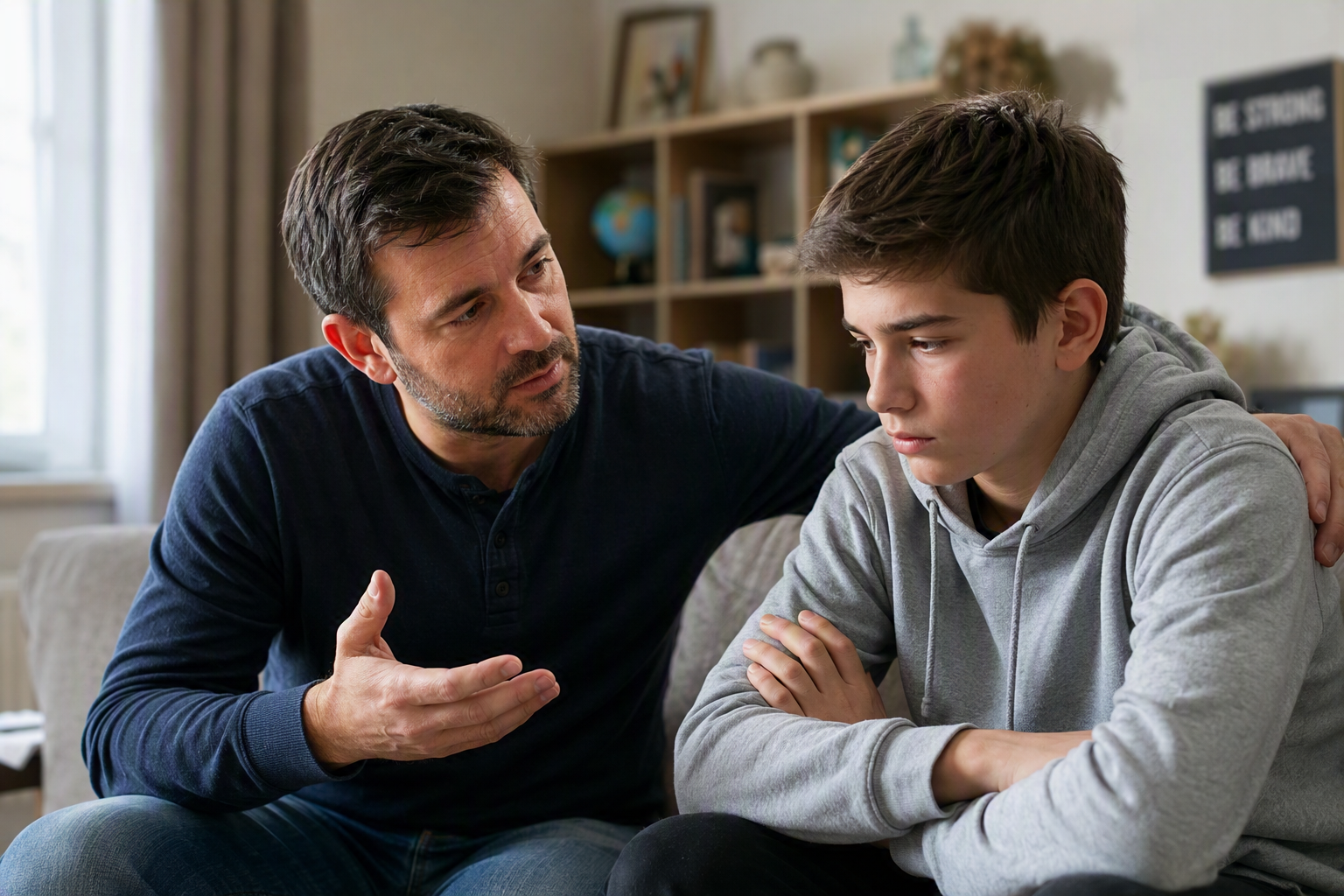
Getting Triggered: Taking Responsibility for Your Reactions
Your Trigger Is Your Responsibility
The phrase“I got triggered” has become increasingly common in modern conversations. People use it to describe intense emotional reactions to something another person said, did, or failed to do. While emotional triggers are real and deserve attention, there is an important truth that is often overlooked: your emotional trigger is your responsibility, not someone else’s.

This does not mean other people are always right, kind, or considerate. It does not mean hurtful behavior should be excused. Rather, it means that while external events may activate an emotional response, you remain responsible for how you interpret, manage, and respond to that reaction.
Emotional triggers are often connected to unresolved experiences, personal beliefs, fears, insecurities, past trauma, or deeply held expectations. According to the Cleveland Clinic, emotional triggers are situations, events, thoughts, or interactions that provoke intense emotional reactions that may be disproportionate to the present event because they are connected to past experiences. [health.cle…clinic.org]
A trigger is not proof that someone else caused your emotions. Instead, it is often evidence that something within you requires examination, healing, or growth.
Understanding the Difference Between Cause and Responsibility
A useful distinction exists between cause and responsibility.
Someone may say something rude. That statement may act as a catalyst for anger. However, the emotional reaction that follows belongs to the individual experiencing it.
Many people spend years blaming family members, coworkers, former partners, friends, or society for their emotional pain. While others may influence our experiences, remaining trapped in blame often prevents healing.
When responsibility is surrendered, personal power is surrendered as well.
Consider these examples:
- Someone criticizes your work, and you become enraged.
- A friend does not text back quickly, and you become anxious.
- A spouse disagrees with you, and you immediately become defensive.
- A coworker receives recognition, and you become resentful.
The external event occurred. However, the intensity of the emotional response often reflects an internal issue that deserves attention.
As psychologist Susan Albers notes, emotional triggers often function as “knee-jerk reactions” connected to prior emotional wounds, pain, or stressful experiences rather than the present situation alone. [health.cle…clinic.org]
Why Blaming Others Keeps You Stuck
Blame can feel empowering in the moment because it removes responsibility from ourselves. Unfortunately, it also removes our ability to create lasting change.
When your happiness depends on other people changing, you remain powerless. When your peace depends on others behaving perfectly, you remain trapped. When your emotional well-being depends upon controlling the behavior of everyone around you, you are fighting a battle you cannot win. Personal accountability allows you to move from:
- Victimhood to ownership
- Reactivity to intentionality
- Resentment to growth
- Helplessness to empowerment
Self-awareness is a foundational component of emotional intelligence. Research and psychological theory indicate that self-awareness helps individuals recognize emotions, understand behavioral patterns, and make more intentional choices. [positiveps…hology.com], [dictionary.apa.org]
Signs That You May Be Operating From a Trigger
You may be reacting from a trigger when:
- Your emotional response feels much larger than the event itself.
- You repeatedly experience the same conflicts.
- You immediately become defensive.
- You struggle to calm yourself after an interaction.
- You replay conversations repeatedly in your mind.
- You frequently blame others for how you feel.
- You find yourself saying things you later regret.
Recognizing these signs is not a reason for shame. It is an opportunity for growth.
Eight Steps to Take Ownership of Your Triggers
1. Pause Before Reacting
Strong emotions create urgency. Triggers often convince us that immediate action is necessary.
Instead:
- Stop.
- Take several deep breaths.
- Create distance between feeling and action.
Even a brief pause allows the thinking parts of the brain to engage before impulsive behavior occurs. Naming and observing emotions can strengthen emotional regulation and reduce reactivity. [apa.org], [scienceinsights.org]
2. Identify What You Are Feeling
Many people only recognize anger.
However, underneath anger may be:
- Fear
- Shame
- Rejection
- Insecurity
- Embarrassment
- Loneliness
- Disappointment
Ask yourself:
“What am I actually feeling right now?”
Awareness creates choice.
3. Ask, “Why Does This Affect Me So Strongly?”
Instead of focusing on the other person’s behavior, focus inward.
Questions to consider:
- What belief was activated?
- What fear was touched?
- What memory does this remind me of?
- Why does this matter so much to me?
This shift transforms the experience from blame to self-discovery.
4. Separate Facts From Stories
The event and the story you tell yourself about the event are not the same thing.
Example:
Fact: Someone interrupted you.
Story: They do not respect me.
The emotional reaction usually attaches itself to the story, not merely the event. Challenge assumptions and consider alternative explanations before reacting.
5. Own Your Emotional Experience
Practice saying:
- “I feel hurt.”
- “I feel anxious.”
- “I feel angry.”
- “I am responsible for how I respond.”
Avoid statements such as:
- “You made me angry.”
- “You ruined my day.”
- “You caused my anxiety.”
Others influence us, but they do not control our responses.
6. Develop Healthy Coping Skills
The National Institutes of Health recommends evidence-based wellness practices that help individuals manage emotional stress and build resilience, including mindfulness, physical activity, social support, adequate sleep, gratitude practices, and healthy self-care routines. [nih.gov], [nimh.nih.gov]
Helpful coping strategies include:
| Mindfulness | Learn to observe emotions without immediately reacting. |
| Deep Breathing | Slow breathing helps calm the body’s stress response. |
| Journaling | Writing allows emotions to be processed instead of suppressed. |
| Exercise | Physical activity helps regulate mood and reduce stress. |
| Meditation | Meditation increases emotional awareness and self-control. |
| Therapy | Professional support can help uncover deeper emotional patterns. |
| Social Support | Healthy relationships provide perspective and encouragement. [apa.org], [nih.gov] |
7. Reframe the Trigger as a Teacher
Instead of asking: “Why did they do this to me?”
Ask: “What is this reaction teaching me about myself?”
Every trigger contains information. It may point toward:
- An insecurity
- An unmet need
- A fear
- A limiting belief
- An unresolved wound
Growth begins when curiosity replaces blame.
8. Practice Accountability Daily
Accountability is a skill. Each day ask yourself:
- What triggered me today?
- How did I respond?
- What could I have done differently?
- What lesson did I learn?
Over time these reflections strengthen emotional resilience and self-awareness.
Conclusion
Being triggered is part of the human experience. Everyone encounters situations that evoke strong emotions. The presence of a trigger is not a character flaw, nor is it proof that someone else is responsible for your emotional state. Healing begins when we stop viewing triggers as evidence of other people’s failures and start viewing them as opportunities for self-examination and growth.
You may not be responsible for every experience that shaped you, but you are responsible for how you manage your reactions today. The moment you stop blaming others for your triggers is the moment you begin reclaiming your power. You are not responsible for what happened to you in the past. You are responsible for what you do with it now. Growth occurs when accountability becomes stronger than blame, and self-awareness becomes stronger than reactivity.
About the Author

References
American Psychological Association. (n.d.). Emotion-Focused Coping. APA Dictionary of Psychology. Retrieved from APA Dictionary of Psychology. [dictionary.apa.org]
American Psychological Association. (n.d.). Emotions. Retrieved from the American Psychological Association. [apa.org]
American Psychological Association. (2018). Emotional Intelligence. APA Dictionary of Psychology. [dictionary.apa.org]
American Psychological Association. (2024). Healthy Ways to Handle Life’s Stressors. American Psychological Association. [apa.org]
Cleveland Clinic. (2024). Can You Identify Your Emotional Triggers? Cleveland Clinic Health Essentials. [health.cle…clinic.org]
Centers for Disease Control and Prevention. (2024). Managing Difficult Emotions. U.S. Department of Health and Human Services. [cdc.gov]
National Institute of Mental Health. (2025). Caring for Your Mental Health. National Institutes of Health. [nimh.nih.gov]
National Institutes of Health. (2026). Emotional Wellness Toolkit. National Institutes of Health. [nih.gov]
Positive Psychology. (2025). Using Self-Awareness Theory and Skills in Psychology. PositivePsychology.com. [positiveps…hology.com]