
WELCOME
How Teens Can Manipulate Their Parents and Why They May Do So

Teenagers are in a developmental stage marked by significant emotional, cognitive, and social growth. As they strive for independence, teens may sometimes use manipulation as a tool to influence their parents and achieve their desires. This article explores common manipulative tactics employed by teens, the psychological reasons behind such behaviors, and strategies parents can use to recognize and address manipulation.

Understanding Manipulative Behaviors

Manipulation is a way of influencing or controlling another person’s actions, emotions, or decisions, often through subtle or indirect means. Teens may manipulate their parents intentionally or unconsciously, employing tactics that exploit parental emotions or expectations.

Some common methods of manipulation include:

  1. Guilt-Tripping: Teens may remind parents of sacrifices made for them or accuse them of being unfair to induce guilt and compliance.
  2. Playing Parents Against Each Other: Also known as triangulation, this involves giving conflicting information to parents to gain an advantage.
  3. Emotional Outbursts: Using anger, tears, or withdrawal to wear down parental resistance.
  4. Feigning Helplessness: Pretending to be unable to complete tasks or solve problems independently to garner assistance or attention.
  5. Promises and Bargaining: Offering to behave better or fulfill obligations in the future in exchange for immediate rewards.

Why Teens Manipulate Their Parents

Manipulative behavior in teenagers often stems from a combination of psychological and environmental factors. The motivations behind such actions can be complex and multifaceted, including:

  1. Desire for Independence
    Adolescence is a time of seeking autonomy. Teens may manipulate parents to gain freedoms they perceive as a step toward adulthood, such as staying out later or having fewer rules. Cognitive Development: During adolescence, the prefrontal cortex (responsible for decision-making and impulse control) is still developing. This immaturity can lead to impulsive decisions, including manipulative behaviors (Blakemore, 2018).
  2. Testing Boundaries
    Teens often test limits to determine how much control they can exert in family dynamics. Manipulation allows them to assess which behaviors lead to favorable outcomes.
  3. Emotional Needs
    Manipulation may signal unmet emotional needs, such as a desire for attention, affection, or validation. Teens struggling with self-esteem or feelings of neglect may resort to manipulative tactics to secure parental involvement.
  4. Avoidance of Consequences
    By deflecting blame or appealing to emotions, teens can avoid facing the repercussions of their actions, such as punishment or accountability.
  5. Peer Influence
    Social dynamics and peer pressure may drive teens to manipulate parents to obtain material goods or freedoms that align with peer group norms.

Recognizing and Addressing Manipulation

Parents can mitigate manipulation by cultivating awareness and adopting strategies that foster healthy communication and boundaries.

  1. Recognize Patterns
    Identifying recurring manipulative behaviors is crucial. Parents should pay attention to tactics like guilt-tripping or emotional outbursts and consider whether their responses reinforce these behaviors.
  2. Set Clear Boundaries
    Establishing and consistently enforcing boundaries helps teens understand acceptable behaviors. Clear rules reduce ambiguity, minimizing opportunities for manipulation.
  3. Encourage Open Communication
    Teens may manipulate because they feel their needs or opinions are not heard. Creating a safe space for honest conversations fosters trust and reduces the likelihood of deceptive tactics.
  4. Model Assertive Behavior
    Parents can demonstrate assertiveness by responding calmly and firmly to manipulation. Refraining from emotional reactions helps de-escalate situations.
  5. Teach Emotional Regulation
    Supporting teens in managing their emotions equips them with healthier ways to express their needs and frustrations without resorting to manipulation.
  6. Seek Professional Support
    If manipulation stems from deeper issues, such as anxiety or trauma, consulting a therapist can provide valuable insights and interventions.

Teen manipulation is often a natural byproduct of adolescence, reflecting their developmental quest for independence and self-expression. While such behavior can challenge parental authority, it also offers opportunities to strengthen family relationships through improved communication and boundary-setting. By understanding the reasons behind manipulative actions and addressing them constructively, parents can guide their teens toward healthier interpersonal skills.

This article was written by John S. Collier, MSW, LCSW. Mr. Collier has over 25 years of experience in the social work field. He currently serves as the executive director and outpatient therapist for Southeast Kentucky Behavior Heath, LLC based out of London Kentucky. He may be reached by phone at (606) 657-0532 extension 101 or by email at john@sekybh.com.

References

  • Blakemore, S.-J. (2018). Inventing Ourselves: The Secret Life of the Teenage Brain. PublicAffairs.
  • Steinberg, L. (2014). Age of Opportunity: Lessons from the New Science of Adolescence. Houghton Mifflin Harcourt.
  • Grolnick, W. S., & Seal, K. (2020). Parenting Practices that Promote Intrinsic Motivation in Adolescents. Journal of Adolescence and Youth Development, 42(3), 295–310.
  • American Psychological Association. (2020). Understanding Adolescents: The Importance of Brain Development. Retrieved from www.apa.org
Social Emotional Learning: A Comprehensive Overview

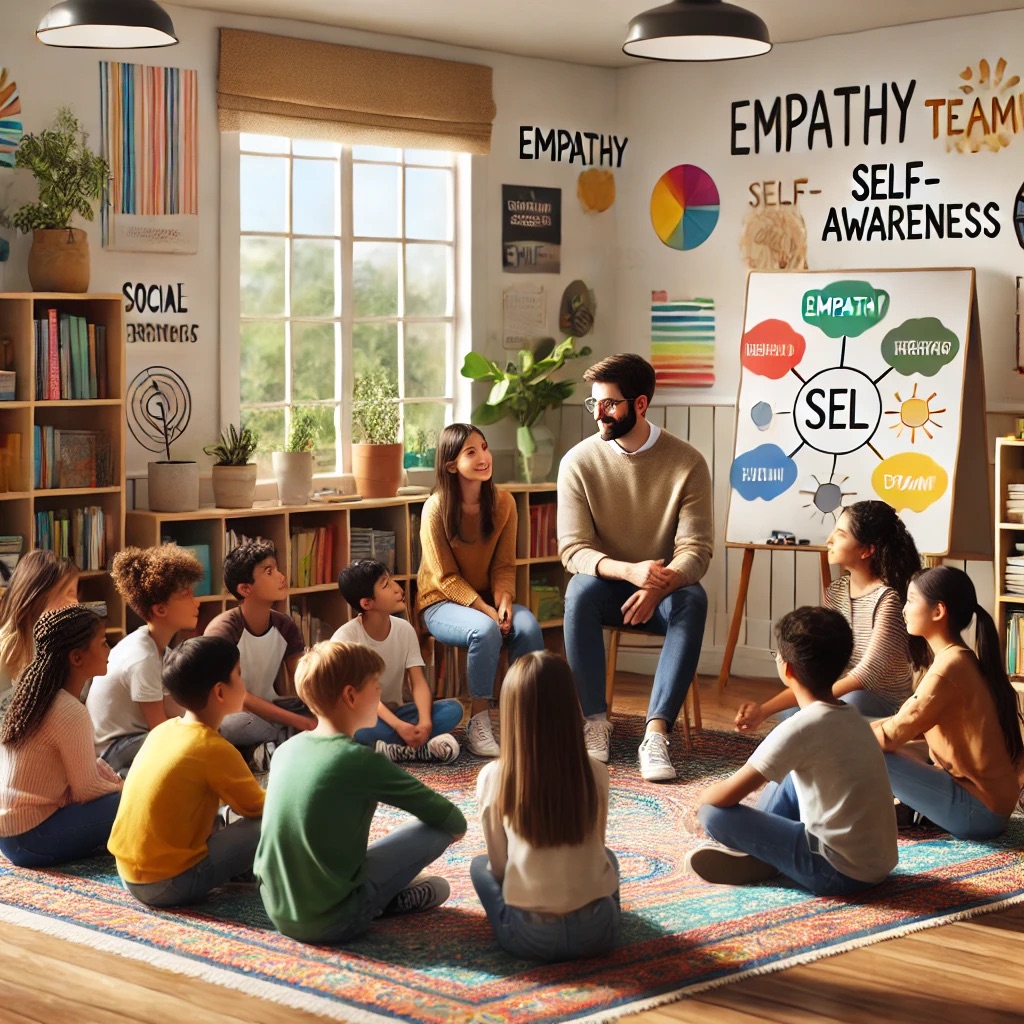
Social Emotional Learning (SEL) has gained prominence as an integral component of education. Defined by the Collaborative for Academic, Social, and Emotional Learning (CASEL), SEL involves the process of acquiring and applying knowledge, attitudes, and skills to understand and manage emotions, achieve positive goals, demonstrate empathy, establish and maintain relationships, and make responsible decisions (CASEL, 2023).

The growing recognition of SEL stems from its demonstrated impact on students’ academic performance, mental health, and future success. This article delves into the five core components of SEL, its benefits, and the practical implications of integrating SEL into educational systems.

Core Components of Social Emotional Learning

CASEL identifies five core competencies that form the foundation of SEL programs:

1. Self-Awareness: The ability to recognize one’s emotions, thoughts, and values and understand how they influence behavior. Self-awareness also involves accurately assessing personal strengths and weaknesses.

2. Self-Management: Skills related to regulating emotions, setting and achieving goals, and managing stress.

3. Social Awareness: The capacity to empathize with others, appreciate diversity, and understand social norms.

4. Relationship Skills: Abilities to establish and maintain healthy relationships, communicate effectively, and resolve conflicts constructively.

5. Responsible Decision-Making: The process of making ethical and constructive choices about personal and social behavior.

These competencies provide a framework for creating supportive environments where students can thrive both academically and personally.

Benefits of Social Emotional Learning

1. Academic Performance

Research consistently shows that SEL enhances academic outcomes. A meta-analysis of 213 SEL programs revealed an average academic performance gain of 11 percentile points for students participating in SEL programs compared to their peers (Durlak et al., 2011).

2. Behavioral Improvements

SEL reduces behavioral problems such as aggression and disruptive behaviors. Programs that teach emotional regulation and conflict resolution help students respond to challenges more constructively (Jones et al., 2019).

3. Mental Health and Well-Being

Students exposed to SEL demonstrate lower levels of anxiety and depression and higher levels of emotional resilience (Taylor et al., 2017). These programs equip students with coping mechanisms to navigate stress and adversity effectively.

4. Long-Term Success

The skills fostered by SEL extend beyond the classroom. Emotional intelligence, teamwork, and decision-making are essential in the workplace and personal life, leading to higher rates of employment and life satisfaction (Weissberg et al., 2015).

Implementation Strategies for Educators

1. Embedding SEL in Curriculum

SEL can be integrated into daily lessons across subjects by incorporating group discussions, collaborative projects, and reflective writing assignments.

2. Professional Development for Teachers

Training educators to model and teach SEL competencies is critical for program success. Teachers need resources and strategies to address diverse student needs.

3. Family and Community Engagement

Involving families and communities in SEL initiatives ensures consistency in fostering social and emotional skills outside the classroom.

4. Data-Driven Practices

Regular assessment of SEL programs helps educators refine their approaches and demonstrate measurable outcomes.

Challenges and Considerations

While SEL offers numerous benefits, challenges such as lack of funding, teacher resistance, and the need for cultural adaptation must be addressed. Policymakers and educators must prioritize creating equitable SEL programs that consider diverse cultural and socioeconomic backgrounds.

Conclusion

Social Emotional Learning is a vital component of modern education, addressing the holistic development of students. By teaching students to navigate emotions, relationships, and decisions, SEL not only enhances academic success but also equips students with lifelong skills. Future research and policy efforts should focus on scaling SEL initiatives and addressing challenges to ensure all students benefit from these transformative programs.

This article is written by John S. Collier, MSW, LCSW. Mr. Collier has over 25 years experience in the social work field. He currently serves as the executive director and outpatient behavioral health therapist at Southeast Kentucky Behavioral health based out of London Kentucky. He may be reached by phone at 606-657-0532 extension 101 or by email at john@sckybh.com

References

• Collaborative for Academic, Social, and Emotional Learning (CASEL). (2023). What is SEL? Retrieved from https://casel.org

• Durlak, J. A., Weissberg, R. P., Dymnicki, A. B., Taylor, R. D., & Schellinger, K. B. (2011). The impact of enhancing students’ social and emotional learning: A meta-analysis of school-based universal interventions. Child Development, 82(1), 405-432.

• Jones, S. M., Bailey, R., & Kahn, J. (2019). The science and practice of social and emotional learning: Implications for state policymaking. The Aspen Institute.

• Taylor, R. D., Oberle, E., Durlak, J. A., & Weissberg, R. P. (2017). Promoting positive youth development through school-based social and emotional learning interventions: A meta-analysis of follow-up effects. Child Development, 88(4), 1156-1171.

• Weissberg, R. P., Durlak, J. A., Domitrovich, C. E., & Gullotta, T. P. (2015). Social and emotional learning: Past, present, and future. Handbook of Social and Emotional Learning: Research and Practice, 3-19.

This article underscores the transformative potential of SEL in education and beyond, offering a roadmap for educators, policymakers, and communities to prioritize holistic development.