Welcome to SOUTHEAST KENTUCKY BEHAVIORAL HEALTH
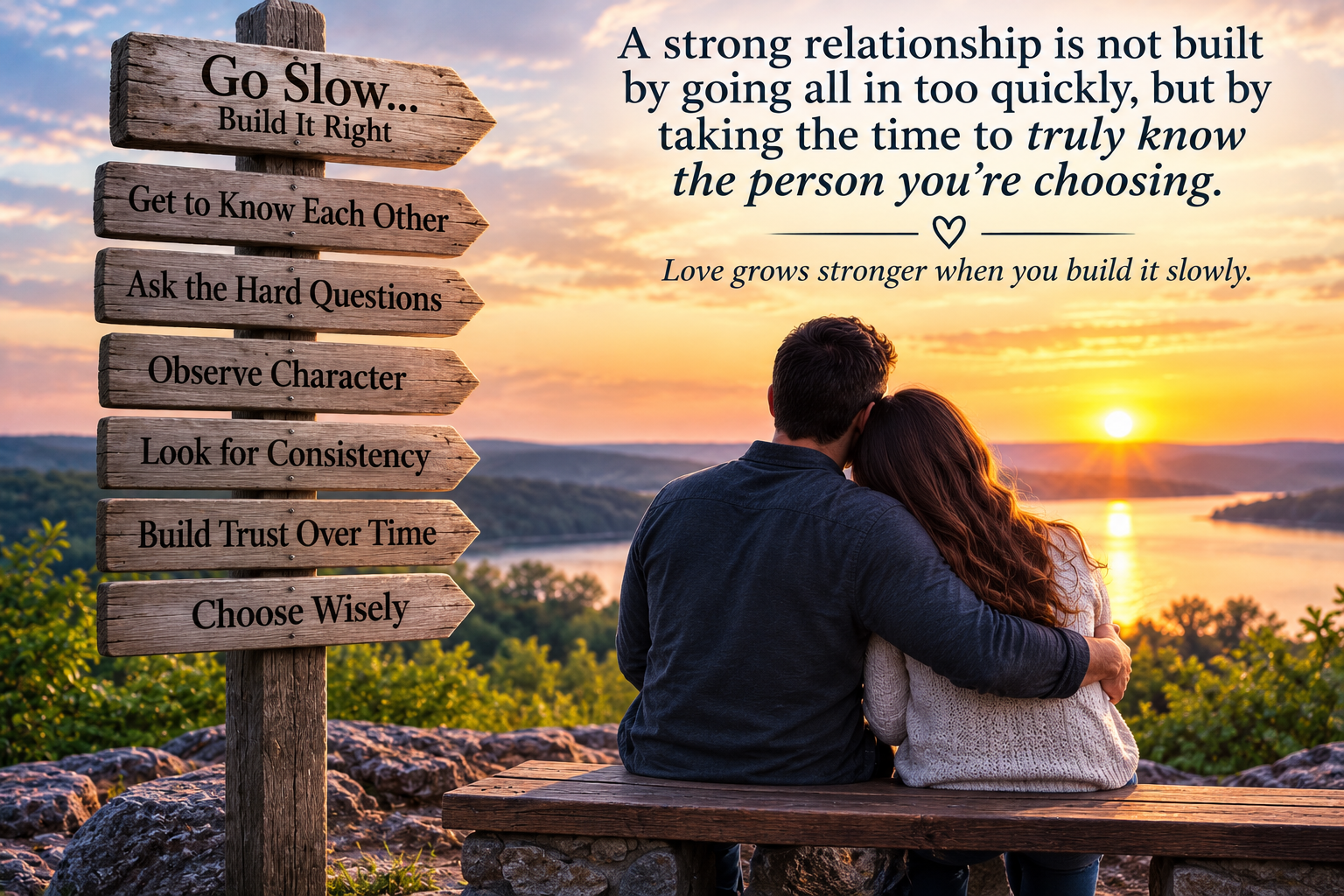
Going All In: The Hidden Risks of Rushing Into a Relationship

There is something undeniably romantic about the phrase “going all in.” Movies celebrate it. Love songs glorify it. Friends often admire people who seem fearless enough to dive headfirst into love. We are told that real love requires vulnerability, commitment, and complete investment.

While commitment is essential for a healthy relationship, there is an important distinction between healthy commitment and premature emotional investment. One is built on knowledge, trust, and experience. The other is often built on hope, attraction, and assumptions.

Many relationships don’t fail because two people were incompatible. They fail because they became emotionally committed long before they truly knew one another.


The Difference Between Attraction and Knowledge

Attraction happens quickly. Knowledge takes time. During the first weeks or months of dating, we naturally see the best version of another person. Psychologists sometimes refer to this as the honeymoon phase, where the brain is flooded with dopamine, oxytocin, and other neurochemicals that create excitement, optimism, and emotional attachment (Fisher, 2004). Unfortunately, these same chemicals can reduce our ability to evaluate a relationship objectively.

When people “go all in” too quickly, they often mistake:

  • Chemistry for compatibility
  • Passion for stability
  • Attention for commitment
  • Potential for reality

Those are not the same things.


We Fall in Love With Who We Think They Are

One of the greatest dangers of rushing a relationship is that we begin filling in the blanks ourselves. Instead of learning who someone truly is, we imagine who they could become. We overlook inconsistencies. We excuse red flags.

We create explanations for behaviors we don’t fully understand. Psychologists call this idealization—seeing another person through the lens of hope rather than reality (Murray, Holmes, & Griffin, 1996). The problem is that relationships are built on reality, not imagination. Eventually, every relationship moves from fantasy to reality. When that happens, many people don’t feel like their partner changed. Instead, they finally see what was there all along.


Emotional Investment Changes Your Judgment

Imagine buying a house. Would you purchase it after walking through the front door for five minutes? Probably not. You would inspect the foundation. Look at the roof. Check for water damage. Review the neighborhood. Ask difficult questions. Relationships deserve at least that much careful consideration. Yet emotionally, many people commit after only a handful of exciting conversations. Once we become emotionally invested, our brains begin protecting that investment.

Instead of asking, “Is this the right person?”

we begin asking, “How can I make this work?”

Those are completely different questions.


The Cost of Ignoring Red Flags

Red flags rarely appear as dramatic warning signs. Most begin as small moments. Perhaps they become irritated when they don’t get their way. Maybe they avoid accountability. Perhaps they speak disrespectfully about former partners. Maybe they struggle with honesty. Perhaps they become controlling in subtle ways. Someone who rushes into commitment often dismisses these concerns because the emotional reward feels greater than the potential risk. Unfortunately, ignored patterns rarely disappear. They usually become stronger. Dating is not primarily about convincing someone to stay. It is about discovering whether staying would be wise.


Love Needs Observation

Healthy relationships require curiosity. Observe how someone handles disappointment. Observe how they manage stress. Observe how they treat people who have nothing to offer them. Observe how they speak about family. Observe whether their words consistently match their actions. Character reveals itself over time. No conversation can replace experience. No promise can replace consistency. No chemistry can replace integrity.


Why Slow Relationships Often Last Longer

Research consistently suggests that relationships built gradually often develop stronger foundations because trust is earned rather than assumed (Stanley, Rhoades, & Markman, 2006). People sometimes fear moving slowly because they worry someone else will “take” the person they’re dating. Ironically, healthy people generally respect appropriate pacing. Individuals who pressure immediate commitment often reveal more about their own insecurity than about their love. Real intimacy grows. It cannot be rushed.


The Difference Between Commitment and Surrender

Healthy commitment says: “I’m choosing you because I know who you are.”

Unhealthy surrender says: “I’m choosing you because I hope you’ll become who I need.”

One is based on evidence. The other is based on emotion. One grows stronger over time. The other becomes increasingly fragile.


Questions Worth Asking Yourself

Before going “all in,” consider asking yourself:

  • What do I actually know about this person’s character?
  • Have I seen them during conflict?
  • How do they respond when they don’t get what they want?
  • Do their actions consistently match their words?
  • Am I attracted to who they are today or who I hope they’ll become?
  • If nothing about this person ever changed, would I still choose this relationship five years from now?

These questions may not feel romantic, but they are deeply loving—because they protect both people from building a relationship on unrealistic expectations.


A Better Way to Love

Moving slowly does not mean loving less. It means loving wisely. Healthy relationships are not races.

They are discoveries. Every shared experience reveals another layer of a person’s character. Trust is built 0through repeated consistency. Respect grows through mutual understanding. Love deepens through truth rather than fantasy.

Going “all in” is admirable when it follows genuine knowledge of another person. Going all in before you truly know someone is less an act of courage than a gamble. The strongest relationships are rarely built by those who rushed toward commitment. They are built by two people who allowed time to reveal character, chose honesty over fantasy, and discovered that lasting love is not found by moving faster—it is found by building a foundation strong enough to support a lifetime.


About the Author

John S. Collier, MSW, LCSW-S is a licensed clinical social worker, therapist, author, and educator with extensive experience helping individuals, couples, and families navigate relationship challenges, anxiety, trauma, and emotional well-being. Throughout his career, he has worked with people from diverse backgrounds, combining evidence-based psychological principles with practical, real-world applications that readers can immediately apply to their daily lives.

John’s writing bridges the gap between academic research and everyday experience, making complex psychological concepts understandable and useful. His work emphasizes emotional maturity, healthy communication, personal responsibility, and building relationships founded on trust, authenticity, and mutual respect. Whether writing about mental health, family dynamics, leadership, or personal growth, his goal is to provide readers with insights that encourage lasting change and healthier, more meaningful lives.

References

Fisher, H. (2004). Why We Love: The Nature and Chemistry of Romantic Love. Henry Holt.

Murray, S. L., Holmes, J. G., & Griffin, D. W. (1996). The benefits of positive illusions: Idealization and the construction of satisfaction in close relationships. Journal of Personality and Social Psychology, 70(1), 79–98.

Stanley, S. M., Rhoades, G. K., & Markman, H. J. (2006). Sliding versus deciding: Inertia and the premarital cohabitation effect. Family Relations, 55(4), 499–509.

Gottman, J. M., & Silver, N. (2015). The Seven Principles for Making Marriage Work (Revised ed.). Harmony Books.


What Makes a Woman Feel Safe Inside a Relationship?

Understanding Emotional Security, Trust, and Connection

When many people think about safety in a relationship, they think about physical safety—protection from harm, danger, or violence. While physical safety is foundational, what often determines whether a relationship thrives or struggles is something deeper: emotional safety. For many women, emotional safety becomes the foundation upon which intimacy, trust, vulnerability, affection, and long-term commitment are built.

Feeling safe in a relationship does not mean perfection. It does not mean a partner never makes mistakes, never disagrees, or never hurts feelings. Rather, it means a woman feels emotionally secure enough to be herself without fear of ridicule, rejection, abandonment, manipulation, or emotional instability. Safety creates trust, and trust creates connection.

Research consistently shows that emotional security is one of the strongest predictors of relationship satisfaction, emotional intimacy, and long-term stability (Gottman & Silver, 2015). Women who feel safe emotionally are often more likely to communicate openly, express affection, engage in healthy vulnerability, and develop deeper emotional intimacy with their partner.

Emotional Safety: The Foundation of Love

One of the greatest contributors to emotional safety is the ability to be vulnerable without fear. A woman who feels safe in a relationship knows she can express her emotions—even difficult emotions—without being mocked, dismissed, punished, or ignored.

Many women desire a relationship where they can say, “This hurt my feelings,” or “I feel overwhelmed,” without their emotions being minimized or met with defensiveness. Emotional safety means there is room for honesty.

This does not mean agreeing on everything. Healthy relationships involve disagreements. What matters is how disagreements are handled. Research by relationship experts has shown that contempt, criticism, stonewalling, and defensiveness are among the strongest predictors of relationship breakdown (Gottman & Silver, 2015). In contrast, respectful communication, repair attempts, and emotional responsiveness strengthen emotional security.

A woman often feels safest when she knows disagreements will not lead to humiliation, emotional withdrawal, threats, manipulation, or emotional chaos. Safety means conflict can happen while still preserving respect.

Consistency Builds Trust

One of the most overlooked aspects of emotional safety is consistency. A woman often feels emotionally safe when she knows her partner is dependable—not perfect, but predictable in character.

Consistency means words and actions align.

If a man says he will call, he calls. If he says he values honesty, he practices honesty. If he says he loves her, his actions demonstrate care, effort, and emotional availability. Inconsistent affection, unpredictable moods, or emotional distance can create anxiety within relationships, particularly for individuals with previous experiences of betrayal or abandonment (Johnson, 2019).

Emotional safety grows when there is reliability.

Many women do not necessarily seek grand gestures every day; rather, they seek reassurance through stability. Knowing a partner will remain emotionally present during hard moments often matters more than expensive gifts or romantic promises.

Healthy Communication Creates Security

Women frequently report feeling safest in relationships where communication feels respectful, calm, and emotionally mature.

This means:

  • Listening without interrupting
  • Responding without excessive defensiveness
  • Validating emotions even during disagreements
  • Avoiding yelling, blame, ridicule, or contempt
  • Being emotionally available during stress

Validation is particularly important. Validation does not mean agreeing with everything someone says. It simply means acknowledging that their emotions matter.

For example, there is a profound difference between:

Unsafe communication:
“You’re overreacting.”

and

Safe communication:
“I may not fully understand, but I can see this is hurting you.”

Research in attachment theory suggests that emotional responsiveness—the sense that a partner notices, values, and responds to emotional needs—is one of the strongest predictors of secure relationships (Johnson, 2019).

When a woman feels emotionally heard, she is often more willing to open her heart.

Respect and Boundaries Matter

Safety also grows through respect.

Respect means honoring boundaries, opinions, time, emotions, values, and individuality. Women often feel emotionally secure when they do not fear punishment for expressing differing viewpoints or maintaining healthy boundaries.

Healthy relationships allow room for individuality.

A woman should not feel pressured to become someone else to maintain peace. She should not fear emotional retaliation for honesty, friendships, personal goals, or differing perspectives.

Relationship researchers consistently note that mutual respect strongly predicts relational satisfaction and emotional well-being (Tatkin, 2012).

Respect is not merely politeness.

It is the repeated message communicated through actions:

“You matter here.”

Emotional Regulation Creates Calm

Many women feel safer with partners who are emotionally regulated.

This does not mean emotionless. It means emotionally mature.

A partner who can manage frustration, disappointment, anger, and conflict in healthy ways often creates emotional calm rather than chaos. Emotional unpredictability—such as explosive anger, silent treatment, manipulation, jealousy, or emotional volatility—can make relationships feel unsafe.

Safety often grows in environments where emotional storms are handled with steadiness.

This includes:

  • Calm communication during disagreements
  • Accountability after mistakes
  • Apologizing when wrong
  • Taking responsibility instead of shifting blame
  • Remaining emotionally present during difficult conversations

According to attachment researchers, emotional responsiveness and regulation significantly influence perceived safety in romantic bonds (Mikulincer & Shaver, 2016).

Safety Means Feeling Chosen

At a deeper emotional level, many women feel safe when they feel intentionally chosen.

Not tolerated.

Not convenient.

Chosen.

This includes emotional presence, reassurance, intentional effort, affection, consistency, and emotional investment. Feeling emotionally secure often comes from knowing:

“You matter to me, even when life gets difficult.”

Love is not simply spoken; it is repeatedly demonstrated through emotional consistency, trustworthiness, honesty, patience, kindness, and care.

Women often feel safest where there is no fear of emotional abandonment every time conflict arises.

Final Thoughts

At its core, what makes a woman feel safe inside a relationship is not dominance, perfection, wealth, or grand romantic gestures.

  • It is emotional security.
  • It is trust.
  • It is consistency.
  • It is respectful communication.
  • It is emotional maturity.
  • It is knowing she can be vulnerable without fear.

A healthy relationship becomes a place where two imperfect people create an environment of emotional peace rather than emotional survival. When safety exists, intimacy grows naturally. Walls lower. Trust deepens. Love becomes less about fear and more about connection.

In many ways, emotional safety is not simply what strengthens love—it is what allows love to fully exist.

About the Author

John S. Collier, MSW, LCSW is a licensed clinical social worker and behavioral health professional with extensive experience working with relationships, trauma, communication patterns, emotional wellness, and personal growth. Through his clinical work and writing, John seeks to help individuals and couples better understand emotional connection, healthy relationships, mental health, and personal healing. He is passionate about translating psychological concepts into relatable and practical guidance that people can apply in everyday life.

References

The Seven Principles for Making Marriage Work Gottman, J. M., & Silver, N. (2015). The Seven Principles for Making Marriage Work. Harmony Books.

Hold Me Tight Johnson, S. (2019). Hold Me Tight: Seven Conversations for a Lifetime of Love. Little, Brown Spark.

Attached Levine, A., & Heller, R. (2010). Attached: The New Science of Adult Attachment and How It Can Help You Find—and Keep—Love. TarcherPerigee.

Wired for Love Tatkin, S. (2012). Wired for Love: How Understanding Your Partner’s Brain and Attachment Style Can Help You Defuse Conflict and Build a Secure Relationship. New Harbinger Publications.

Attachment in Adulthood Mikulincer, M., & Shaver, P. R. (2016). Attachment in Adulthood: Structure, Dynamics, and Change. Guilford Press.

Listening to Understand, Not to Win

Many couples argue because they are trying to win, not because they don’t care. When people listen just to prove their point, conversations turn into fights. When people listen to understand, conversations turn into chances to grow closer.

Listening to understand means you are trying to truly hear what your partner feels and needs—even if you do not fully agree. This kind of listening builds trust, safety, and connection in marriage.


Listening to Win vs. Listening to Understand

Listening to Win

When someone listens to win, they are:

  • planning what to say next
  • defending themselves
  • trying to prove they are right
  • pointing out mistakes

This makes the other person feel unheard and unsafe. When people feel unsafe, they shut down or fight back.

Listening to Understand

When someone listens to understand, they are:

  • focused on the other person
  • trying to understand feelings
  • asking questions instead of accusing
  • showing care and respect

Research shows that feeling understood lowers anger and helps couples solve problems together (Gottman Institute, n.d.).


Why Feeling Heard Matters So Much

When your partner feels heard, their body and brain calm down. They are more open to problem-solving. Studies on active listening show that people communicate better when they feel emotionally understood, not judged (Rogers & Farson, 1957).

You do not have to agree to show understanding. You only have to show that you are trying to understand.


A Helpful Rule: Understand First, Respond Later

A simple rule for couples is this:

Do not argue with something you do not fully understand yet.

Before responding, try to explain your partner’s point in your own words. This shows effort and care.

Example:

  • “What I hear you saying is that you felt ignored when I didn’t respond.”
  • “It sounds like that really hurt you.”

This approach reduces defensiveness and keeps conversations respectful (Gottman Institute, n.d.).


5 Simple Skills for Listening to Understand

1. Give Full Attention

Put down your phone. Look at your partner. Show that they matter.

2. Don’t Interrupt

Let your partner finish speaking. Interrupting sends the message that their feelings don’t matter.

3. Repeat What You Heard

Say:

  • “So you’re saying…”
    This helps prevent misunderstandings.

4. Name the Feeling

Try:

  • “It sounds like you felt frustrated.”
    This helps your partner feel seen.

5. Ask If You Got It Right

End with:

  • “Did I understand that correctly?”
    This turns the conversation into teamwork.

These steps are core parts of active listening and emotional connection (StatPearls, 2023).


A Simple Script Couples Can Use

Partner A:
“I feel hurt when this happens.”

Partner B:
“What I hear is that you felt hurt because ____. Did I get that right?”

Partner A:
“Yes” or “Almost—here’s what I mean…”

Partner B:
“Thank you for explaining. Tell me more.”

This small change can completely shift the tone of a conversation.


Common Mistakes to Avoid

  • Trying to fix the problem too fast
  • Saying “yes, but…”
  • Correcting small details instead of focusing on feelings
  • Getting defensive right away

When emotions are high, understanding must come before solutions.


Conclusion

Listening to understand, not to win, changes marriages. It creates safety. It builds trust. It helps couples feel like partners instead of opponents.

When both people feel heard, even hard conversations become moments of connection.

Reframes for Couples

Use these simple reframes during conflict:

  • ❌ “You’re wrong.”
    ✅ “Help me understand your point.”
  • ❌ “You’re overreacting.”
    ✅ “I see this really matters to you.”
  • ❌ “Here’s why I did that.”
    ✅ “I want to understand how that affected you.”
  • ❌ “You always…”
    ✅ “When this happens, it feels…”
  • ❌ “I need to defend myself.”
    ✅ “I need to listen first.”

Strong marriages are not built on being right.
They are built on being present, patient, and willing to understand.


This article was written by John S. Collier, MSW, LCSW-S. He is a Licensed Clinical Social Worker and behavioral health professional with extensive experience working with individuals, couples, and families. He specializes in relationship dynamics, emotional regulation, trauma-informed care, and communication patterns that impact long-term connection. John is known for blending clinical insight with practical, real-life guidance that helps couples move from conflict toward understanding, safety, and emotional growth. His work focuses on helping people build healthier relationships through empathy, accountability, and intentional communication.


Reflective Questions

  1. Do I listen to understand or to respond?
  2. What helps me feel heard by my partner?
  3. What habits do I have that shut conversations down?
  4. How do I react when I feel misunderstood?
  5. What would change if I focused more on understanding than winning?

References


What Does It Mean to Love Your Wife?

Loving one’s wife is a fundamental aspect of a strong and enduring marriage. It extends beyond mere words or fleeting emotions and is demonstrated through actions, commitment, and intentional effort. The concept of love within marriage has been explored in psychological, philosophical, and religious contexts, with varying interpretations of how love is best expressed. This article examines what it means to love one’s wife, drawing on research from psychology, relationship counseling, and philosophy.

Understanding Love in Marriage

Love in marriage is multidimensional, encompassing emotional, intellectual, and physical connections. Sternberg’s Triangular Theory of Love (1986) identifies three core components of love: intimacy, passion, and commitment (Sternberg, 1986). A balanced marriage integrates these elements, fostering a deep and fulfilling relationship.

  1. Intimacy – This involves deep emotional closeness, vulnerability, and a sense of connection. It is built through trust, empathy, and consistent communication (Gottman & Silver, 2015).
  2. Passion – Passion entails romantic attraction and physical affection. While it may fluctuate over time, intentional efforts to nurture attraction and express love physically are vital (Hatfield & Walster, 1978).
  3. Commitment – A long-term decision to prioritize the well-being and happiness of one’s spouse despite life’s challenges. This aspect of love is what sustains a relationship through difficulties (Stanley, 2005).

Demonstrating Love in Practical Ways

To truly love one’s wife means translating emotional affection into meaningful actions. Here are several key ways to do so:

1. Practicing Emotional Attunement :

Loving one’s wife requires actively listening and responding to her emotional needs. Dr. John Gottman, a renowned relationship expert, emphasizes the importance of turning toward one’s partner instead of away when discussing emotions (Gottman & Silver, 2015). This means being present, validating her feelings, and offering support rather than dismissing concerns.

2. Acts of Service and Sacrifice

Love often involves selflessness. Gary Chapman’s Five Love Languages (1992) identifies acts of service as a key way many individuals feel loved. Helping with household responsibilities, supporting her goals, and prioritizing her well-being are clear demonstrations of love.

3. Communicating Affection and Appreciation

Verbal affirmations, such as expressing gratitude and admiration, strengthen emotional intimacy (Chapman, 1992). Simple words of encouragement and affirmation, such as “I appreciate you” or “I love you,” reinforce a strong emotional bond.

4. Prioritizing Quality Time

Spending intentional time together, without distractions, cultivates closeness. Studies suggest that couples who engage in shared activities and date nights experience greater relationship satisfaction (Ogolsky, 2020).

5. Nurturing Physical and Romantic Connection

Physical intimacy, including affectionate gestures like holding hands, hugging, and maintaining a fulfilling sex life, plays a crucial role in sustaining a healthy marriage (Hatfield & Rapson, 1993). Physical touch is a powerful way to communicate love and security.

6. Supporting Her Growth and Well-Being

Loving one’s wife includes supporting her personal and professional aspirations. Encouraging her ambitions and well-being contributes to her happiness and strengthens the partnership (Aron et al., 2000).

7. Remaining Loyal and Trustworthy

Trust is the foundation of love. Maintaining honesty, faithfulness, and integrity in words and actions fosters a secure and lasting marriage (Stanley, 2005).

Loving one’s wife is an active and lifelong commitment. It requires effort, intentionality, and a deep understanding of her emotional and relational needs. By practicing emotional attunement, expressing love through actions, and prioritizing the relationship, a husband can create a marriage that thrives on deep, enduring love.

John S. Collier, MSW, LCSW, is a licensed clinical social worker based in London, Kentucky. With years of experience in behavioral health therapy, he specializes in relationship counseling, trauma-informed care, and family dynamics. Mr. Collier has worked extensively with couples, helping them build stronger emotional connections and develop healthy communication patterns. His expertise in marriage counseling is grounded in evidence-based therapeutic approaches, drawing from attachment theory, cognitive-behavioral therapy, and mindfulness practices. Passionate about strengthening relationships, John continues to provide guidance and support to individuals and couples navigating the complexities of love, commitment, and emotional well-being.

References

  • Aron, A., Aron, E. N., Tudor, M., & Nelson, G. (2000). Close relationships as including other in the self. Journal of Personality and Social Psychology, 78(4), 599-612.
  • Chapman, G. (1992). The Five Love Languages: How to Express Heartfelt Commitment to Your Mate. Northfield Publishing.
  • Gottman, J. M., & Silver, N. (2015). The Seven Principles for Making Marriage Work. Harmony.
  • Hatfield, E., & Rapson, R. L. (1993). Love, Sex, and Intimacy: Their Psychology, Biology, and History. HarperCollins.
  • Hatfield, E., & Walster, G. W. (1978). A New Look at Love. University Press of America.
  • Ogolsky, B. G. (2020). The Science of Couple and Family Relationships. Routledge.
  • Stanley, S. M. (2005). The Power of Commitment: A Guide to Active, Lifelong Love. Jossey-Bass.
  • Sternberg, R. J. (1986). A triangular theory of love. Psychological Review, 93(2), 119-135.