
WELCOME
What Does It Mean to Be Emotionally Available?

Introduction

Emotional availability is often discussed in relationships, yet it remains a concept many people struggle to define clearly. At its core, being emotionally available means having the capacity, willingness, and ability to recognize, express, and respond to emotions—both your own and those of others—in a healthy and meaningful way. It is a cornerstone of secure relationships, psychological well-being, and authentic human connection (Johnson, 2019).


Understanding Emotional Availability

Emotional availability involves more than simply “being open.” It requires emotional awareness, regulation, vulnerability, and responsiveness. According to attachment theory, individuals who are emotionally available are more likely to form secure attachments, characterized by trust, safety, and mutual understanding (Bowlby, 1988).

Key components include:

  • Self-awareness: Understanding your own emotions and triggers
  • Emotional expression: Communicating feelings honestly and appropriately
  • Empathy: Recognizing and validating others’ emotional experiences
  • Responsiveness: Being present and supportive when others express emotions

People who lack emotional availability may appear distant, avoidant, or inconsistent in their emotional responses, often due to unresolved trauma, fear of vulnerability, or learned relational patterns (Levine & Heller, 2010).


Signs of Emotional Availability

1. Openness to Vulnerability

Emotionally available individuals are willing to share their inner thoughts and feelings, even when it feels uncomfortable. Vulnerability fosters intimacy and trust (Brown, 2012).

2. Consistent Emotional Presence

They show up emotionally, not just physically. This means being attentive, engaged, and responsive in conversations and relationships.

3. Healthy Boundaries

Emotional availability does not mean overexposure or emotional dependence. Instead, it includes the ability to set and respect boundaries while maintaining connection.

4. Capacity for Empathy

They listen without judgment and strive to understand others’ emotional experiences, which strengthens relational bonds.

5. Emotional Regulation

They can manage their emotions without becoming overwhelmed or shutting down, allowing for productive communication during conflict (Gross, 1998).


Barriers to Emotional Availability

Several factors can interfere with emotional availability:

  • Past trauma or unresolved grief
  • Fear of rejection or abandonment
  • Attachment insecurity (avoidant or anxious styles)
  • Cultural or familial norms discouraging emotional expression
  • Chronic stress or mental health conditions such as depression or anxiety

For example, individuals with avoidant attachment styles may distance themselves emotionally to protect against perceived vulnerability, while those with anxious attachment may struggle with emotional regulation and fear of loss (Mikulincer & Shaver, 2007).


Why Emotional Availability Matters

Emotional availability is essential for:

  • Healthy romantic relationships
  • Effective parenting and caregiving
  • Strong friendships and social support systems
  • Personal mental health and resilience

Research shows that emotionally available relationships are associated with higher levels of satisfaction, reduced conflict, and improved psychological well-being (Reis & Shaver, 1988).


How to Develop Emotional Availability

Becoming emotionally available is a process that requires intentional effort:

  1. Increase Emotional Awareness
    Practice identifying and naming your emotions through journaling or mindfulness.
  2. Work Through Past Experiences
    Therapy or counseling can help process unresolved trauma or relational wounds.
  3. Practice Vulnerability Gradually
    Share thoughts and feelings in safe, supportive environments.
  4. Develop Emotional Regulation Skills
    Techniques such as deep breathing, grounding, and cognitive reframing can help manage intense emotions.
  5. Engage in Active Listening
    Focus on understanding rather than responding when others share their feelings.

Conclusion

Emotional availability is not about perfection—it is about presence. It requires courage to face one’s own emotions and compassion to engage with the emotions of others. When individuals become emotionally available, they create space for deeper, more meaningful connections that foster growth, healing, and fulfillment.


About the Author

John S. Collier, MSW, LCSW, is a behavioral health therapist based in Kentucky with extensive experience in emotional regulation, relationship dynamics, and trauma-informed care. Through his clinical work and writing, he is dedicated to helping individuals better understand themselves and build healthier, more meaningful relationships. His approach combines evidence-based practices with real-world insight, making complex emotional concepts accessible and practical for everyday life.


References

Bowlby, J. (1988). A secure base: Parent-child attachment and healthy human development. Basic Books.

Brown, B. (2012). Daring greatly: How the courage to be vulnerable transforms the way we live, love, parent, and lead. Gotham Books.

Gross, J. J. (1998). The emerging field of emotion regulation: An integrative review. Review of General Psychology, 2(3), 271–299.

Johnson, S. M. (2019). Attachment theory in practice: Emotionally focused therapy (EFT) with individuals, couples, and families. Guilford Press.

Levine, A., & Heller, R. (2010). Attached: The new science of adult attachment and how it can help you find—and keep—love. TarcherPerigee.

Mikulincer, M., & Shaver, P. R. (2007). Attachment in adulthood: Structure, dynamics, and change. Guilford Press.

Reis, H. T., & Shaver, P. (1988). Intimacy as an interpersonal process. In S. Duck (Ed.), Handbook of personal relationships (pp. 367–389). Wiley.
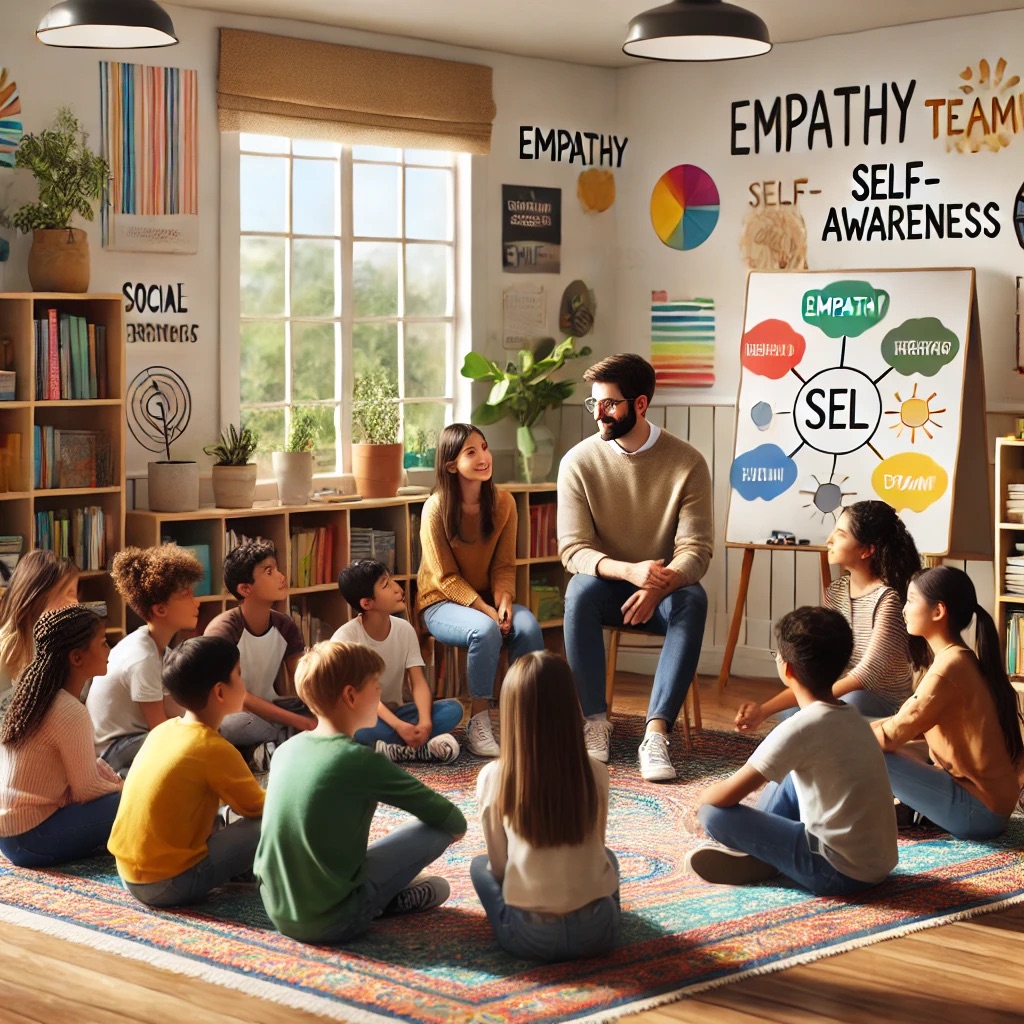

Social Emotional Learning: A Comprehensive Overview

Social Emotional Learning (SEL) has gained prominence as an integral component of education. Defined by the Collaborative for Academic, Social, and Emotional Learning (CASEL), SEL involves the process of acquiring and applying knowledge, attitudes, and skills to understand and manage emotions, achieve positive goals, demonstrate empathy, establish and maintain relationships, and make responsible decisions (CASEL, 2023).

The growing recognition of SEL stems from its demonstrated impact on students’ academic performance, mental health, and future success. This article delves into the five core components of SEL, its benefits, and the practical implications of integrating SEL into educational systems.

Core Components of Social Emotional Learning

CASEL identifies five core competencies that form the foundation of SEL programs:

1. Self-Awareness: The ability to recognize one’s emotions, thoughts, and values and understand how they influence behavior. Self-awareness also involves accurately assessing personal strengths and weaknesses.

2. Self-Management: Skills related to regulating emotions, setting and achieving goals, and managing stress.

3. Social Awareness: The capacity to empathize with others, appreciate diversity, and understand social norms.

4. Relationship Skills: Abilities to establish and maintain healthy relationships, communicate effectively, and resolve conflicts constructively.

5. Responsible Decision-Making: The process of making ethical and constructive choices about personal and social behavior.

These competencies provide a framework for creating supportive environments where students can thrive both academically and personally.

Benefits of Social Emotional Learning

1. Academic Performance

Research consistently shows that SEL enhances academic outcomes. A meta-analysis of 213 SEL programs revealed an average academic performance gain of 11 percentile points for students participating in SEL programs compared to their peers (Durlak et al., 2011).

2. Behavioral Improvements

SEL reduces behavioral problems such as aggression and disruptive behaviors. Programs that teach emotional regulation and conflict resolution help students respond to challenges more constructively (Jones et al., 2019).

3. Mental Health and Well-Being

Students exposed to SEL demonstrate lower levels of anxiety and depression and higher levels of emotional resilience (Taylor et al., 2017). These programs equip students with coping mechanisms to navigate stress and adversity effectively.

4. Long-Term Success

The skills fostered by SEL extend beyond the classroom. Emotional intelligence, teamwork, and decision-making are essential in the workplace and personal life, leading to higher rates of employment and life satisfaction (Weissberg et al., 2015).

Implementation Strategies for Educators

1. Embedding SEL in Curriculum

SEL can be integrated into daily lessons across subjects by incorporating group discussions, collaborative projects, and reflective writing assignments.

2. Professional Development for Teachers

Training educators to model and teach SEL competencies is critical for program success. Teachers need resources and strategies to address diverse student needs.

3. Family and Community Engagement

Involving families and communities in SEL initiatives ensures consistency in fostering social and emotional skills outside the classroom.

4. Data-Driven Practices

Regular assessment of SEL programs helps educators refine their approaches and demonstrate measurable outcomes.

Challenges and Considerations

While SEL offers numerous benefits, challenges such as lack of funding, teacher resistance, and the need for cultural adaptation must be addressed. Policymakers and educators must prioritize creating equitable SEL programs that consider diverse cultural and socioeconomic backgrounds.

Conclusion

Social Emotional Learning is a vital component of modern education, addressing the holistic development of students. By teaching students to navigate emotions, relationships, and decisions, SEL not only enhances academic success but also equips students with lifelong skills. Future research and policy efforts should focus on scaling SEL initiatives and addressing challenges to ensure all students benefit from these transformative programs.

This article is written by John S. Collier, MSW, LCSW. Mr. Collier has over 25 years experience in the social work field. He currently serves as the executive director and outpatient behavioral health therapist at Southeast Kentucky Behavioral health based out of London Kentucky. He may be reached by phone at 606-657-0532 extension 101 or by email at john@sckybh.com

References

• Collaborative for Academic, Social, and Emotional Learning (CASEL). (2023). What is SEL? Retrieved from https://casel.org

• Durlak, J. A., Weissberg, R. P., Dymnicki, A. B., Taylor, R. D., & Schellinger, K. B. (2011). The impact of enhancing students’ social and emotional learning: A meta-analysis of school-based universal interventions. Child Development, 82(1), 405-432.

• Jones, S. M., Bailey, R., & Kahn, J. (2019). The science and practice of social and emotional learning: Implications for state policymaking. The Aspen Institute.

• Taylor, R. D., Oberle, E., Durlak, J. A., & Weissberg, R. P. (2017). Promoting positive youth development through school-based social and emotional learning interventions: A meta-analysis of follow-up effects. Child Development, 88(4), 1156-1171.

• Weissberg, R. P., Durlak, J. A., Domitrovich, C. E., & Gullotta, T. P. (2015). Social and emotional learning: Past, present, and future. Handbook of Social and Emotional Learning: Research and Practice, 3-19.

This article underscores the transformative potential of SEL in education and beyond, offering a roadmap for educators, policymakers, and communities to prioritize holistic development.