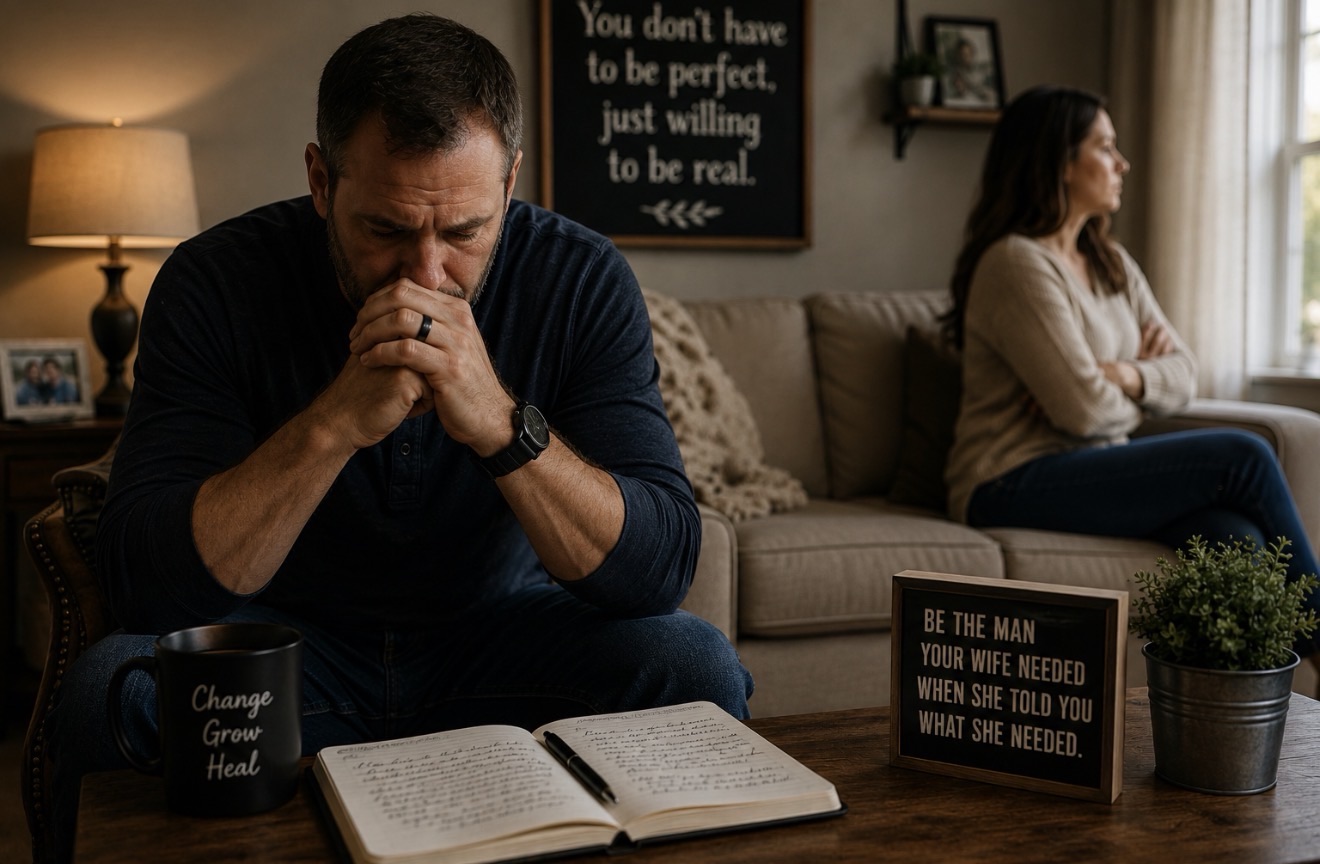
When Your Spouse Wants a Divorce—and You Are Finally Trying
Understanding Fear, Regret, Urgency, Change, and the Difficult Work of Rebuilding Trust
By John S. Collier, MSW, LCSW
When a spouse says they want a divorce, the words may feel like the sudden collapse of a life you believed would continue. You may feel shocked. You may feel confused. You may wonder how the marriage reached this point. You may believe the decision came without warning—even though your spouse may feel they have been expressing their pain, disappointment, loneliness, or unmet needs for years.
Suddenly, everything becomes urgent. You begin listening more carefully. You become more affectionate. You help more around the home. You spend more time with your spouse and family. You communicate more openly. You schedule counseling. You apologize. You begin doing many of the things your spouse had asked you to do before.
You may sincerely believe:
- “I finally understand.”
- “I know what I did wrong.”
- “I can change.”
- “I will never take this marriage for granted again.”
- “Please give me one more chance.”
Your effort may be genuine.
Your regret may be real. Your love may be sincere. Yet your spouse may remain uncertain. They may appear emotionally distant. They may question your motives. They may say:
- “You have done this before.”
- Or:
- “You only change when I am ready to leave.”
Those words may feel unfair because you know how deeply you are hurting and how hard you are trying. However, understanding your spouse’s hesitation may require recognizing an important difference:
You are experiencing the urgency of possibly losing the marriage today. Your spouse may be carrying the accumulated pain of feeling alone within the marriage for years.
Both experiences matter.
“Why Didn’t I Understand Before?”
One of the most painful questions may be:
“Why did it take the possibility of divorce for me to understand what my spouse needed?” Perhaps your spouse communicated their concerns many times.
Maybe they said:
- “I feel alone.”
- “I need more help.”
- “I do not feel important to you.”
- “I need you to listen.”
- “I want us to spend time together.”
- “I do not feel appreciated.”
- “I feel like we are roommates.”
- “I cannot keep living like this.”
At the time, you may have heard criticism rather than pain. You may have felt attacked. You may have become defensive. You may have explained why you were tired, stressed, busy, overwhelmed, or doing the best you could. You may have believed that providing financially, working hard, completing responsibilities, remaining faithful, caring for the children, or simply staying in the marriage demonstrated love. You may have thought:
- “I am here. What more do they want from me?”
- Meanwhile, your spouse may have been thinking:
- “You are physically here, but I still feel emotionally alone.”
Neither perspective automatically means that one person cared and the other did not. Sometimes partners express and recognize love differently. Sometimes one spouse believes they are contributing greatly while the other experiences unmet emotional or relational needs. However, when concerns are repeatedly minimized, avoided, dismissed, or postponed, emotional distance may gradually develop.
Why Divorce Can Suddenly Make Everything Clear
The possibility of divorce creates consequences that are difficult to ignore. Before divorce was mentioned, relationship concerns may have felt uncomfortable but manageable. You may have believed:
- “We are going through a difficult season.”
- “All couples have problems.”
- “Things will eventually get better.”
- “My spouse is upset, but they are not actually going anywhere.”
Then your spouse says:
“I want a divorce.”
Suddenly, the concerns no longer feel temporary. You begin imagining an empty home. You think about waking up without your spouse. You imagine holidays changing. You worry about the children. You think about finances, living arrangements, family traditions, companionship, shared memories, and the future you expected to have. You may recognize the value of ordinary moments only when you realize they may no longer be part of your life. Fear can create clarity. Loss can reveal value. Consequences can create urgency. That does not necessarily mean your effort is false. However, your spouse may wonder why the possibility of losing them created more urgency than their pain did.
“But I Really Am Trying This Time”
You may feel frustrated when your effort is questioned. You may think:
- “Why can’t they see that I am different?”
- “Why does everything I did wrong matter more than everything I am doing now?”
- “How long am I supposed to pay for the past?”
- “Why ask me to change if they will not believe me when I do?”
These are understandable questions. You may genuinely be changing. People can gain insight. People can recognize harmful patterns. People can learn healthier communication. People can become more emotionally available. People can change priorities. People can rebuild relationships. However, your spouse may not be rejecting your current effort. They may be protecting themselves from another disappointment.
If this pattern has happened before, they may remember previous apologies, promises, counseling appointments, affectionate periods, increased involvement, or temporary improvements. They may remember feeling hopeful. They may also remember what happened after the crisis passed.
Your spouse may not be asking: “Are you trying today?” They may be asking: “Will you still be trying after you feel certain that I am staying?”
The Difference Between Sincere Effort and Sustainable Change
Your effort can be sincere and still be temporary. This does not mean you are intentionally deceiving anyone. During a crisis, fear, grief, regret, and urgency can create powerful motivation. You may sincerely promise: “I will never do that again.” You may fully believe it. However, lasting change requires more than sincerity. It requires new habits. It requires accountability. It requires emotional awareness. It requires consistency. It may require individual counseling, couples counseling, education, support, honest self-reflection, and a willingness to examine behaviors that are uncomfortable to acknowledge.
Sustainable change continues after the immediate fear decreases. It continues when your spouse is no longer praising your effort. It continues when reconciliation remains uncertain. It continues when you are tired. It continues when life becomes stressful. It continues when changing is inconvenient. It continues when no one is watching. Lasting change is not demonstrated only by what you do while trying to prevent your spouse from leaving. It is demonstrated by who you become after the crisis is no longer controlling your behavior.
Understanding Why Your Spouse May Not Trust the Change
Trust is not rebuilt at the same speed that behavior can change. You may change your actions today. Your spouse may need months—or longer—to determine whether those actions represent a new pattern. You may think: “I have done everything they asked for during the last three weeks.” Your spouse may think: “I experienced the old pattern for many years.” Three good weeks do not automatically erase years of hurt.
This does not mean your current effort has no value. It means trust often requires repeated experiences over time. If your spouse has repeatedly hoped, trusted, reconciled, and later experienced the same disappointment, they may become cautious about hope itself. Hope may feel dangerous because hope requires emotional vulnerability. They may fear: “If I believe again, and everything returns to the way it was, I do not know whether I can survive another disappointment.” Their hesitation may not be punishment. It may be self-protection.
Your Intentions and Their Experience May Be Different
You may say: “I never intended to hurt you.” That may be true. You may not have intended for your spouse to feel neglected, ignored, unsupported, unwanted, unappreciated, or alone. However, intention and impact are not always the same. You may have intended to provide. Your spouse may have experienced emotional absence. You may have intended to avoid conflict. Your spouse may have experienced avoidance or abandonment. You may have intended to give your spouse space. Your spouse may have experienced disconnection. You may have intended to explain yourself. Your spouse may have experienced defensiveness. You may have intended to solve the problem. Your spouse may have needed empathy and understanding.
Recognizing the impact of your behavior does not require believing that you were intentionally cruel. Accountability is not the same as declaring yourself a bad person. Accountability means becoming willing to understand experiences beyond your intentions.
Avoid Making Your Spouse Responsible for Your Fear
When divorce becomes possible, you may experience panic, sadness, anxiety, anger, shame, grief, loneliness, or desperation. You may cry. You may struggle to sleep. You may repeatedly ask for reassurance. You may say:
- “Tell me there is still hope.”
- “Promise me you will not leave.”
- “Tell me what I need to do.”
- “How can you do this to our family?”
- “What about everything we built?”
Your pain deserves compassion. However, your spouse may already be emotionally exhausted. If they have spent years asking for change, they may not have the emotional capacity to comfort you about the consequences of the problems they were trying to address. Be careful not to make your spouse responsible for relieving your fear. Seek appropriate support. Talk with a therapist. Use healthy family or social supports without recruiting people to pressure your spouse. Reflect. Journal. Pray, if faith is meaningful to you. Learn to tolerate uncertainty without demanding immediate reassurance.
Your spouse may need space to understand what they feel. Respecting that space may be one of the first ways you demonstrate meaningful change.
Do Not Use Guilt as a Reason They Should Stay
Fear may cause people to say things they later regret. You may be tempted to say:
- “You are destroying our family.”
- “You are throwing away all these years.”
- “What will this do to the children?”
- “You are not giving me a chance.”
- “You are being selfish.”
- “You will regret this.”
- “No one will ever love you like I do.”
These statements may come from pain, but they can place responsibility for the entire relationship on the spouse considering divorce. The decision to divorce may be theirs. The history leading to that decision belongs to the relationship. Rather than asking: “How can you leave when I am trying?” Consider asking: “What happened between us that made leaving feel safer, healthier, or more hopeful than staying?”
The answer may be painful. Listening without immediately defending yourself may provide information that years of arguing could not.
Apologies Should Not Demand Immediate Forgiveness
A meaningful apology is not a transaction.
It does not say: “I apologized, so you should stay.” It does not say: “I admitted I was wrong, so you should trust me.” It does not say: “I changed, so you owe me another chance.” A healthier apology may sound like:
“I understand that my choices affected you. I am sorry. I recognize that my intentions do not erase your experience. I want to change because I need to become healthier—not only because I am afraid of losing you. I hope trust can be rebuilt, but I understand that I cannot demand it.”
An apology takes responsibility. It does not control the outcome.
Change Should Not Depend Entirely on Reconciliation
You may ask: “Why should I continue trying if my spouse may leave anyway?” Because the changes may still matter. Learning to communicate more effectively matters. Becoming emotionally available matters. Developing accountability matters. Understanding your relationship patterns matters. Becoming a healthier parent matters. Learning to listen matters. Addressing anger, avoidance, defensiveness, substance use, emotional withdrawal, dishonesty, unhealthy boundaries, work imbalance, or other concerns matters. Personal growth should not be used only as a bargaining tool to obtain reconciliation.
If your change depends entirely on your spouse promising to stay, then the change remains dependent on the crisis. Consider saying: “I hope we can rebuild our marriage. But whether we reconcile or not, I need to understand my role, address these patterns, and become healthier.”
That is not giving up on the marriage. It is taking responsibility for the part of change that belongs to you.
Questions to Ask Yourself
Rather than asking only, “How do I convince my spouse to stay?” consider asking:
- What concerns did my spouse repeatedly communicate?
- How did I usually respond?
- Did I listen—or immediately explain, defend, minimize, blame, withdraw, or attempt to end the conversation?
- Did I mistake the absence of arguments for relationship satisfaction?
- Did my spouse become quieter because things improved—or because they stopped believing change was possible?
- Have I made similar promises during previous relationship crises?
- What happened after those crises passed?
- Am I changing because I understand the harm—or primarily because I fear the consequences?
- Am I seeking counseling because I want growth—or because I believe attendance should persuade my spouse to stay?
- Can I respect my spouse’s boundaries even when those boundaries increase my fear?
- Can I listen to their experience without correcting their memory or debating their feelings?
- Am I willing to continue changing without receiving immediate forgiveness, trust, affection, or reassurance?
- What specific behaviors need to change?
- What support, education, counseling, or accountability will help make those changes sustainable?
- Who do I want to become regardless of the outcome of the marriage?
What Lasting Change May Look Like
Lasting change may include:
- Listening without immediately becoming defensive
- Accepting responsibility without adding “but”
- Acknowledging impact rather than focusing only on intent
- Following through without repeated reminders
- Attending counseling consistently
- Completing work outside counseling sessions
- Learning healthier communication and conflict-resolution skills
- Respecting emotional and physical boundaries
- Avoiding pressure, threats, guilt, or manipulation
- Allowing your spouse time to evaluate the change
- Becoming more emotionally present
- Sharing responsibilities consistently
- Expressing appreciation during ordinary life
- Maintaining change when stress increases
- Accepting that trust may return slowly
- Continuing personal growth even if reconciliation remains uncertain
The goal is not perfection. The goal is a pattern that is different enough, consistent enough, and sustained long enough to become trustworthy.
Couples Counseling May Help—but It Is Not Proof of Change
Scheduling couples counseling may be an important step. However, attending therapy is not the same as changing. Counseling may help partners:
- Understand repeating relationship patterns
- Improve communication
- Identify unmet needs
- Examine emotional withdrawal and defensiveness
- Develop healthier conflict-resolution skills
- Increase empathy
- Clarify boundaries
- Rebuild trust when appropriate
- Determine whether reconciliation is realistic
- Separate with greater understanding and respect when reconciliation is not possible
Do not treat counseling as evidence that your spouse must remain married. Therapy provides an opportunity for work. The work still has to occur.
If Your Spouse Still Chooses Divorce
This may be the outcome you fear most. You may believe: “If they leave, all my effort was meaningless.” It was not necessarily meaningless. Sometimes insight comes after significant consequences. Sometimes people recognize patterns too late to repair a particular relationship. That reality can be painful without making growth pointless. You may still become a healthier person. You may become a more emotionally available parent. You may learn to communicate more effectively. You may understand yourself more deeply. You may stop repeating patterns that caused harm. You may carry new insight into future relationships. You may grieve the marriage while continuing to grow. Change does not guarantee reconciliation. Reconciliation is an outcome involving two people. Personal growth is a responsibility that belongs to you.
A Necessary Distinction: Relationship Distress and Abuse Are Not the Same
Relationship conflict, emotional disconnection, avoidance, broken promises, and inconsistent effort should not automatically be labeled abuse. However, if the relationship includes intimidation, threats, coercive control, physical violence, sexual coercion, stalking, financial control, isolation, retaliation, or fear, the situation requires specialized assessment and safety-focused support.
If abusive behavior has occurred, intense apologies, affection, gifts, promises, or temporary improvement should not be treated as sufficient evidence that the risk has ended. Accountability in these circumstances requires specialized intervention, respect for safety planning, acceptance of consequences, and an end to pressure for reconciliation. Couples counseling may not be appropriate when fear, coercion, or active abuse prevents honest and safe participation.
The Question Is Not Only, “How Do I Get Them to Stay?”
You cannot force trust. You cannot demand forgiveness. You cannot pressure someone into believing that change is permanent. You cannot erase years of pain with several weeks of effort. You can listen. You can accept responsibility. You can seek help. You can respect boundaries. You can change unhealthy patterns. You can become consistent. You can continue the work after the immediate crisis passes.
Instead of asking: “What do I have to do to make my spouse stay?”
Consider asking: “What do I need to understand, accept, repair, and change so that I become healthier—regardless of the outcome?”
Your spouse may eventually trust the change. They may not. But sustainable change cannot depend entirely on controlling their decision.
Final Thought
Perhaps you truly did not understand how much pain your spouse was carrying. Perhaps you believed the marriage was difficult but secure. Perhaps you thought there would always be more time. Then divorce was mentioned, and suddenly you saw everything differently. Your fear may be real. Your regret may be genuine. Your effort may be sincere. Your love may still be strong. But your spouse may be asking whether the person standing before them today will remain after the fear settles and ordinary life returns.
You may want to say: “Please believe that I have changed.”
Your spouse may need to respond: “I need time to experience whether the change will last.”
Do not allow that uncertainty to become an excuse to return to old behaviors. Continue. Continue when you are afraid. Continue when you are disappointed. Continue when you do not receive immediate reassurance. Continue when your spouse remains uncertain. Continue when the crisis becomes quieter. Continue after the dust settles. Because the strongest evidence of change may not be how hard you fight when you are afraid of losing someone. It may be who you consistently choose to become—even when you cannot control whether they stay.
About the Author
John S. Collier, MSW, LCSW, is a Licensed Clinical Social Worker with more than 25 years of experience in behavioral health and human services. He is the founder and Executive Director of Southeast Kentucky Behavioral Health, LLC, where he provides clinical leadership and works to improve access to quality behavioral-health services and supports throughout Kentucky.
Throughout his career, John has worked with individuals, couples, families, children, and adults experiencing relationship difficulties, emotional distress, behavioral challenges, significant life transitions, grief, trauma, anxiety, depression, and other complex circumstances. His professional work emphasizes compassion, personal responsibility, healthy communication, emotional awareness, meaningful behavioral change, and the importance of recognizing the difference between intentions, promises, and consistent actions.
As a therapist, writer, educator, and speaker, John seeks to help people better understand the thoughts, emotions, experiences, and relationship patterns that influence their lives. His writing combines professional knowledge with practical insight and personal reflection to encourage readers to examine difficult experiences with honesty, empathy, accountability, and hope.
John believes that people are capable of meaningful change. However, sustainable change requires more than promises made during moments of fear. It requires accountability, emotional awareness, humility, consistent effort, respect for boundaries, and a willingness to continue growing even when the desired outcome is uncertain.
His educational articles are intended to encourage reflection, promote meaningful conversations, and help individuals make thoughtful, informed, and values-based decisions regarding their relationships, emotional well-being, and personal growth.
References
Caughlin, J. P., & Vangelisti, A. L. (1999). Desire for change in one’s partner as a predictor of the demand-withdraw pattern of marital communication. Communication Monographs, 66(1), 66–89. doi:10.1080/03637759909376462
Dichter, M. E., Thomas, K. A., Crits-Christoph, P., Ogden, S. N., & Rhodes, K. V. (2018). Coercive control in intimate partner violence: Relationship with women’s experience of violence, use of violence, and danger. Psychology of Violence, 8(5), 596–604. doi:10.1037/vio0000158
Leo, K., Crenshaw, A. O., Hogan, J. N., Bourne, S. V., Baucom, K. J. W., & Baucom, B. R. W. (2021). A replication and extension of the interpersonal process model of demand-withdraw behavior: Incorporating subjective emotional experience. Journal of Family Psychology, 35(4), 534–545. doi:10.1037/fam0000802
Papp, L. M., Kouros, C. D., & Cummings, E. M. (2009). Demand-withdraw patterns in marital conflict in the home. Personal Relationships, 16(2), 285–300. doi:10.1111/j.1475-6811.2009.01223.x
Sangeetha, J., Mohan, S., Hariharasudan, A., & Nawaz, N. (2022). Strategic analysis of intimate partner violence and the cycle of violence in the autobiographical text When I Hit You. Heliyon, 8(6), Article e09727. doi:10.1016/j.heliyon.2022.e09727