WELCOME!!!!
Look for the Good Things in Life

Life can feel busy and stressful, but focusing on the good things can make a big difference. This idea comes from something called positive psychology. It’s about paying attention to what makes us happy and strong instead of only thinking about problems.

Why Focus on the Positive?

  • It Helps You Feel Better
    When you think about what you’re thankful for, you feel happier and less worried. Writing down things you’re grateful for can boost your mood.
  • It’s Good for Your Health
    People who stay positive often sleep better, feel less stressed, and even live longer.
  • It Makes Friendships Stronger
    Saying “thank you” and showing kindness helps you connect with others.
  • It Helps You Handle Hard Times
    Positive thinking makes it easier to deal with challenges. You start seeing problems as chances to learn.

Easy Ways to Be More Positive

  1. Keep a Gratitude Journal
    Write down three things you’re thankful for every day.
  2. Say Good Things About Yourself
    Remind yourself of your strengths. For example: “I am a good friend” or “I work hard.”
  3. Find the Bright Side
    Stuck in traffic? Use the time to listen to music or think about your goals.
  4. Do Things You Love
    Play a sport, draw, or read—anything that makes you lose track of time.
  5. Practice Mindfulness
    Take a few minutes to breathe slowly and notice what’s around you.

Bottom Line: Looking for the good things doesn’t mean ignoring problems. It means choosing to notice the positive parts of life. When you do, you’ll feel happier, healthier, and more connected to others.


John S. Collier, MSW, LCSW, is a seasoned and compassionate clinical social worker based in London, Kentucky. He earned his Master of Social Work from the University of Kentucky. With over two decades of clinical experience, John provides therapy through Southeast Kentucky Behavioral Health, LLC, where he specializes in evidence-based modalities including cognitive behavioral therapy, psychodynamic approaches, and trauma-informed care. He is committed to offering client-centered support tailored to individuals, couples, and families. [sekybh.com], [vitadox.com]

John is known for his holistic, empathetic, and collaborative approach. He builds strong therapeutic relationships and adapts interventions to meet clients’ unique strengths and challenges. He also emphasizes community outreach, mental health advocacy, and destigmatizing care—particularly within underserved populations across Southeast Kentucky. [sekybh.com]


References

  1. Harvard Health: “Positive Psychology” [health.harvard.edu]
  2. BMC Psychology: “Positive psychological traits and psychological well-being…” [bmcpsychol…entral.com]
  3. Johns Hopkins Medicine: “The Power of Positive Thinking” [hopkinsmedicine.org]
  4. Harvard Health Blog: “Gratitude enhances health, brings happiness…” [health.harvard.edu]
  5. American Psychological Association: “Self‑affirmations can boost well‑being…” [apa.org]
  6. Power of Positivity: “10 Benefits of Positive Psychology…” [powerofpos…tivity.com]
  7. Psychology Today: “Wired for Positivity: How Optimism Shapes Our Well‑Being” [psychologytoday.com]
  8. Psychology Today: “5 Positive Psychology Findings for a Happier Life” [psychologytoday.com]
Dopamine: The Reward Hormone

Unlocking Motivation, Pleasure, and Purpose

Dopamine, often called the “reward hormone,” is a neurotransmitter that plays a major role in how we experience motivation, pleasure, and satisfaction. It is released in the brain when we achieve a goal, enjoy a delicious meal, or listen to music we love. This biochemical reaction reinforces positive behaviors and drives us to repeat them.


🧠 How Dopamine Works

Dopamine operates in a reward circuit known as the mesolimbic pathway. When you perform actions that your brain perceives as beneficial—like completing a task or eating a favorite food—dopamine is released, giving you a feeling of satisfaction and pleasure.

According to research by Stellar et al. (2011), the release of dopamine acts as a “motivational salience” signal that promotes goal-directed behavior.


🎯 Boosting Dopamine Naturally

To encourage healthy dopamine levels, consider integrating these daily habits:

  • Set and achieve small goals
  • Listen to music that uplifts you
  • Eat your favorite (healthy) comfort foods
  • Practice gratitude
  • Exercise regularly
  • Celebrate accomplishments, big or small

📚 References

  • Stellar, J. E., John-Henderson, N., Anderson, C. L., Gordon, A. M., McNeil, G. D., & Keltner, D. (2011). Positive affect and markers of inflammation: Discrete positive emotions predict lower levels of inflammatory cytokines. Emotion, 15(2), 129–133.
  • Volkow, N. D., Wang, G.-J., Fowler, J. S., & Telang, F. (2008). Overlapping neuronal circuits in addiction and obesity: Evidence of systems pathology. Philosophical Transactions of the Royal Society B, 363(1507), 3191–3200.

Telling Your Child “No” Without a Good Explanation

The word “no” is an essential part of parenting, helping children understand boundaries, safety, and appropriate behavior. However, simply saying “no” without offering an explanation can lead to frustration, confusion, and resistance from children. Research in developmental psychology and child behavior suggests that explaining the reasoning behind a “no” can foster better communication, cognitive development, and emotional regulation in children (Grolnick et al., 2007).

This article explores the importance of providing explanations when setting boundaries for children and how this approach can benefit their emotional and cognitive growth.

The Psychology Behind “No”

Children are naturally curious and seek to understand the world around them. When a parent tells a child “no” without an explanation, the child may not grasp the reasoning behind the restriction. This lack of understanding can lead to:

  • Increased frustration and defiance (Baumrind, 1991)
  • Reduced trust in parental guidance (Grusec & Goodnow, 1994)
  • Impaired problem-solving and decision-making skills (Deci & Ryan, 1985)

On the other hand, when parents provide an explanation, it allows the child to process the logic behind the rule, making them more likely to accept and internalize it (Smetana, 2011).

The Benefits of Explaining “No”

1. Encourages Critical Thinking and Decision-Making

Explaining “no” helps children develop reasoning skills. For example, if a child asks to eat candy before dinner, simply saying “no” may lead to frustration. Instead, saying, “We need to eat healthy food first so that your body gets the right nutrients. After dinner, you can have a small treat,” teaches the child about nutrition and decision-making (Piaget, 1952).

2. Reduces Defiance and Power Struggles

Children are more likely to comply when they understand the logic behind a rule. Research on authoritative parenting shows that children raised with explanations and open discussions are less likely to exhibit defiant behaviors than those raised with authoritarian approaches (Baumrind, 1991).

3. Strengthens Parent-Child Relationships

A child who receives explanations for parental decisions feels respected and valued. This approach fosters a stronger, more trusting relationship between parent and child, encouraging open communication and cooperation (Grolnick et al., 2007).

4. Teaches Emotional Regulation and Empathy

When parents explain the reasons behind restrictions, children learn to regulate their emotions and consider others’ perspectives. For example, saying, “You can’t grab that toy from your friend because it will make them sad,” helps a child understand social dynamics and empathy (Hoffman, 2000).

How to Effectively Explain “No”

  1. Be Clear and Age-Appropriate – Tailor explanations to the child’s level of understanding. A toddler may need a simple reason, while an older child can handle more complex explanations.
  2. Keep It Brief and Direct – Avoid over-explaining or lecturing, as young children have short attention spans.
  3. Use Positive Language – Instead of focusing on what the child cannot do, offer alternatives. For example, “You can’t run inside, but you can run outside,” maintains the boundary while redirecting the behavior.
  4. Encourage Questions – Allow children to ask questions about rules, which can further reinforce their understanding.
  5. Be Consistent – Ensure that explanations align with family values and remain consistent across situations.

Telling a child “no” without an explanation can lead to resistance, confusion, and frustration. By providing a rationale, parents help children develop cognitive, emotional, and social skills while fostering a respectful and cooperative relationship. Research supports that authoritative parenting—characterized by warmth, communication, and explanations—produces well-adjusted, independent, and empathetic children (Baumrind, 1991).

As parents, guiding children with reasoning and respect ensures they not only understand boundaries but also learn critical life skills that will benefit them in the long run.


References

  • Baumrind, D. (1991). The influence of parenting style on adolescent competence and substance use. Journal of Early Adolescence, 11(1), 56-95.
  • Deci, E. L., & Ryan, R. M. (1985). Intrinsic motivation and self-determination in human behavior. Springer.
  • Grolnick, W. S., Deci, E. L., & Ryan, R. M. (2007). Autonomy support in parenting: The role of structure. Handbook of Parenting, 1, 97-118.
  • Grusec, J. E., & Goodnow, J. J. (1994). Impact of parental discipline methods on the child’s internalization of values: A reconceptualization of current points of view. Developmental Psychology, 30(1), 4-19.
  • Hoffman, M. L. (2000). Empathy and moral development: Implications for caring and justice. Cambridge University Press.
  • Piaget, J. (1952). The origins of intelligence in children. Norton.
  • Smetana, J. G. (2011). Adolescents, families, and social development: How teens construct their worlds. Wiley.
Social Emotional Learning: A Comprehensive Overview

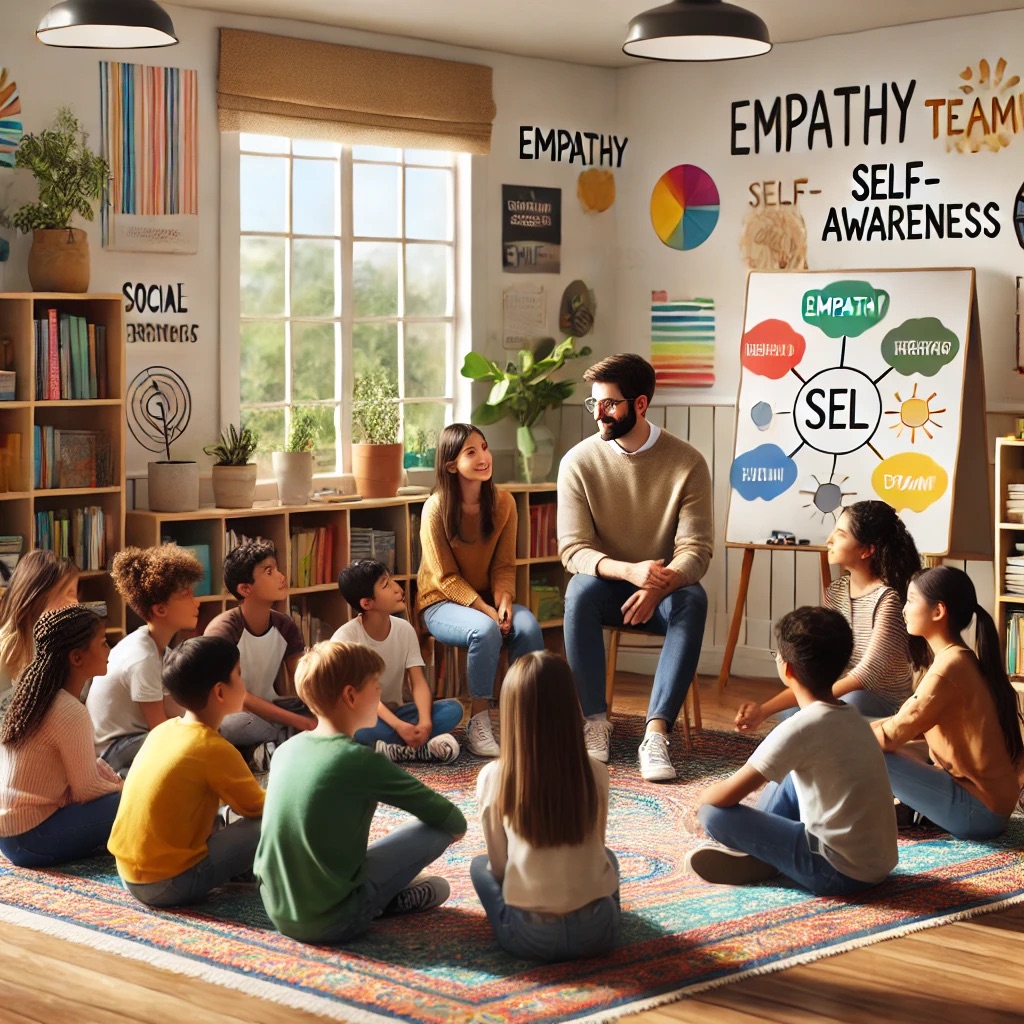
Social Emotional Learning (SEL) has gained prominence as an integral component of education. Defined by the Collaborative for Academic, Social, and Emotional Learning (CASEL), SEL involves the process of acquiring and applying knowledge, attitudes, and skills to understand and manage emotions, achieve positive goals, demonstrate empathy, establish and maintain relationships, and make responsible decisions (CASEL, 2023).

The growing recognition of SEL stems from its demonstrated impact on students’ academic performance, mental health, and future success. This article delves into the five core components of SEL, its benefits, and the practical implications of integrating SEL into educational systems.

Core Components of Social Emotional Learning

CASEL identifies five core competencies that form the foundation of SEL programs:

1. Self-Awareness: The ability to recognize one’s emotions, thoughts, and values and understand how they influence behavior. Self-awareness also involves accurately assessing personal strengths and weaknesses.

2. Self-Management: Skills related to regulating emotions, setting and achieving goals, and managing stress.

3. Social Awareness: The capacity to empathize with others, appreciate diversity, and understand social norms.

4. Relationship Skills: Abilities to establish and maintain healthy relationships, communicate effectively, and resolve conflicts constructively.

5. Responsible Decision-Making: The process of making ethical and constructive choices about personal and social behavior.

These competencies provide a framework for creating supportive environments where students can thrive both academically and personally.

Benefits of Social Emotional Learning

1. Academic Performance

Research consistently shows that SEL enhances academic outcomes. A meta-analysis of 213 SEL programs revealed an average academic performance gain of 11 percentile points for students participating in SEL programs compared to their peers (Durlak et al., 2011).

2. Behavioral Improvements

SEL reduces behavioral problems such as aggression and disruptive behaviors. Programs that teach emotional regulation and conflict resolution help students respond to challenges more constructively (Jones et al., 2019).

3. Mental Health and Well-Being

Students exposed to SEL demonstrate lower levels of anxiety and depression and higher levels of emotional resilience (Taylor et al., 2017). These programs equip students with coping mechanisms to navigate stress and adversity effectively.

4. Long-Term Success

The skills fostered by SEL extend beyond the classroom. Emotional intelligence, teamwork, and decision-making are essential in the workplace and personal life, leading to higher rates of employment and life satisfaction (Weissberg et al., 2015).

Implementation Strategies for Educators

1. Embedding SEL in Curriculum

SEL can be integrated into daily lessons across subjects by incorporating group discussions, collaborative projects, and reflective writing assignments.

2. Professional Development for Teachers

Training educators to model and teach SEL competencies is critical for program success. Teachers need resources and strategies to address diverse student needs.

3. Family and Community Engagement

Involving families and communities in SEL initiatives ensures consistency in fostering social and emotional skills outside the classroom.

4. Data-Driven Practices

Regular assessment of SEL programs helps educators refine their approaches and demonstrate measurable outcomes.

Challenges and Considerations

While SEL offers numerous benefits, challenges such as lack of funding, teacher resistance, and the need for cultural adaptation must be addressed. Policymakers and educators must prioritize creating equitable SEL programs that consider diverse cultural and socioeconomic backgrounds.

Conclusion

Social Emotional Learning is a vital component of modern education, addressing the holistic development of students. By teaching students to navigate emotions, relationships, and decisions, SEL not only enhances academic success but also equips students with lifelong skills. Future research and policy efforts should focus on scaling SEL initiatives and addressing challenges to ensure all students benefit from these transformative programs.

This article is written by John S. Collier, MSW, LCSW. Mr. Collier has over 25 years experience in the social work field. He currently serves as the executive director and outpatient behavioral health therapist at Southeast Kentucky Behavioral health based out of London Kentucky. He may be reached by phone at 606-657-0532 extension 101 or by email at john@sckybh.com

References

• Collaborative for Academic, Social, and Emotional Learning (CASEL). (2023). What is SEL? Retrieved from https://casel.org

• Durlak, J. A., Weissberg, R. P., Dymnicki, A. B., Taylor, R. D., & Schellinger, K. B. (2011). The impact of enhancing students’ social and emotional learning: A meta-analysis of school-based universal interventions. Child Development, 82(1), 405-432.

• Jones, S. M., Bailey, R., & Kahn, J. (2019). The science and practice of social and emotional learning: Implications for state policymaking. The Aspen Institute.

• Taylor, R. D., Oberle, E., Durlak, J. A., & Weissberg, R. P. (2017). Promoting positive youth development through school-based social and emotional learning interventions: A meta-analysis of follow-up effects. Child Development, 88(4), 1156-1171.

• Weissberg, R. P., Durlak, J. A., Domitrovich, C. E., & Gullotta, T. P. (2015). Social and emotional learning: Past, present, and future. Handbook of Social and Emotional Learning: Research and Practice, 3-19.

This article underscores the transformative potential of SEL in education and beyond, offering a roadmap for educators, policymakers, and communities to prioritize holistic development.