WELCOME
Being Intentional and Productive During Divorce Recovery

Divorce is not merely a legal process; it is a profound psychological, emotional, and identity-based transition. Research consistently shows that divorce ranks among the most stressful life events, often comparable to bereavement or serious illness (Holmes & Rahe, 1967). While the pain of divorce is unavoidable, prolonged suffering is not inevitable. Recovery becomes more adaptive—and ultimately more healing—when individuals approach this season with intentionality and purpose rather than avoidance or emotional paralysis.

Understanding Divorce as a Transition, Not a Failure

One of the most significant barriers to recovery is the tendency to frame divorce solely as a personal failure. This narrative fuels shame, rumination, and identity collapse. Contemporary psychological models instead conceptualize divorce as a life transition that disrupts routines, roles, and attachment bonds (Amato, 2010). When individuals reframe divorce as a transition requiring adjustment—not a verdict on their worth—they are better positioned to engage in productive healing behaviors.

Intentional recovery begins with acknowledging loss while resisting the urge to remain psychologically anchored in the past. This balance allows grief to be processed without becoming one’s permanent emotional residence.

The Role of Intentionality in Emotional Healing

Intentionality refers to making deliberate, values-driven choices rather than reacting solely to emotional distress. Following divorce, emotions often fluctuate rapidly—anger, sadness, relief, fear, and loneliness may coexist. Without intentional structure, individuals may default to maladaptive coping strategies such as isolation, substance use, rebound relationships, or excessive rumination (Sbarra & Emery, 2005).

Intentional recovery involves:

  • Setting boundaries with the former spouse
  • Creating predictable daily routines
  • Choosing behaviors aligned with long-term well-being rather than short-term relief

Research on self-regulation and coping demonstrates that purposeful goal-setting during periods of stress improves emotional stability and resilience (Baumeister & Vohs, 2007).

Productivity as a Stabilizing Force

Productivity during divorce recovery does not mean relentless busyness or emotional suppression. Instead, it involves engaging in meaningful activities that restore a sense of competence, agency, and identity. Studies indicate that mastery-oriented activities—such as learning new skills, maintaining employment, or pursuing health goals—can counteract the helplessness often experienced after relational loss (Bandura, 1997).

Productive behaviors that support recovery include:

  • Rebuilding physical health through exercise and sleep hygiene
  • Establishing financial literacy and independence
  • Engaging in purposeful work or service
  • Developing new personal or professional goals

These actions help regulate mood, rebuild confidence, and create forward momentum during a time that often feels stagnant.

Reconstructing Identity After Divorce

Divorce frequently dismantles shared identity—roles such as spouse, partner, or co-parent may change abruptly. Identity reconstruction is a central task of recovery (Hetherington & Kelly, 2002). Intentional individuals actively explore who they are becoming rather than clinging to who they were.

This process may involve reassessing values, redefining boundaries, and clarifying personal beliefs about relationships, trust, and commitment. Therapeutic research shows that individuals who engage in reflective meaning-making following divorce experience greater long-term psychological growth (Tashiro & Frazier, 2003).

Avoiding the Trap of Emotional Avoidance

Productivity must not become a mechanism for emotional avoidance. Suppressing grief or anger often prolongs distress rather than resolving it. Healthy recovery requires alternating between action and reflection—doing the work of daily life while allowing space for emotional processing.

Mindfulness-based and acceptance-oriented approaches emphasize acknowledging pain without allowing it to dictate behavior (Hayes et al., 2006). This balance enables individuals to move forward without denying the emotional reality of their experience.

Being intentional and productive during divorce recovery is not about rushing healing or minimizing loss. It is about choosing to engage with life in ways that foster stability, growth, and self-respect while grief runs its natural course. Divorce changes a person’s life, but it does not have to define the rest of it. Through deliberate choices, meaningful action, and reflective growth, recovery can become not just an ending—but a turning point.

This article was written by John S, Collier, MSW, LCSW-S. Mr. Collier has over 25 years of experience in the Social Work field. He currently serves as the Executive Director and Outpatient Behavioral Health Therapist for Southeast Kentucky Behavioral Health in London Kentucky. He may be reached by phone at (606) 657-0532 and by email at john@sekybh.com.


References

Amato, P. R. (2010). Research on divorce: Continuing trends and new developments. Journal of Marriage and Family, 72(3), 650–666. https://doi.org/10.1111/j.1741-3737.2010.00723.x

Bandura, A. (1997). Self-efficacy: The exercise of control. New York, NY: Freeman.

Baumeister, R. F., & Vohs, K. D. (2007). Self-regulation, ego depletion, and motivation. Social and Personality Psychology Compass, 1(1), 115–128. https://doi.org/10.1111/j.1751-9004.2007.00001.x

Hayes, S. C., Luoma, J. B., Bond, F. W., Masuda, A., & Lillis, J. (2006). Acceptance and commitment therapy: Model, processes, and outcomes. Behaviour Research and Therapy, 44(1), 1–25. https://doi.org/10.1016/j.brat.2005.06.006

Hetherington, E. M., & Kelly, J. (2002). For better or for worse: Divorce reconsidered. New York, NY: W. W. Norton & Company.

Holmes, T. H., & Rahe, R. H. (1967). The social readjustment rating scale. Journal of Psychosomatic Research, 11(2), 213–218. https://doi.org/10.1016/0022-3999(67)90010-4

Sbarra, D. A., & Emery, R. E. (2005). The emotional sequelae of nonmarital relationship dissolution: Analysis of change and intraindividual variability over time. Personal Relationships, 12(2), 213–232. https://doi.org/10.1111/j.1350-4126.2005.00112.x

Tashiro, T., & Frazier, P. (2003). “I’ll never be in a relationship like that again”: Personal growth following romantic relationship breakups. Personal Relationships, 10(1), 113–128. https://doi.org/10.1111/1475-6811.00039


I

When Kids Aren’t the “Center” — But Belong in a Strong Family

Many modern parenting philosophies promote a child-centered home — one in which children’s preferences, needs, and schedules shape family life. But emerging insights from psychology and family systems research suggest this approach often places undue pressure on parents and can unintentionally undermine family health and child development.

The popular social media observation that “a child-centered home doesn’t create happier kids — it creates exhausted parents and disconnected marriages” resonates with deeper research themes about family functioning and well-being. 

1. The Limits of Putting Children at the Center

Child-centered parenting often places the child’s needs above all others in daily decision-making and family priorities. While this approach grows from a desire to nurture and protect, critics argue it can slide into over-indulgence and conflict:

Psychology Today notes that highly child-centered parenting can “run the risk of producing entitled, narcissistic children” and higher conflict in the home because parental limits and structure are minimized in favor of child preference.  Rather than fostering secure independence, over-prioritizing the child’s wants can make routine parenting tasks — like chores, bedtime, or discipline — points of escalating frustration for both sides.

This dynamic often drains parents’ emotional and physical resources, contributing to parenting burnout — a researched phenomenon linked to chronic stress and strained parent­–child relationships. 

2. Children Thrive Within a Strong Family System

Instead of centering children above all else, family systems theory emphasizes balance: each member has a role, and the system functions healthiest when boundaries, mutual support, and interconnected relationships work well together. In healthy families:

Children feel secure belonging in the system rather than being its focus. This fosters autonomy, confidence, and emotional regulation. Quality of parental relationships, especially between caregivers, strongly predicts children’s social and emotional competence. Research shows that harmonious couple interactions contribute to better child outcomes, while conflict or parent exhaustion can spill over and affect child development. 

The idea of enmeshment — where family roles blur and individual boundaries erode — also illustrates how child-centrism can backfire. In enmeshed families, a child’s identity becomes intertwined with parental needs and anxieties, limiting both parent and child growth. 

3. When Marriages Suffer, Kids Also Feel the Impact

Importantly, research shows that marital quality is not just “between adults” — it affects children deeply. Studies using family systems models reveal that positive couple relationships correlate with fewer behavioral issues and stronger emotional adjustment in children. 

In contrast, when a marriage becomes strained because parents are exhausted or focused primarily on pleasing children, children may actually experience less stability and higher emotional tension at home — conditions that research associates with poorer adjustment over time. 

4. Belonging Over Centrality

Some contemporary voices in parenting psychology propose moving from a child-centric model to one of family-centered belonging. In this view:

Children benefit most when the entire family unit thrives, including parental well-being and marital health.  Happiness and emotional security for children come not from being the focus of attention, but from predictable boundaries, parental stability, and loving relationships between family adults.

A balanced family environment supports both children’s needs and parents’ well-being — a combination that research repeatedly links with better long-term emotional development in kids.

References

A child-centered home doesn’t create happier kids — it creates exhausted parents and disconnected marriages. (Social media post highlighting popular perspective).  Leff, J. S. & Goldberg, J. (2014). Parents’ relationship quality and children’s behavior — stable two-parent families show better child outcomes linked to positive couple interactions.  The Failure of Child-Centered Parenting. Psychology Today: Child-centered styles may increase conflict and entitlement risks.  Liang, J. & Chen, Z. (2025). Parents’ work–family conflict and parent–child relationship — parenting burnout can harm family bonds.  Tang, Y. (2023). Study on mother-father relationships and social-emotional competence — marital support positively influences children’s development.  Enmeshment. Psychology concept describing boundary issues when family roles become intertwined.  Nelson, J. A. (2009). Family stress and parental responses to children — parent fatigue affects responsiveness.  Reddit discussion on decentering children for family health. 

Telling Your Child “No” Without a Good Explanation

The word “no” is an essential part of parenting, helping children understand boundaries, safety, and appropriate behavior. However, simply saying “no” without offering an explanation can lead to frustration, confusion, and resistance from children. Research in developmental psychology and child behavior suggests that explaining the reasoning behind a “no” can foster better communication, cognitive development, and emotional regulation in children (Grolnick et al., 2007).

This article explores the importance of providing explanations when setting boundaries for children and how this approach can benefit their emotional and cognitive growth.

The Psychology Behind “No”

Children are naturally curious and seek to understand the world around them. When a parent tells a child “no” without an explanation, the child may not grasp the reasoning behind the restriction. This lack of understanding can lead to:

  • Increased frustration and defiance (Baumrind, 1991)
  • Reduced trust in parental guidance (Grusec & Goodnow, 1994)
  • Impaired problem-solving and decision-making skills (Deci & Ryan, 1985)

On the other hand, when parents provide an explanation, it allows the child to process the logic behind the rule, making them more likely to accept and internalize it (Smetana, 2011).

The Benefits of Explaining “No”

1. Encourages Critical Thinking and Decision-Making

Explaining “no” helps children develop reasoning skills. For example, if a child asks to eat candy before dinner, simply saying “no” may lead to frustration. Instead, saying, “We need to eat healthy food first so that your body gets the right nutrients. After dinner, you can have a small treat,” teaches the child about nutrition and decision-making (Piaget, 1952).

2. Reduces Defiance and Power Struggles

Children are more likely to comply when they understand the logic behind a rule. Research on authoritative parenting shows that children raised with explanations and open discussions are less likely to exhibit defiant behaviors than those raised with authoritarian approaches (Baumrind, 1991).

3. Strengthens Parent-Child Relationships

A child who receives explanations for parental decisions feels respected and valued. This approach fosters a stronger, more trusting relationship between parent and child, encouraging open communication and cooperation (Grolnick et al., 2007).

4. Teaches Emotional Regulation and Empathy

When parents explain the reasons behind restrictions, children learn to regulate their emotions and consider others’ perspectives. For example, saying, “You can’t grab that toy from your friend because it will make them sad,” helps a child understand social dynamics and empathy (Hoffman, 2000).

How to Effectively Explain “No”

  1. Be Clear and Age-Appropriate – Tailor explanations to the child’s level of understanding. A toddler may need a simple reason, while an older child can handle more complex explanations.
  2. Keep It Brief and Direct – Avoid over-explaining or lecturing, as young children have short attention spans.
  3. Use Positive Language – Instead of focusing on what the child cannot do, offer alternatives. For example, “You can’t run inside, but you can run outside,” maintains the boundary while redirecting the behavior.
  4. Encourage Questions – Allow children to ask questions about rules, which can further reinforce their understanding.
  5. Be Consistent – Ensure that explanations align with family values and remain consistent across situations.

Telling a child “no” without an explanation can lead to resistance, confusion, and frustration. By providing a rationale, parents help children develop cognitive, emotional, and social skills while fostering a respectful and cooperative relationship. Research supports that authoritative parenting—characterized by warmth, communication, and explanations—produces well-adjusted, independent, and empathetic children (Baumrind, 1991).

As parents, guiding children with reasoning and respect ensures they not only understand boundaries but also learn critical life skills that will benefit them in the long run.


References

  • Baumrind, D. (1991). The influence of parenting style on adolescent competence and substance use. Journal of Early Adolescence, 11(1), 56-95.
  • Deci, E. L., & Ryan, R. M. (1985). Intrinsic motivation and self-determination in human behavior. Springer.
  • Grolnick, W. S., Deci, E. L., & Ryan, R. M. (2007). Autonomy support in parenting: The role of structure. Handbook of Parenting, 1, 97-118.
  • Grusec, J. E., & Goodnow, J. J. (1994). Impact of parental discipline methods on the child’s internalization of values: A reconceptualization of current points of view. Developmental Psychology, 30(1), 4-19.
  • Hoffman, M. L. (2000). Empathy and moral development: Implications for caring and justice. Cambridge University Press.
  • Piaget, J. (1952). The origins of intelligence in children. Norton.
  • Smetana, J. G. (2011). Adolescents, families, and social development: How teens construct their worlds. Wiley.
Supporting Children with ADHD in Schools: Strategies for Educational Success

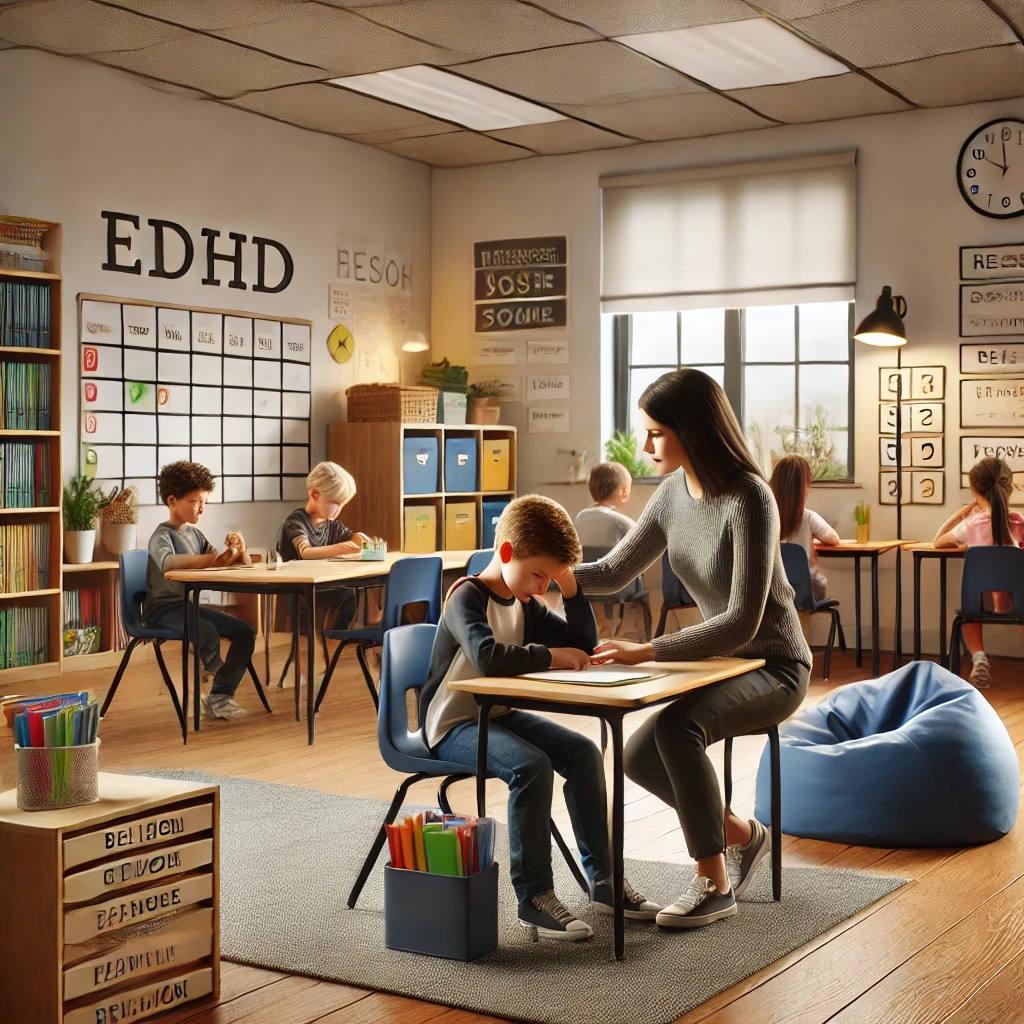
Attention-Deficit/Hyperactivity Disorder (ADHD) affects many children and can present challenges in educational settings, including difficulties with focus, organization, and emotional regulation. However, with proper support, schools can play a crucial role in helping children with ADHD thrive academically and socially. This article outlines evidence-based strategies that educators and administrators can implement to support children with ADHD in achieving educational success.

1. Provide Structured and Predictable Routines

Children with ADHD benefit from consistent routines that reduce uncertainty and help them focus.

• Why it works: Predictable schedules minimize distractions and promote self-regulation (Barkley, 2021).

• Implementation: Schools can use visual schedules, consistent class routines, and clear transitions between activities. Providing a daily agenda at the beginning of the day can help students anticipate tasks and prepare mentally.

2. Use Individualized Education Plans (IEPs) and 504 Plans

For students with ADHD, accommodations through IEPs or 504 Plans can address their unique needs.

• Why it works: These plans allow for tailored interventions, helping students access the curriculum effectively (DuPaul & Stoner, 2014).

• Implementation: Accommodations may include extended test time, preferential seating, or modified assignments to reduce cognitive overload.

3. Incorporate Movement Breaks

Frequent physical activity helps children with ADHD regulate their energy and improve focus.

• Why it works: Research shows that movement increases dopamine levels, enhancing attention and motivation (Halperin et al., 2020).

• Implementation: Integrate short movement breaks, such as stretching, walking, or classroom yoga, between lessons. Schools can also provide fidget tools or standing desks for students who struggle with sitting still.

4. Offer Clear and Concise Instructions

Children with ADHD often struggle with processing lengthy or complex directions.

• Why it works: Simplifying instructions reduces cognitive strain and helps students stay focused (Zentall, 2015).

• Implementation: Use step-by-step directions, written instructions, and visual aids. Check for understanding by having students repeat instructions back to the teacher.

5. Provide Positive Reinforcement

Reinforcing positive behavior can motivate students with ADHD to stay on task and meet expectations.

• Why it works: Positive reinforcement fosters a growth mindset and builds self-esteem (Millichap, 2021).

• Implementation: Use praise, reward systems, or token economies to celebrate small successes. Focus on effort and improvement rather than solely on outcomes.

6. Create an ADHD-Friendly Classroom Environment

A well-structured and minimally distracting classroom can help students stay focused.

• Why it works: Environmental adjustments reduce sensory overload and support sustained attention (Pfeiffer, 2022).

• Implementation: Use organizational tools like color-coded folders, labeled bins, and clutter-free desks. Position students away from high-traffic areas and provide quiet zones for focused work.

7. Teach Executive Function Skills

Children with ADHD often need support developing skills such as time management and organization.

• Why it works: Strengthening executive function helps students manage their workload and responsibilities (Zelazo & Lyons, 2012).

• Implementation: Introduce tools like planners, checklists, and digital calendars. Teach students to break down assignments into smaller steps and set achievable goals.

8. Foster Open Communication with Families

Collaboration with parents ensures consistency in strategies used at home and school.

• Why it works: A team-based approach improves problem-solving and creates a unified support system (DuPaul et al., 2011).

• Implementation: Schedule regular parent-teacher conferences, send home progress reports, and maintain open lines of communication via email or apps.

9. Provide Social-Emotional Support

Children with ADHD often face challenges with peer relationships and emotional regulation.

• Why it works: Social-emotional learning (SEL) programs improve self-awareness, empathy, and interpersonal skills (Elias et al., 2015).

• Implementation: Incorporate SEL lessons into the curriculum and provide access to school counselors for emotional support. Use role-playing activities to teach conflict resolution and social skills.

10. Leverage Technology

Technology can help students with ADHD stay organized and engaged in their learning.

• Why it works: Digital tools cater to diverse learning styles and help students track tasks and deadlines (Radesky et al., 2020).

• Implementation: Use apps like ClassDojo for behavior tracking, Google Calendar for scheduling, or gamified learning platforms to maintain engagement.

Schools have a vital role in supporting children with ADHD by creating inclusive environments, providing individualized accommodations, and teaching skills that foster independence. Through structured routines, positive reinforcement, and open communication with families, schools can empower children with ADHD to succeed academically and socially.

This article was written by John S. Collier, MSW, LCSW. Mr. Collier has over 25 years experience in the social work field. He currently serves as the executive Director and outpatient behavioral health therapist through Southeast Kentucky Behavioral health based out of London Kentucky. John may be reached by phone at 606-657-0532 extension 101 or by email at john@sekybh.com.

References

• Barkley, R. A. (2021). Taking Charge of ADHD: The Complete, Authoritative Guide for Parents. Guilford Press.

• DuPaul, G. J., & Stoner, G. (2014). ADHD in the Schools: Assessment and Intervention Strategies. Guilford Publications.

• DuPaul, G. J., et al. (2011). Home-school collaboration in ADHD management. School Psychology Review, 40(4), 494-512.

• Elias, M. J., et al. (2015). Promoting Social and Emotional Learning: Guidelines for Educators. ASCD.

• Halperin, J. M., et al. (2020). Physical activity intervention improves sustained attention and executive functioning in children with ADHD. Journal of Attention Disorders, 24(10), 1408-1415.

• Millichap, J. G. (2021). Attention Deficit Hyperactivity Disorder Handbook: A Physician’s Guide to ADHD. Springer.

• Pfeiffer, S. (2022). Routines for children with ADHD: Why they matter and how to build them. Psychology Today.

• Radesky, J., et al. (2020). Digital technology and ADHD: Benefits and risks. Pediatrics, 145(S2), S157-S162.

• Zentall, S. S. (2015). Environmental support for children with ADHD. Behavioral Interventions, 30(3), 153-164.

• Zelazo, P. D., & Lyons, K. E. (2012). Mindfulness training in childhood. Developmental Psychology, 48(5), 1023-1031.