
Welcome to SOUTHEAST KENTUCKY BEHAVIORAL HEALTH

Archives October 2026

Becoming Better: The Daily Work of a Good Man

“What we do for ourselves dies with us. What we do for others and the world remains and is immortal.”
— Albert Pine (often attributed to Albert Pike)

As I’ve gotten older, I have found myself thinking more about what kind of man I am and what kind of man I want to become.

Not because I think I have everything figured out.

Actually, it is the opposite.

The more I learn, the more I realize how much I still need to grow.

Every day, I try to be a better man than I was yesterday. And if I’m honest, that can be hard. Some days I do well. Other days I fall short. I lose my patience. I become frustrated. I make mistakes. I say things I wish I could take back.

But then I wake up the next morning and try again.

For me, that is what being a moral man looks like.

It is not being perfect.

It is being committed to growing.

The Man in the Mirror

Every morning, the first person I have to answer to is the man in the mirror.

I can fool other people. I can make excuses. I can blame circumstances.

But deep down, I know when I could have done better.

I know when I should have listened more.

I know when I should have shown more patience.

I know when I should have chosen courage instead of comfort.

The struggle is not with other people nearly as much as it is with myself.

The person I am competing with today is the person I was yesterday.

What Really Matters

As the Executive Director of a growing behavioral health organization, I spend much of my life helping people. I work with individuals who are struggling, families who are hurting, children who need support, and staff members who are trying to make a difference.

The longer I do this work, the more I realize something important.

People will not remember most of our titles.

They will not remember how many meetings we attended.

They will not remember how much money we made.

But they will remember how we treated them.

They will remember whether we showed up when they needed us.

They will remember whether we cared.

That is why Albert Pine’s quote speaks so deeply to me.

Everything I do for myself will eventually be gone.

But the people I help, the encouragement I give, the kindness I show, and the lives I touch may continue long after I am gone.

A Good Man Is Never Finished

One lesson life has taught me is that becoming a good man is never a completed project.

There is always room to improve.

I can become a better father.

A better leader.

A better friend.

A better partner.

A better listener.

A better example.

There is always another lesson to learn and another weakness to overcome.

For many men, that can feel discouraging.

I see it differently.

I believe it is a gift.

If I still have room to grow, then I still have purpose.

The Quiet Things Matter Most

Many people think a legacy is built by doing something famous.

I do not believe that.

I believe most legacies are built in ordinary moments.

A father staying up late to help his child.

A husband keeping his promises.

A friend answering the phone when someone is hurting.

A man doing the right thing when nobody is watching.

These moments may never make headlines.

But they shape lives.

In my work, I have met many people who can clearly remember a teacher, coach, parent, counselor, or mentor who changed their life with a few simple words or actions.

That is the power of doing good for others.

Small acts often leave the biggest footprints.

Why We Keep Trying

The world can be difficult.

There are days when being kind feels harder than being angry.

There are days when honesty costs us something.

There are days when doing the right thing seems unnoticed.

Yet good men keep trying.

We keep trying because character matters.

We keep trying because our children are watching.

We keep trying because the people around us deserve our best.

We keep trying because we know the world becomes a little better every time someone chooses integrity over selfishness.

A moral man does not always succeed.

But he refuses to quit trying.

The Immortal Part of a Man

One day, every one of us will leave this world.

Our jobs will be filled by someone else.

Our belongings will belong to someone else.

Our accomplishments will slowly fade into history.

But something remains.

The love we gave.

The lives we helped.

The wisdom we shared.

The people we encouraged.

The sacrifices we made for others.

That is the immortal part of a man.

Not the things he owned.

The lives he touched.

Conclusion

When I think about Albert Pine’s quote, I am reminded that the goal is not simply to have a successful life.

The goal is to have a meaningful one.

I do not want to be remembered for what I accumulated.

I want to be remembered for what I contributed.

Like many men, I am still a work in progress. I still stumble. I still learn. I still have days when I am not the man I want to be.

But every morning, I get another chance.

Another chance to be a little wiser.

A little kinder.

A little stronger.

A little better than I was yesterday.

And if I can help someone else along the way, then perhaps a small part of my life will continue living in the lives of others.

That is the kind of immortality worth striving for.


“The goal is not to become a perfect man. The goal is to become a better man today than you were yesterday and a better man tomorrow than you are today.”


About the Author

John S. Collier, MSW, LCSW-S is a Licensed Clinical Social Worker Supervisor, Executive Director of Southeast Kentucky Behavioral Health, LLC, and author of The Mind’s Trestle Board. Through his work in behavioral health, leadership, and writing, he explores personal growth, resilience, character development, and the daily pursuit of becoming the person we were created to be.


References

Frankl, V. E. (2006). Man’s Search for Meaning. Beacon Press.

Covey, S. R. (2004). The 7 Habits of Highly Effective People. Free Press.

Aristotle. Nicomachean Ethics.

Pine, A. (attributed). “What we do for ourselves dies with us. What we do for others and the world remains and is immortal.”


Southeast Kentucky Behavioral Health proudly supports Breast Cancer Awareness Month.

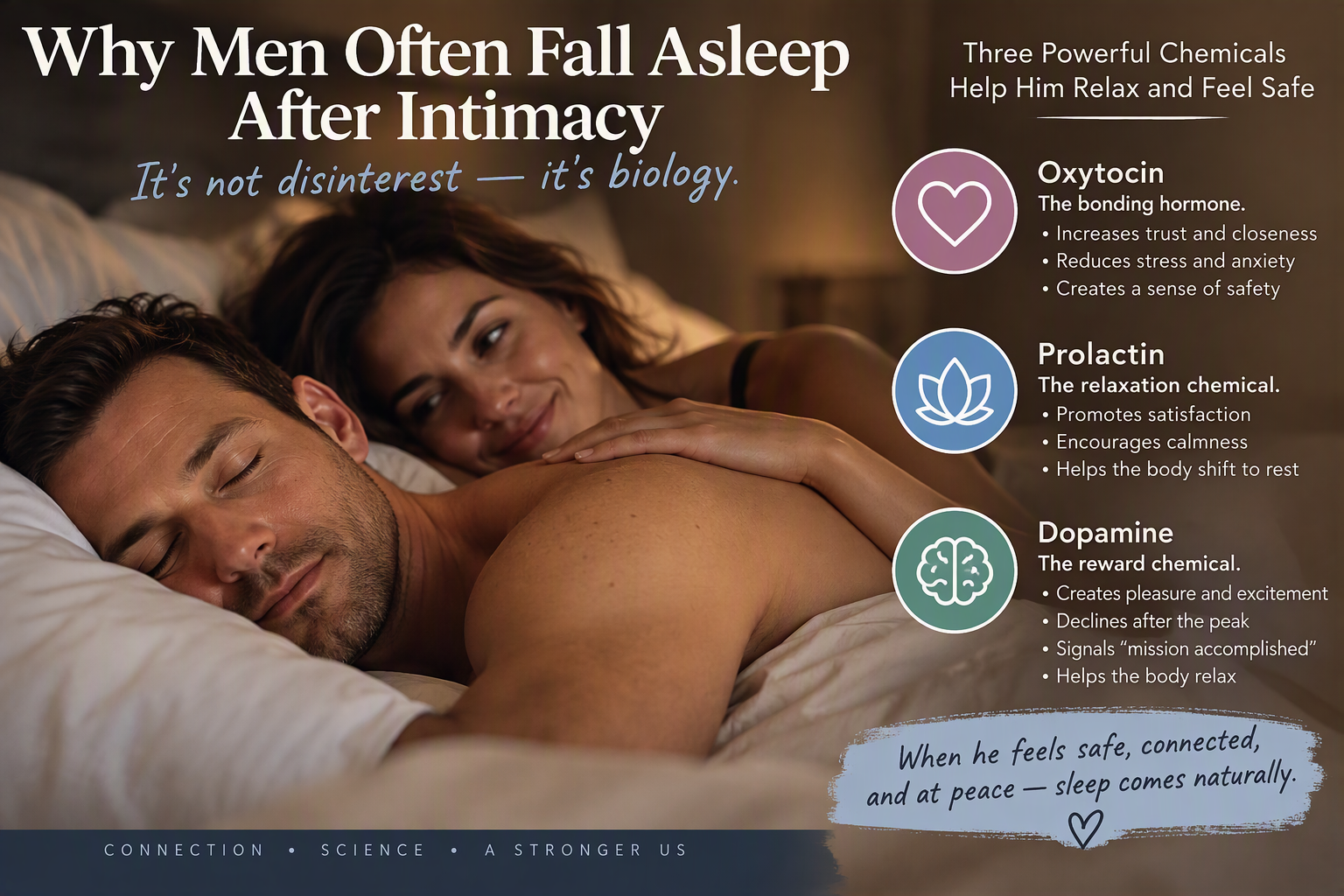
Why Men Often Fall Asleep After Intimacy: The Science of Feeling Safe, Relaxed, and Connected

For many couples, it is a familiar scene: moments after intimacy, one partner is ready to talk while the other is drifting off to sleep. Although this stereotype is often portrayed in jokes and movies, there is actually a fascinating biological explanation behind it. The tendency for many men to become sleepy after intimacy is not usually a sign of disinterest or emotional withdrawal. Rather, it is often the result of several powerful brain chemicals working together to create feelings of relaxation, satisfaction, and safety.


More Than Just Physical Exhaustion

Many people assume that men fall asleep after intimacy simply because they are physically tired. While physical exertion can contribute, the explanation goes much deeper. During intimacy and emotional closeness, the brain releases a combination of hormones and neurotransmitters that encourage relaxation, reduce stress, and promote bonding.

Three of the most important chemicals involved are:

  1. Oxytocin
  2. Prolactin
  3. Dopamine (followed by a natural reduction after peak release)

Together, these chemicals create a biological environment that encourages calmness, emotional security, and sleep.


1. Oxytocin: The Bonding Hormone

Oxytocin is often called the “love hormone” or “bonding hormone.” It is released during moments of trust, affection, physical touch, and emotional connection.

When oxytocin levels rise, people often experience:

  • Increased feelings of trust
  • Greater emotional closeness
  • Reduced stress and anxiety
  • Lower blood pressure
  • A sense of calm and safety

For many men, oxytocin contributes to a feeling that they can finally let their guard down. The body’s stress-response system quiets, muscles relax, and the mind shifts away from vigilance and toward rest.

In a way, oxytocin tells the brain:

“You are safe. You are connected. You can relax now.”


2. Prolactin: The Relaxation Chemical

Prolactin is one of the least discussed but most important chemicals involved in post-intimacy sleepiness.

Following intimacy, prolactin levels naturally increase. Researchers believe prolactin contributes to feelings of:

  • Satisfaction
  • Fulfillment
  • Contentment
  • Relaxation
  • Sleepiness

Interestingly, elevated prolactin levels are associated with the transition from arousal back to a resting state. Think of prolactin as the body’s way of helping someone move from high levels of excitement into a period of recovery and restoration.

Many scientists believe prolactin plays a significant role in why men often become drowsy afterward.


3. Dopamine: The Reward Chemical

Dopamine is often referred to as the brain’s “reward neurotransmitter.”

Before and during intimacy, dopamine levels increase substantially. This creates anticipation, motivation, pleasure, and excitement.

However, once the experience is complete, dopamine naturally declines toward baseline levels.

This shift can create a feeling similar to what happens after completing a major project, winning a competition, or achieving a long-sought goal.

The brain essentially says:

“Mission accomplished.”

As dopamine levels settle, relaxation often follows. Combined with the effects of oxytocin and prolactin, the body moves from energized engagement to peaceful rest.


The Forgotten Factor: Emotional Safety

While hormones and neurotransmitters are important, another element is often overlooked:

Feeling Safe

Many men carry significant stress throughout the day.

Responsibilities involving:

  • Work
  • Family
  • Finances
  • Relationships
  • Personal expectations

can keep the nervous system in a heightened state of alertness.

Moments of genuine emotional and physical connection can create a temporary space where those defenses are lowered. A man who feels accepted, loved, and emotionally secure may experience a profound reduction in stress.

When the body no longer feels the need to remain on guard, sleep can come quickly.

In clinical terms, the nervous system shifts away from the “fight-or-flight” response and toward the parasympathetic nervous system, often called the “rest-and-digest” system.

This state promotes:

  • Relaxation
  • Digestion
  • Recovery
  • Bonding
  • Sleep

What It Does Not Mean

One of the most common misunderstandings occurs when a partner interprets post-intimacy sleepiness as emotional distance.

In reality, a man falling asleep afterward does not necessarily mean:

  • He is bored.
  • He is emotionally detached.
  • He is not interested in conversation.
  • He is taking his partner for granted.

Often, it means exactly the opposite.

The combination of oxytocin, prolactin, and dopamine shifts can create a powerful sense of contentment and security. For many men, sleep is not a sign of withdrawal but a sign that the body feels safe enough to fully relax.


A Note About Individual Differences

Not every man experiences this response, and many women experience similar effects. Biology varies from person to person.

Factors such as:

  • Age
  • Health
  • Stress levels
  • Sleep deprivation
  • Hormonal differences
  • Relationship quality

can all influence how someone responds after intimacy.

The important takeaway is that these reactions are influenced by both biology and emotional connection.


Final Thoughts

The tendency for many men to fall asleep after intimacy is not merely a stereotype. It is rooted in a complex interaction of neurochemistry and human attachment. Oxytocin promotes bonding and safety, prolactin encourages relaxation and satisfaction, and dopamine gradually settles after the brain’s reward system has been activated.

When these biological processes occur within a trusting relationship, the result can be a profound sense of peace. The body relaxes, stress decreases, emotional walls come down, and sleep often follows.

Far from indicating disinterest, post-intimacy sleepiness may actually be one of the body’s ways of saying:

“I feel safe. I feel connected. I am finally able to rest.”


About the Author

John S. Collier, MSW, LCSW-S is a Licensed Clinical Social Worker Supervisor and Executive Director of Southeast Kentucky Behavioral Health, LLC. He is the author of The Mind’s Trestle Board and writes about mental health, relationships, human behavior, resilience, and personal growth. Through his work, he seeks to bridge clinical knowledge with everyday life experiences, helping readers better understand themselves and the people they love.


References

Brody, S., & Krüger, T. H. C. (2006). The post-orgasmic prolactin increase following intercourse is greater than following masturbation and suggests greater satiety. Biological Psychology, 71(3), 312-315.

Carter, C. S. (2014). Oxytocin pathways and the evolution of human behavior. Annual Review of Psychology, 65, 17-39.

Diamond, L. M. (2004). Emerging perspectives on distinctions between romantic love and sexual desire. Current Directions in Psychological Science, 13(3), 116-119.

Levine, S. B. (2003). The nature of sexual desire: A clinician’s perspective. Archives of Sexual Behavior, 32(3), 279-285.

Uvnäs-Moberg, K. (1998). Oxytocin may mediate the benefits of positive social interaction and emotions. Psychoneuroendocrinology, 23(8), 819-835.