
Welcome to SOUTHEAST KENTUCKY BEHAVIORAL HEALTH
Do I Manipulate My Parents?

Have you ever convinced your parents to change their minds by making them feel guilty, throwing a tantrum, or promising something you didn’t intend to follow through on? If so, you might be using manipulation. Don’t worry—you’re not alone, and this doesn’t make you a bad person. Understanding why you might manipulate and how to communicate better with your parents can make your relationships stronger and healthier.

What is Manipulation?

Manipulation means influencing someone to do what you want, often by using guilt, emotions, or other tactics. For example:

  • Complaining about how unfair rules are until your parents give in.
  • Saying, “You never let me do anything,” to make them feel bad.
  • Pitting your parents against each other to get a “yes” when one says “no.”

Sometimes manipulation happens without you even realizing it!


Why Do Teens Manipulate Their Parents?

It’s normal to want freedom, and you might think manipulating is the best way to get it. Here are some common reasons:

  1. Independence: You’re growing up and want to make your own decisions, but you might not know how to ask for it directly.
  2. Avoiding Conflict: Manipulation can feel easier than talking about what you really need or want.
  3. Testing Boundaries: You might be figuring out how far you can push the rules.
  4. Emotional Needs: If you feel misunderstood or ignored, manipulation might seem like the only way to get attention.

According to psychologist Dr. Laurence Steinberg, teens are still developing their ability to think long-term. This can make quick fixes like manipulation more appealing (Steinberg, 2014).


How to Tell If You’re Manipulating

Here are some signs to look for:

  • You often feel guilty after conversations with your parents.
  • You make promises you don’t plan to keep, like saying, “I’ll clean my room later,” but never do.
  • You use your emotions (anger, crying, etc.) to get what you want instead of calmly explaining why you need it.

If these behaviors sound familiar, it’s a good idea to try a different approach.


How to Communicate Instead of Manipulate

Healthy communication can help you get what you want without hurting your relationship with your parents. Here’s how to start:

  1. Be Honest
    Instead of twisting the truth, explain how you feel and what you need. For example, “I feel left out when my friends are allowed to go out, and I’m not. Can we talk about it?”
  2. Listen to Their Side
    Parents have reasons for their decisions, even if they seem unfair. Listening can help you understand their perspective.
  3. Compromise
    Negotiating, like agreeing to finish homework before hanging out with friends, shows responsibility.
  4. Stay Calm
    Even if you’re upset, try to speak calmly instead of yelling or crying. It helps them take you seriously.

Why It’s Important to Stop Manipulation

When you manipulate your parents, it might work temporarily, but it can hurt your relationship in the long run. Manipulation can make your parents feel disrespected or tricked, which can lead to mistrust. Learning to communicate honestly helps you build a relationship based on trust and mutual respect.


Figuring out how to get what you want without manipulation is a part of growing up. It might take practice, but learning to be open, honest, and calm with your parents will help them see you as mature and responsible. And remember, everyone makes mistakes—what matters is trying to do better.

This article has been written by John S. Collier, MSW, LCSW. Mr. Collier has over 25 years experience in the social work field. He currently serves as the Executive Director and Outpatient Behavioral Health Therapist through Southeast Kentucky Behavioral Health, LLC based out of London Kentucky. He may be reached by phone (606) 657-0532 extension 101 or by email at john@sekybh.

References:

  1. Siegel, D. J., & Bryson, T. P. (2012).The Whole-Brain Child: 12 Revolutionary Strategies to Nurture Your Child’s Developing Mind. Delacorte Press.
    • Explores how understanding brain development can improve parent-teen communication.
  2. Ginsburg, K. R. (2011).Building Resilience in Children and Teens: Giving Kids Roots and Wings. American Academy of Pediatrics.
    • Provides insights into fostering resilience and healthy relationships in teens.
  3. American Academy of Pediatrics. (2018).Parenting Your Teenager: Strategies for Building Trust and Respect.
    • Offers guidance on managing common challenges in adolescence and fostering mutual respect.
  4. Berk, L. E. (2020).Development Through the Lifespan (7th ed.). Pearson.
    • A comprehensive textbook on human development, including insights into the teenage years.
  5. Maccoby, E. E., & Martin, J. A. (1983). “Socialization in the Context of the Family: Parent-Child Interaction.” Handbook of Child Psychology.
    • Discusses how family dynamics influence adolescent behavior.
  6. Arnett, J. J. (2014).Emerging Adulthood: The Winding Road from the Late Teens Through the Twenties. Oxford University Press.
    • Explores the transition from adolescence to adulthood and its effects on behavior and relationships.
  7. American Psychological Association. (2020).
    • Articles and resources on adolescent development and communication strategies. Visit www.apa.org.
  8. Santrock, J. W. (2021).Adolescence (17th ed.). McGraw Hill.
    • Covers the psychological and social changes teens experience and their implications for family relationships.
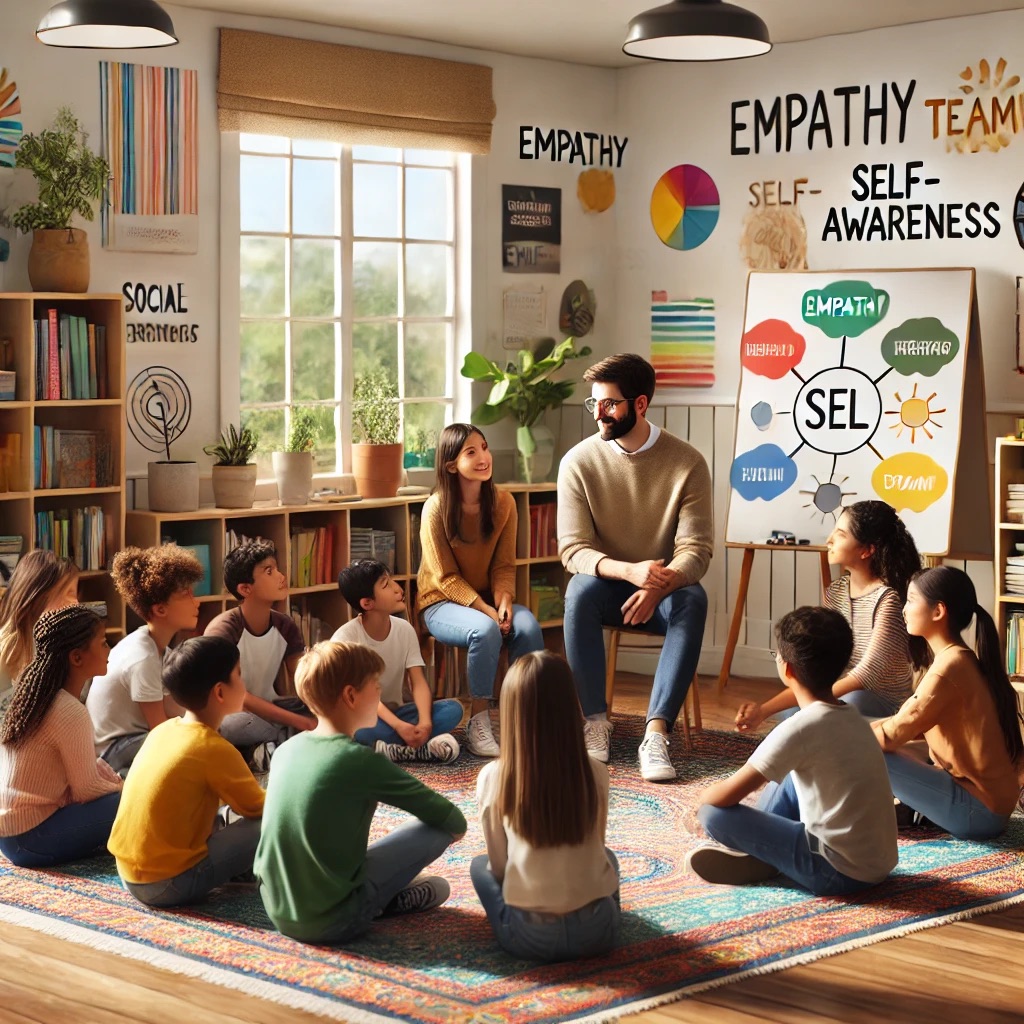
Social Emotional Learning: A Comprehensive Overview

Social Emotional Learning (SEL) has gained prominence as an integral component of education. Defined by the Collaborative for Academic, Social, and Emotional Learning (CASEL), SEL involves the process of acquiring and applying knowledge, attitudes, and skills to understand and manage emotions, achieve positive goals, demonstrate empathy, establish and maintain relationships, and make responsible decisions (CASEL, 2023).

The growing recognition of SEL stems from its demonstrated impact on students’ academic performance, mental health, and future success. This article delves into the five core components of SEL, its benefits, and the practical implications of integrating SEL into educational systems.

Core Components of Social Emotional Learning

CASEL identifies five core competencies that form the foundation of SEL programs:

1. Self-Awareness: The ability to recognize one’s emotions, thoughts, and values and understand how they influence behavior. Self-awareness also involves accurately assessing personal strengths and weaknesses.

2. Self-Management: Skills related to regulating emotions, setting and achieving goals, and managing stress.

3. Social Awareness: The capacity to empathize with others, appreciate diversity, and understand social norms.

4. Relationship Skills: Abilities to establish and maintain healthy relationships, communicate effectively, and resolve conflicts constructively.

5. Responsible Decision-Making: The process of making ethical and constructive choices about personal and social behavior.

These competencies provide a framework for creating supportive environments where students can thrive both academically and personally.

Benefits of Social Emotional Learning

1. Academic Performance

Research consistently shows that SEL enhances academic outcomes. A meta-analysis of 213 SEL programs revealed an average academic performance gain of 11 percentile points for students participating in SEL programs compared to their peers (Durlak et al., 2011).

2. Behavioral Improvements

SEL reduces behavioral problems such as aggression and disruptive behaviors. Programs that teach emotional regulation and conflict resolution help students respond to challenges more constructively (Jones et al., 2019).

3. Mental Health and Well-Being

Students exposed to SEL demonstrate lower levels of anxiety and depression and higher levels of emotional resilience (Taylor et al., 2017). These programs equip students with coping mechanisms to navigate stress and adversity effectively.

4. Long-Term Success

The skills fostered by SEL extend beyond the classroom. Emotional intelligence, teamwork, and decision-making are essential in the workplace and personal life, leading to higher rates of employment and life satisfaction (Weissberg et al., 2015).

Implementation Strategies for Educators

1. Embedding SEL in Curriculum

SEL can be integrated into daily lessons across subjects by incorporating group discussions, collaborative projects, and reflective writing assignments.

2. Professional Development for Teachers

Training educators to model and teach SEL competencies is critical for program success. Teachers need resources and strategies to address diverse student needs.

3. Family and Community Engagement

Involving families and communities in SEL initiatives ensures consistency in fostering social and emotional skills outside the classroom.

4. Data-Driven Practices

Regular assessment of SEL programs helps educators refine their approaches and demonstrate measurable outcomes.

Challenges and Considerations

While SEL offers numerous benefits, challenges such as lack of funding, teacher resistance, and the need for cultural adaptation must be addressed. Policymakers and educators must prioritize creating equitable SEL programs that consider diverse cultural and socioeconomic backgrounds.

Conclusion

Social Emotional Learning is a vital component of modern education, addressing the holistic development of students. By teaching students to navigate emotions, relationships, and decisions, SEL not only enhances academic success but also equips students with lifelong skills. Future research and policy efforts should focus on scaling SEL initiatives and addressing challenges to ensure all students benefit from these transformative programs.

This article is written by John S. Collier, MSW, LCSW. Mr. Collier has over 25 years experience in the social work field. He currently serves as the executive director and outpatient behavioral health therapist at Southeast Kentucky Behavioral health based out of London Kentucky. He may be reached by phone at 606-657-0532 extension 101 or by email at john@sckybh.com

References

• Collaborative for Academic, Social, and Emotional Learning (CASEL). (2023). What is SEL? Retrieved from https://casel.org

• Durlak, J. A., Weissberg, R. P., Dymnicki, A. B., Taylor, R. D., & Schellinger, K. B. (2011). The impact of enhancing students’ social and emotional learning: A meta-analysis of school-based universal interventions. Child Development, 82(1), 405-432.

• Jones, S. M., Bailey, R., & Kahn, J. (2019). The science and practice of social and emotional learning: Implications for state policymaking. The Aspen Institute.

• Taylor, R. D., Oberle, E., Durlak, J. A., & Weissberg, R. P. (2017). Promoting positive youth development through school-based social and emotional learning interventions: A meta-analysis of follow-up effects. Child Development, 88(4), 1156-1171.

• Weissberg, R. P., Durlak, J. A., Domitrovich, C. E., & Gullotta, T. P. (2015). Social and emotional learning: Past, present, and future. Handbook of Social and Emotional Learning: Research and Practice, 3-19.

This article underscores the transformative potential of SEL in education and beyond, offering a roadmap for educators, policymakers, and communities to prioritize holistic development.

The Differences Between a Woman Who Wants a Husband and a Woman Who Wants to Be a Wife

The dynamics of modern relationships are increasingly complex, influenced by societal shifts in gender roles, expectations, and personal values. In the context of marriage, two distinct perspectives often emerge: the desire for a husband versus the desire to be a wife. While these may appear similar on the surface, they represent fundamentally different approaches to partnership and commitment. This article explores these differences and their implications for modern relationships.

1. Motivation for Commitment

A woman who wants a husband may be primarily motivated by the idea of companionship, societal status, or achieving a particular milestone in life. Her focus might center on what a husband can bring to her life—financial stability, emotional support, or social recognition. Conversely, a woman who wants to be a wife often emphasizes the role she seeks to fulfill within a relationship. Her motivation stems from a desire to nurture, build a partnership, and invest in the growth of the marital union.

Research on marital satisfaction suggests that intrinsic motivations, such as personal fulfillment and mutual support, are stronger predictors of long-term happiness than extrinsic factors like societal pressure or financial security (Amato, 2010). This underscores the importance of aligning motivations with the relational roles each partner seeks to embody.

2. Expectations of the Relationship

The expectations held by a woman who wants a husband may be more externally focused, often shaped by cultural norms or personal ideals of what a husband “should” provide. For instance, these expectations might include financial provision, protection, or fulfilling a traditional role within the family unit.

In contrast, a woman who wants to be a wife often adopts a more internally driven perspective. She focuses on what she can contribute to the relationship, such as emotional support, shared responsibilities, and fostering mutual respect. This aligns with the concept of communal orientation in relationships, where the emphasis is on meeting the partner’s needs without expecting direct reciprocation (Clark & Mills, 2012).

3. Approach to Challenges

When challenges arise, the difference in perspective becomes particularly evident. A woman seeking a husband may evaluate problems in terms of what she is or isn’t receiving from her partner. If unmet expectations dominate her perception, it can lead to dissatisfaction or conflict.

Conversely, a woman who desires to be a wife is more likely to approach challenges collaboratively, viewing them as opportunities to strengthen the relationship. This aligns with findings that couples who adopt a team-oriented mindset are better equipped to navigate conflict and maintain marital satisfaction (Markman, Stanley, & Blumberg, 2010).

4. Role of Personal Identity

For a woman who wants a husband, her identity may be intertwined with the social or cultural validation that comes with marriage. The title of “wife” may hold less intrinsic value than the societal perception of being married.

However, a woman who wants to be a wife typically views the role as an extension of her personal identity and values. She may find meaning in the responsibilities and commitments that come with the role, emphasizing personal growth and the deepening of emotional connections within the marriage.

5. Long-Term Compatibility

The difference between wanting a husband and wanting to be a wife has profound implications for long-term compatibility. Relationships built on the former may face challenges if external expectations are not met or if the relationship is not rooted in mutual understanding and shared goals. By contrast, relationships centered on the latter are more likely to thrive, as both partners invest in the well-being of the partnership, prioritizing collaboration over individual expectations.

Studies have shown that marital satisfaction is highest when both partners exhibit high levels of commitment and engage in behaviors that promote mutual trust and respect (Fowers & Olson, 1993). This suggests that aligning relationship goals and motivations is critical for a successful marriage.

Conclusion

The distinction between wanting a husband and wanting to be a wife reflects deeper differences in motivations, expectations, and approaches to relationships. While both perspectives can lead to fulfilling partnerships, understanding and aligning these differences is essential for building a resilient and harmonious marriage. Ultimately, the key lies in fostering a relationship based on shared values, mutual respect, and a commitment to growing together.

References

Amato, P. R. (2010). Research on divorce: Continuing trends and new developments. Journal of Marriage and Family, 72(3), 650-666. https://doi.org/10.1111/j.1741-3737.2010.00723.x

Clark, M. S., & Mills, J. (2012). A theory of communal (and exchange) relationships. In P. Van Lange, A. Kruglanski, & E. T. Higgins (Eds.), Handbook of Theories of Social Psychology (pp. 232-250). Sage.

Fowers, B. J., & Olson, D. H. (1993). ENRICH marital satisfaction scale: A brief research and clinical tool. Journal of Family Psychology, 7(2), 176-185. https://doi.org/10.1037/0893-3200.7.2.176

Markman, H. J., Stanley, S. M., & Blumberg, S. L. (2010). Fighting for your marriage: A deluxe revised edition of the classic best-seller for enhancing marriage and preventing divorce. Jossey-Bass.

Healthy Forms of Validation: Recognizing and Seeking Supportive Affirmation

Validation is the process of understanding, affirming, and accepting one’s feelings, thoughts, or experiences. Receiving healthy validation plays an essential role in building self-esteem, enhancing relationships, and promoting emotional resilience. However, it’s essential to recognize and seek out validation that is healthy and constructive. Here’s an overview of different types of validation and strategies for recognizing and pursuing them effectively.

Why Validation Matters

Validation from others reassures us that our feelings and experiences are understood and accepted. Research shows that receiving consistent, positive validation from supportive people can lead to improved mental health, stronger relationships, and a more secure sense of self (Linehan, 1993). According to self-determination theory, validation can also foster autonomy, competence, and relatedness, which are essential for psychological well-being (Ryan & Deci, 2000).

However, relying solely on external validation can be harmful, leading to dependency and reduced self-esteem. Instead, it’s beneficial to balance seeking validation from others with developing self-validation practices.

1. Types of Healthy Validation

  • Emotional Validation: Emotional validation involves acknowledging and accepting someone’s feelings without judgment. This can be as simple as listening attentively, empathizing, and affirming that the other person’s feelings are understandable. Emotional validation reinforces that feelings are valid and that it’s okay to feel what one feels (Linehan, 1993).
  • Validation of Effort and Progress: Praising effort rather than outcomes is a powerful form of validation that can reinforce persistence, self-compassion, and growth. Validating someone’s efforts, even if they fall short of success, promotes a growth mindset, where challenges are seen as opportunities to learn rather than sources of failure (Dweck, 2006).
  • Authentic Affirmations: Authentic affirmations recognize specific qualities, skills, or positive contributions that a person has shown. This validation should be specific rather than generic to reinforce self-worth in an honest, meaningful way (Wood et al., 2008).

2. Recognizing Healthy Validation

Healthy validation has distinct characteristics that make it different from unhealthy or superficial validation. Here’s how to identify it:

  • Respectful and Non-Judgmental: Healthy validation acknowledges your experiences without judgment or dismissal. Research shows that people who validate respectfully build stronger, more trusting relationships (Kross et al., 2014).
  • Specific and Genuine: Unlike generic praise, specific and genuine validation is grounded in real examples. For example, instead of saying “You’re smart,” healthy validation might sound like “I noticed how thoughtful you were when you solved that problem.” This specificity makes the affirmation more meaningful and believable (Wood et al., 2008).
  • Supportive but Not Enabling: Healthy validation encourages personal growth and resilience. It acknowledges your feelings and experiences without enabling unhelpful behaviors, promoting personal accountability and independence (Ryan & Deci, 2000).

3. How to Seek Out Healthy Validation

While it can be challenging to seek validation directly, there are strategies to create environments and relationships where it naturally occurs:

  • Communicate Openly: Sharing how you feel and what kind of support you need can help others understand your perspective and respond in validating ways. Research suggests that people who openly communicate their feelings are more likely to receive affirming responses, as clear communication reduces misunderstandings (Gottman, 2011).
  • Seek Supportive Relationships: Prioritize connections with people who genuinely care about your well-being and listen to you. Friendships and relationships that emphasize empathy, understanding, and honest feedback are more likely to offer healthy validation (Reis & Shaver, 1988).
  • Set Boundaries Around Validation-Seeking: Being mindful of how and when you seek validation can help prevent over-dependence on others. Seeking validation when genuinely needed, rather than as a habit, can help you distinguish between healthy support and dependency (Neff, 2003).

4. Building Self-Validation Skills

Relying on oneself for validation is a healthy, empowering practice that can lead to greater self-confidence and resilience:

  • Practice Self-Compassion: Self-compassion is a form of self-validation that involves treating yourself kindly, especially during challenging times. According to Dr. Kristin Neff, practicing self-compassion can help you become your own source of validation, reducing dependency on external sources (Neff, 2003).
  • Acknowledge Your Own Efforts: Celebrating your progress, no matter how small, reinforces self-validation. This practice helps you recognize your own efforts, fostering a positive self-image and reducing the need for constant external approval (Dweck, 2006).
  • Mindfulness and Journaling: Reflecting on your experiences, thoughts, and emotions through mindfulness or journaling can help you recognize your feelings and validate them internally. This process strengthens self-awareness and helps you rely less on external feedback (Kabat-Zinn, 2003).

Conclusion

Validation is a powerful element of healthy relationships and self-esteem, but it’s essential to seek out healthy, constructive forms of affirmation. By recognizing the qualities of healthy validation, seeking it from supportive people, and building self-validation skills, individuals can enhance their emotional resilience and improve their overall well-being.

This article has been written by John S. Collier, MSW, LCSW. Mr. Collier has over 25 years of experience in the social work field and is based in London Kentucky through Southeast Kentucky Behavioral Health, LLC. Mr. Collier may be reached by phone at (606) 657–0532 extension 101 or by email at john@sekybh.com.

References

  • Dweck, C. S. (2006). Mindset: The New Psychology of Success. Random House.
  • Gottman, J. M. (2011). The Science of Trust: Emotional Attunement for Couples. W.W. Norton & Company.
  • Kabat-Zinn, J. (2003). Mindfulness-Based Stress Reduction (MBSR). American Psychological Association.
  • Kross, E., et al. (2014). Social rejection and the brain. Trends in Cognitive Sciences, 18(1), 15-21.
  • Linehan, M. M. (1993). Cognitive-Behavioral Treatment of Borderline Personality Disorder. Guilford Press.
  • Neff, K. D. (2003). The development and validation of a scale to measure self-compassion. Self and Identity, 2(3), 223-250.
  • Reis, H. T., & Shaver, P. (1988). Intimacy as an interpersonal process. In Handbook of Personal Relationships, 367-389.
  • Ryan, R. M., & Deci, E. L. (2000). Self-determination theory and the facilitation of intrinsic motivation, social development, and well-being. American Psychologist, 55(1), 68-78.
  • Wood, A. M., et al. (2008). The role of gratitude in the development of social support, stress, and depression: Two longitudinal studies. Journal of Research in Personality, 42(4), 854-871.

This article provides a guide to recognizing and seeking healthy forms of validation based on research and psychological theories. Let me know if there’s any area you’d like to explore in more depth.