WELCOME
The High That Can Hurt: When New Love Feels Too Good

When you meet someone new and exciting, your brain lights up in powerful ways. Your heart races, your thoughts stay on them, and everything feels brighter. This feeling is often called a “dopamine rush.” While it can feel amazing, it can also be risky if we don’t understand what’s happening inside us.

What Is Dopamine?

Dopamine is a chemical in the brain that helps control pleasure, reward, and motivation. When something feels good—like eating your favorite food or getting a compliment—dopamine is released. It tells your brain, “This is important. Do it again.”

When you meet someone new and feel attracted to them, dopamine levels can spike. This creates feelings of excitement, energy, and even obsession (Fisher, 2016). It’s the same system involved in other rewarding behaviors, including gambling and substance use.

Why New Attraction Feels So Intense

The early stage of attraction is often called “infatuation” or “romantic passion.” During this time, the brain releases not just dopamine, but also other chemicals like norepinephrine and serotonin. Together, these chemicals can make you feel:

  • Excited and energized
  • Focused almost entirely on the other person
  • Less interested in sleep or food
  • Overly hopeful or idealistic

This is why people sometimes say they feel “high on love.” In fact, brain scans show that romantic attraction activates the same reward pathways as addictive substances (Aron et al., 2005).

When the Dopamine Rush Becomes Dangerous

While this feeling can be enjoyable, it can also lead to poor decisions. The dopamine rush can cloud judgment and make someone ignore warning signs or “red flags.” You may see the person as perfect, even when there are clear concerns.

Here are some ways it can become unhealthy:

1. Ignoring Red Flags
You may overlook behaviors that would normally concern you, such as dishonesty, disrespect, or inconsistency.

2. Moving Too Fast
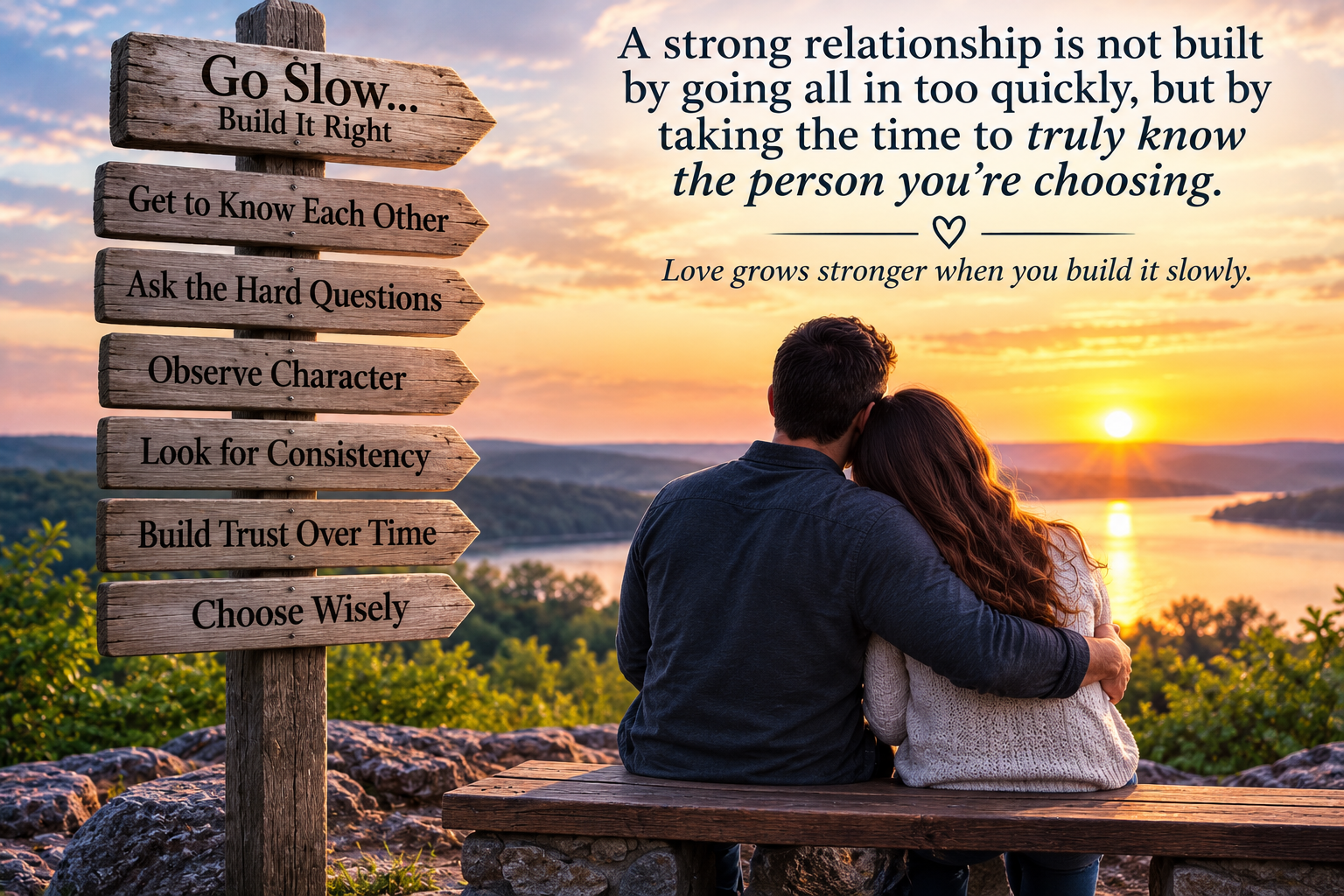
The intense feeling can push people to rush into relationships, commitment, or emotional attachment before truly knowing the other person.

3. Emotional Dependency
You may begin to rely on that person for happiness, leading to anxiety when they are not around or not responding.

4. Addiction-Like Patterns
Because dopamine is involved in reward, some people chase the “high” of new relationships rather than building stable, healthy ones (Volkow et al., 2011).

The Crash After the High

Dopamine highs do not last forever. Over time, the brain adjusts, and those intense feelings begin to fade. This is normal. However, when someone becomes attached to the feeling instead of the person, they may feel disappointed, restless, or even bored.

This can lead to a cycle of constantly seeking new excitement rather than building long-term connection. Healthy relationships shift from intense highs to steady trust, respect, and emotional safety.

How to Stay Grounded

You don’t have to avoid excitement—but it helps to stay aware. Here are a few simple ways to stay balanced:

  • Take things slow, even if it feels hard
  • Pay attention to actions, not just feelings
  • Talk to trusted friends or family for perspective
  • Keep your normal routines and responsibilities
  • Notice if you feel anxious, not just excited

Being aware of the dopamine rush allows you to enjoy connection without losing yourself in it.

Final Thoughts

The excitement of meeting someone new can feel powerful and even life-changing. But not every strong feeling is a sign of something lasting. Sometimes, it is simply your brain responding to novelty and reward. Understanding this can help you make better choices, protect your emotional health, and build relationships that are not just exciting—but also safe and real.


About the Author

John S. Collier, MSW, LCSW, is a licensed clinical social worker based in Kentucky with extensive experience in behavioral health, relationship dynamics, and emotional wellness. He specializes in helping individuals understand the connection between brain chemistry and behavior, guiding clients toward healthier relationships and improved emotional regulation. Through his writing and clinical work, John focuses on practical, real-world applications of psychological principles to everyday life.


References

Aron, A., Fisher, H., Mashek, D. J., Strong, G., Li, H., & Brown, L. L. (2005). Reward, motivation, and emotion systems associated with early-stage intense romantic love. Journal of Neurophysiology, 94(1), 327–337. https://doi.org/10.1152/jn.00838.2004

Fisher, H. (2016). Anatomy of love: A natural history of mating, marriage, and why we stray. W. W. Norton & Company.

Volkow, N. D., Wang, G. J., Fowler, J. S., & Tomasi, D. (2011). Addiction circuitry in the human brain. Annual Review of Pharmacology and Toxicology, 52, 321–336. https://doi.org/10.1146/annurev-pharmtox-010611-134625


When a Man Just Needs Peace

For many men, the world outside the home can feel like a battlefield. Responsibilities pile up—work, financial pressures, expectations to provide, protect, and persevere. Society often tells men they must be strong, stoic, and unshakeable. When the day ends and the door closes behind them, many men carry the invisible weight of those expectations with them.

In the quiet moments, what some men long for most is not applause, advice, or another task. What they want is something far simpler and far more human: peace. They want a place where they can sit down, lay their head on the chest or lap of the woman they love, and simply breathe. A place where the noise of the world fades away and they can feel safe enough to just exist for a moment.

Yet in modern relationships, many men report that this sense of emotional refuge is becoming harder to find.

The Hidden Exhaustion Men Carry

Research consistently shows that men are less likely to openly express emotional distress than women due to social expectations around masculinity. Psychologist Ronald Levant, known for his work on male emotional socialization, describes how boys are often taught early in life to suppress vulnerability and emotional needs (Levant & Richmond, 2007).

By adulthood, many men have internalized the belief that their role is to endure stress silently.

They work long hours.

They carry financial burdens.

They solve problems without complaint.

They try to be the steady pillar everyone else leans on.

But even pillars crack under enough pressure.

Behind the quiet exterior, many men feel emotionally exhausted. When they come home, they are not necessarily looking for solutions—they have spent all day solving problems. What they crave instead is emotional safety.

The Comfort of Quiet Presence

Attachment theory suggests that healthy relationships provide a secure base—a place where individuals feel safe, accepted, and emotionally supported (Bowlby, 1988). While this principle is often discussed in relation to children, it applies equally to adults.

For a man, that secure base may look like something very simple:

Sitting beside the woman he loves.

Feeling her hand on his shoulder.

Resting his head in her lap after a long day.

Being able to close his eyes without having to defend himself, explain himself, or fix something else.

It is not weakness.

It is regulation.

Research on physical touch shows that comforting contact—such as hugging or resting close to a partner—can reduce cortisol (stress hormones) and increase oxytocin, the hormone associated with bonding and calmness (Field, 2010).

In other words, that quiet moment in her arms can literally help a man’s nervous system reset.

When Peace Turns Into Pressure

Unfortunately, some men describe the opposite experience. Instead of peace, they encounter another layer of pressure when they come home.

The conversation immediately becomes about:

More problems to solve

More expectations to meet

More criticisms about what hasn’t been done

More reminders that something is still lacking

Over time, this can create emotional fatigue inside the relationship itself.

Psychologist Dr. John Gottman, known for decades of relationship research, found that constant criticism and negative interaction patterns are among the strongest predictors of relationship dissatisfaction and divorce (Gottman & Silver, 2015).

When a man feels that nothing he does is ever enough, he may stop sharing altogether. Instead of seeking comfort, he withdraws emotionally.

Not because he does not care.

But because he no longer feels safe being vulnerable.

The Shame Around Male Vulnerability

One of the most damaging messages men often receive is the idea that wanting comfort somehow makes them weak.

Phrases like:

“Man up.”

“Get over it.”

“Stop being soft.”

send a powerful message that emotional needs are unacceptable.

Yet modern psychological research strongly contradicts this narrative. Emotional intimacy is one of the strongest predictors of relationship satisfaction for both partners (Reis & Shaver, 1988).

Men need connection just as deeply as women do.

They simply tend to express that need differently.

For many men, connection is not always about long conversations or emotional processing. Sometimes it is about shared silence, physical closeness, and emotional reassurance.

A quiet moment together can say more than a thousand words.

Why Some Men Choose Solitude Instead

Because of these experiences, some men become reluctant to pursue relationships at all.

If the relationship becomes another place where they feel criticized, judged, or emotionally unsafe, many men begin to ask themselves a difficult question:

Is it easier to struggle alone than to carry the stress of a relationship that offers no peace?

This does not mean men do not desire companionship.

In fact, studies consistently show that men benefit greatly from committed relationships in terms of mental health and longevity (Umberson & Montez, 2010).

But the key factor is relationship quality.

A relationship should not feel like another battlefield.

It should feel like home.

Becoming Each Other’s Peace

Healthy relationships work best when both partners become a source of calm for one another.

Women often want emotional reassurance, listening, and validation.

Men often want physical closeness, acceptance, and a place to rest emotionally.

Neither need is wrong.

Both are human.

When couples learn to recognize and honor each other’s emotional languages, something powerful happens. The relationship stops being a place of pressure and becomes a place of restoration.

The strongest couples are not those who never struggle.

They are the ones who can look at each other after a long day and silently say:

“You’re safe here.”

Conclusion

A man who comes home and lays his head in the lap of the woman he loves is not weak.

He is not less masculine.

He is simply human.

In a world that constantly demands strength, productivity, and resilience from men, the quiet comfort of a loving partner can become one of the most powerful forms of healing.

Sometimes the greatest gift a woman can give the man she loves is not advice, correction, or another expectation.

Sometimes the greatest gift is simply peace.

A quiet moment.

A gentle touch.

And the unspoken assurance that for a little while, the weight of the world can rest somewhere else.

About the Author

John S. Collier, MSW, LCSW, is a behavioral health therapist and writer from Kentucky who focuses on relationships, emotional healing, and personal growth. Through his clinical experience and writing, he explores the complex emotional dynamics between men and women and seeks to help individuals develop healthier, more compassionate relationships.

References

Bowlby, J. (1988). A Secure Base: Parent-Child Attachment and Healthy Human Development. Basic Books.

Field, T. (2010). Touch for socioemotional and physical well-being: A review. Developmental Review, 30(4), 367–383.

Gottman, J. M., & Silver, N. (2015). The Seven Principles for Making Marriage Work. Harmony Books.

Levant, R. F., & Richmond, K. (2007). A review of research on masculinity ideologies using the Male Role Norms Inventory. Journal of Men’s Studies, 15(2), 130–146.

Reis, H. T., & Shaver, P. (1988). Intimacy as an interpersonal process. In Handbook of Personal Relationships. Wiley.

Umberson, D., & Montez, J. K. (2010). Social relationships and health: A flashpoint for health policy. Journal of Health and Social Behavior, 51(Suppl), S54–S66.

How Couples Can Avoid Pushing Each Other Away: Building Emotional Safety and Lasting Connection

Emotional distance in marriage rarely begins with dramatic betrayal. It usually grows through small, repeated moments of misunderstanding, criticism, avoidance, or neglect. The good news is that distance is preventable—and often reversible.

Research in relationship science consistently shows that strong marriages are not built on perfection, but on emotional responsiveness, respect, and repair. Couples who intentionally practice healthy relational habits dramatically reduce their risk of drifting apart.

Here is what the research—and clinical experience—tells us couples can do to protect their connection.

1. Replace Criticism with Gentle Start-Ups

Dr. John Gottman found that how a conversation begins often determines how it ends. Harsh start-ups (blame, accusation, sarcasm) predict escalation, while gentle start-ups predict resolution (Gottman & Silver, 1999).

Instead of:

“You never help around here.”

Try:

“I’ve been feeling overwhelmed. Could we figure out a better way to divide things?”

The difference is tone and ownership. Speak about your feelings and needs rather than attacking your partner’s character.

2. Practice Emotional Validation

According to Sue Johnson, emotional responsiveness is the core of secure attachment in marriage (Johnson, 2008). Validation does not mean agreement—it means understanding.

Validation sounds like:

“I can see why that hurt you.” “That makes sense.” “Help me understand more.”

When couples feel heard, defensiveness decreases and closeness increases.

3. Maintain a Strong Positive-to-Negative Ratio

Longitudinal research shows that stable marriages maintain approximately a 5:1 ratio of positive to negative interactions (Gottman, 1994).

Positive interactions include:

Expressing appreciation Small acts of kindness Physical affection Humor Encouragement

These daily deposits build relational resilience. When conflict arises, the emotional bank account has reserves.

4. Express Appreciation Frequently

Gratitude strengthens relational bonds. Studies show that expressed appreciation increases connection and pro-relationship behavior (Algoe, Gable, & Maisel, 2010).

Do not assume your partner “just knows.”

Say:

“Thank you for working so hard.” “I appreciate how you handled that.” “I’m grateful for you.”

Small affirmations create emotional security.

5. Stay Engaged During Conflict

Avoidance feels safer in the moment but damaging in the long term. Emotional withdrawal—also called stonewalling—creates loneliness inside marriage (Gottman & Silver, 1999).

Instead:

Take short breaks if overwhelmed Return to finish the conversation Focus on solving the issue, not winning

Conflict handled respectfully strengthens marriages.

6. Share the Mental and Emotional Load

Research on marital equity shows that perceived fairness increases satisfaction (Wilcox & Nock, 2006). Partnership matters deeply.

Couples should regularly ask:

“Do you feel supported?” “Is our division of responsibilities fair?” “What would make this feel more balanced?”

Marriage is not about rigid roles—it is about teamwork.

7. Protect Emotional and Physical Intimacy

Attachment research demonstrates that consistent affection and responsiveness create security (Mikulincer & Shaver, 2007).

Protect intimacy by:

Scheduling connection time Limiting screen distraction Offering non-sexual affection Talking about emotional needs

Connection requires intentionality.

8. Repair Quickly After Hurt

No marriage avoids mistakes. What predicts longevity is repair attempts—apologies, humor, reassurance, or physical affection that de-escalates tension (Gottman, 1994).

Say:

“I handled that poorly.” “I’m sorry.” “Can we reset?”

Repair prevents small wounds from becoming permanent fractures.

Conclusion

Couples avoid pushing each other away not by eliminating conflict—but by cultivating emotional safety. Gentle communication, validation, gratitude, partnership, engagement, affection, and repair are the protective factors that guard against distance.

Marriage is not sustained by feelings alone. It is sustained by habits.

When both partners intentionally choose responsiveness over reactivity and appreciation over criticism, connection deepens—and stays.

About the Author

John S. Collier, MSW, LCSW, is a behavioral health therapist based in Kentucky who works extensively with couples and families. With a clinical focus on attachment, emotional regulation, and relational dynamics, he integrates evidence-based research with practical strategies to help couples rebuild connection and strengthen emotional safety in marriage.

References

Algoe, S. B., Gable, S. L., & Maisel, N. C. (2010). It’s the little things: Everyday gratitude as a booster shot for romantic relationships. Personal Relationships, 17(2), 217–233.

Gottman, J. M. (1994). Why Marriages Succeed or Fail. New York: Simon & Schuster.

Gottman, J. M., & Silver, N. (1999). The Seven Principles for Making Marriage Work. New York: Crown.

Johnson, S. (2008). Hold Me Tight: Seven Conversations for a Lifetime of Love. New York: Little, Brown and Company.

Mikulincer, M., & Shaver, P. R. (2007). Attachment in Adulthood: Structure, Dynamics, and Change. New York: Guilford Press.

Wilcox, W. B., & Nock, S. L. (2006). What’s love got to do with it? Social Forces, 84(3), 1321–1345.

Husbands, What Does It Mean to “Show Up” for Your Wife?

“Showing up” for your wife means being present, reliable, and caring in everyday life. It is not about grand gestures. It is about small, steady actions that build trust and safety over time.

To show up, a husband pays attention. He listens when his wife talks. He notices stress, joy, and changes in mood. Research shows that feeling heard and understood is strongly linked to relationship satisfaction (Gottman & Silver, 2015).

Showing up also means sharing responsibility. This includes chores, parenting, finances, and emotional support. Studies have found that couples who feel household work is fair report higher happiness and lower conflict (Pew Research Center, 2023).

Emotional presence is just as important. Support during hard times reduces stress and strengthens the bond between partners (Reis, Clark, & Holmes, 2004). A husband who shows empathy, patience, and kindness helps create emotional security.

Consistency matters. Trust grows when words and actions match. According to long-term marital research, dependability and responsiveness are key predictors of stable, healthy marriages (Gottman, 1999).

Showing up can look like:

Keeping promises Helping without being asked Listening without interrupting Offering comfort during stress Spending quality time together

In simple terms, showing up means saying through actions: “You are not alone. I am here with you.”

Conclusion

Showing up for your wife is about presence, effort, and care. It is built through daily habits, not occasional moments. When a husband is attentive, supportive, and dependable, the marriage becomes stronger, safer, and more connected.

About the Author

John S. Collier, MSW, LCSW, is a behavioral health therapist and writer who focuses on relationships, emotional wellness, and personal growth. He works with individuals and families to improve communication, strengthen bonds, and build healthier lives.

References

Gottman, J. M. (1999). The Marriage Clinic: A Scientifically Based Marital Therapy. New York, NY: W. W. Norton & Company.

Gottman, J., & Silver, N. (2015). The Seven Principles for Making Marriage Work. New York, NY: Harmony Books.

Pew Research Center. (2023). Sharing Chores and Responsibilities in Marriage.

Reis, H. T., Clark, M. S., & Holmes, J. G. (2004). Perceived partner responsiveness as an organizing construct in the study of intimacy. Handbook of Closeness and Intimacy.