Welcome to SOUTHEAST KENTUCKY BEHAVIORAL HEALTH
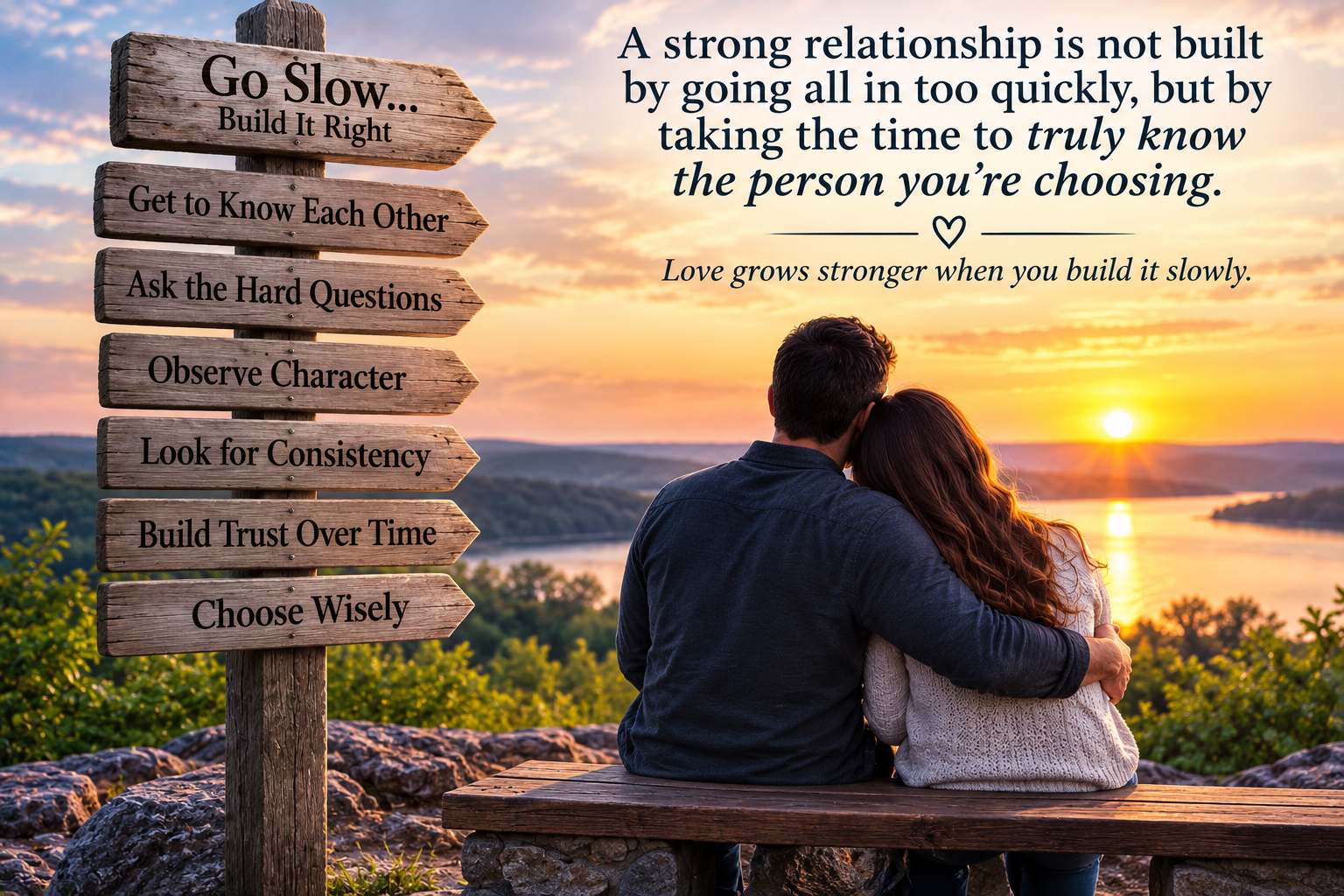
Going All In: The Hidden Risks of Rushing Into a Relationship

There is something undeniably romantic about the phrase “going all in.” Movies celebrate it. Love songs glorify it. Friends often admire people who seem fearless enough to dive headfirst into love. We are told that real love requires vulnerability, commitment, and complete investment.

While commitment is essential for a healthy relationship, there is an important distinction between healthy commitment and premature emotional investment. One is built on knowledge, trust, and experience. The other is often built on hope, attraction, and assumptions.

Many relationships don’t fail because two people were incompatible. They fail because they became emotionally committed long before they truly knew one another.


The Difference Between Attraction and Knowledge

Attraction happens quickly. Knowledge takes time. During the first weeks or months of dating, we naturally see the best version of another person. Psychologists sometimes refer to this as the honeymoon phase, where the brain is flooded with dopamine, oxytocin, and other neurochemicals that create excitement, optimism, and emotional attachment (Fisher, 2004). Unfortunately, these same chemicals can reduce our ability to evaluate a relationship objectively.

When people “go all in” too quickly, they often mistake:

  • Chemistry for compatibility
  • Passion for stability
  • Attention for commitment
  • Potential for reality

Those are not the same things.


We Fall in Love With Who We Think They Are

One of the greatest dangers of rushing a relationship is that we begin filling in the blanks ourselves. Instead of learning who someone truly is, we imagine who they could become. We overlook inconsistencies. We excuse red flags.

We create explanations for behaviors we don’t fully understand. Psychologists call this idealization—seeing another person through the lens of hope rather than reality (Murray, Holmes, & Griffin, 1996). The problem is that relationships are built on reality, not imagination. Eventually, every relationship moves from fantasy to reality. When that happens, many people don’t feel like their partner changed. Instead, they finally see what was there all along.


Emotional Investment Changes Your Judgment

Imagine buying a house. Would you purchase it after walking through the front door for five minutes? Probably not. You would inspect the foundation. Look at the roof. Check for water damage. Review the neighborhood. Ask difficult questions. Relationships deserve at least that much careful consideration. Yet emotionally, many people commit after only a handful of exciting conversations. Once we become emotionally invested, our brains begin protecting that investment.

Instead of asking, “Is this the right person?”

we begin asking, “How can I make this work?”

Those are completely different questions.


The Cost of Ignoring Red Flags

Red flags rarely appear as dramatic warning signs. Most begin as small moments. Perhaps they become irritated when they don’t get their way. Maybe they avoid accountability. Perhaps they speak disrespectfully about former partners. Maybe they struggle with honesty. Perhaps they become controlling in subtle ways. Someone who rushes into commitment often dismisses these concerns because the emotional reward feels greater than the potential risk. Unfortunately, ignored patterns rarely disappear. They usually become stronger. Dating is not primarily about convincing someone to stay. It is about discovering whether staying would be wise.


Love Needs Observation

Healthy relationships require curiosity. Observe how someone handles disappointment. Observe how they manage stress. Observe how they treat people who have nothing to offer them. Observe how they speak about family. Observe whether their words consistently match their actions. Character reveals itself over time. No conversation can replace experience. No promise can replace consistency. No chemistry can replace integrity.


Why Slow Relationships Often Last Longer

Research consistently suggests that relationships built gradually often develop stronger foundations because trust is earned rather than assumed (Stanley, Rhoades, & Markman, 2006). People sometimes fear moving slowly because they worry someone else will “take” the person they’re dating. Ironically, healthy people generally respect appropriate pacing. Individuals who pressure immediate commitment often reveal more about their own insecurity than about their love. Real intimacy grows. It cannot be rushed.


The Difference Between Commitment and Surrender

Healthy commitment says: “I’m choosing you because I know who you are.”

Unhealthy surrender says: “I’m choosing you because I hope you’ll become who I need.”

One is based on evidence. The other is based on emotion. One grows stronger over time. The other becomes increasingly fragile.


Questions Worth Asking Yourself

Before going “all in,” consider asking yourself:

  • What do I actually know about this person’s character?
  • Have I seen them during conflict?
  • How do they respond when they don’t get what they want?
  • Do their actions consistently match their words?
  • Am I attracted to who they are today or who I hope they’ll become?
  • If nothing about this person ever changed, would I still choose this relationship five years from now?

These questions may not feel romantic, but they are deeply loving—because they protect both people from building a relationship on unrealistic expectations.


A Better Way to Love

Moving slowly does not mean loving less. It means loving wisely. Healthy relationships are not races.

They are discoveries. Every shared experience reveals another layer of a person’s character. Trust is built 0through repeated consistency. Respect grows through mutual understanding. Love deepens through truth rather than fantasy.

Going “all in” is admirable when it follows genuine knowledge of another person. Going all in before you truly know someone is less an act of courage than a gamble. The strongest relationships are rarely built by those who rushed toward commitment. They are built by two people who allowed time to reveal character, chose honesty over fantasy, and discovered that lasting love is not found by moving faster—it is found by building a foundation strong enough to support a lifetime.


About the Author

John S. Collier, MSW, LCSW-S is a licensed clinical social worker, therapist, author, and educator with extensive experience helping individuals, couples, and families navigate relationship challenges, anxiety, trauma, and emotional well-being. Throughout his career, he has worked with people from diverse backgrounds, combining evidence-based psychological principles with practical, real-world applications that readers can immediately apply to their daily lives.

John’s writing bridges the gap between academic research and everyday experience, making complex psychological concepts understandable and useful. His work emphasizes emotional maturity, healthy communication, personal responsibility, and building relationships founded on trust, authenticity, and mutual respect. Whether writing about mental health, family dynamics, leadership, or personal growth, his goal is to provide readers with insights that encourage lasting change and healthier, more meaningful lives.

References

Fisher, H. (2004). Why We Love: The Nature and Chemistry of Romantic Love. Henry Holt.

Murray, S. L., Holmes, J. G., & Griffin, D. W. (1996). The benefits of positive illusions: Idealization and the construction of satisfaction in close relationships. Journal of Personality and Social Psychology, 70(1), 79–98.

Stanley, S. M., Rhoades, G. K., & Markman, H. J. (2006). Sliding versus deciding: Inertia and the premarital cohabitation effect. Family Relations, 55(4), 499–509.

Gottman, J. M., & Silver, N. (2015). The Seven Principles for Making Marriage Work (Revised ed.). Harmony Books.



Marriage, Needs, and Growing Together

A Look at Traditional and Modern Views of Marriage

Marriage has changed over time, but one thing has stayed the same: people want to feel loved, valued, and important to one another. The handout shown above teaches a traditional Christian view of marriage. It explains that a wife wants to feel special to her husband and wants to know that she plays an important role in his life. It also says that husbands should share their needs and be humble in how they treat their wives.

Many Christians believe these ideas come from the Bible. In Genesis 2:18, God said, “It is not good for the man to be alone,” and created a helper for Adam. In Ephesians 5:25, husbands are told to love their wives “just as Christ loved the church and gave himself up for her.” These verses teach love, service, sacrifice, and care in marriage.

The handout says that wives often want to feel needed and important. In many relationships, this can be true. Research shows that people in healthy marriages want to feel appreciated and emotionally safe. Marriage experts have found that couples who show admiration and kindness toward one another often have stronger relationships (Gottman & Silver, 2015).

The handout also talks about jealousy and says that women may fear being replaced. While jealousy can sometimes come from insecurity, many relationship experts explain that it often comes from fear of losing connection or trust. Healthy couples work through these feelings by talking openly and honestly rather than blaming one another (Johnson, 2019).

Another important idea in the handout is humility. It says husbands should share their failures and real needs instead of trying to appear perfect. Modern research supports this idea. Emotional openness helps people feel closer in relationships. When couples are honest about struggles, fears, and needs, trust often grows stronger (Brown, 2012).

At the same time, some people may see parts of the handout differently today. Modern marriage counselors often believe that both husbands and wives should meet each other’s emotional, spiritual, and practical needs. Many people now see marriage as a partnership where both people support one another equally. Healthy marriages often work best when both people feel heard, respected, and valued.

Still, the main message in both traditional and modern views is very similar: marriage works best when two people care for each other, communicate openly, and put effort into the relationship. Whether someone follows a traditional Christian marriage model or a more modern partnership model, kindness, honesty, trust, and love matter most.

No marriage is perfect. Every couple will struggle at times. But strong marriages are built over time through patience, forgiveness, good communication, and the willingness to grow together.

Biblical Support

  • Genesis 2:18 – God created a helper and companion.
  • Ephesians 5:25 – Husbands are called to love sacrificially.
  • 1 Peter 3:7 – Husbands should honor and understand their wives.
  • Ecclesiastes 4:9–10 – Two are stronger than one.
  • Proverbs 31:10–12 – A good spouse is valuable and trustworthy.

About the Author

John S. Collier, MSW, LCSW, is a licensed therapist, Master Mason, and founder of Southeast Kentucky Behavioral Health, LLC. With over 25 years of experience in behavioral health, John has helped individuals, couples, and families work through life’s struggles with compassion and understanding. His writing combines faith, psychology, and everyday life lessons to help people build healthier relationships and stronger lives. John lives in London, Kentucky, where he continues to serve his community through counseling, teaching, and writing.

References

Brown, B. (2012). Daring Greatly. Gotham Books.

The Holy Bible, New International Version. (2011). Zondervan.

Gottman, J., & Silver, N. (2015). The Seven Principles for Making Marriage Work. Harmony Books.

Johnson, S. (2019). Attachment Theory in Practice: Emotionally Focused Therapy (EFT) with Individuals, Couples, and Families. Guilford Press.

When Love Stays After Betrayal: The Difficult Path of the Faithful Partner

Infidelity is one of the most painful experiences a person can endure in a romantic relationship. For many couples, the discovery of an affair leads to separation or divorce. However, some couples decide to remain together and attempt to rebuild the relationship. While this decision can reflect commitment, hope, and a desire for healing, the faithful partner often faces an incredibly difficult emotional journey. Rebuilding trust after betrayal requires confronting deep wounds, navigating intense emotional turmoil, and learning how to redefine the relationship moving forward.

The Shock of Betrayal

When a partner discovers infidelity, the initial reaction is often shock. The faithful partner may struggle to reconcile the person they believed they knew with the actions that caused such deep harm. Psychologists describe this reaction as betrayal trauma, a psychological response that occurs when someone we depend on for emotional security violates that trust (Freyd, 1996).

The faithful partner may replay memories in their mind, wondering when the betrayal began, whether warning signs were missed, or whether certain moments were lies. Even seemingly small details—texts, late nights at work, unexplained absences—can take on new meaning in hindsight.

This stage often includes feelings such as:

disbelief anger humiliation sadness confusion anxiety about the future

Even if the unfaithful partner expresses remorse and commits to repairing the relationship, the emotional damage does not disappear overnight.

The Loss of Trust

Trust is one of the foundational pillars of a healthy relationship. When infidelity occurs, that pillar can collapse almost instantly. According to relationship researcher John Gottman, trust functions as the emotional safety net that allows couples to feel secure with one another. Once broken, it requires significant effort and time to rebuild.

For the faithful partner, daily life can become filled with uncertainty. Questions that never existed before begin to arise:

Where are they really going? Who are they texting? Are they telling the truth now? Could this happen again?

This constant questioning can lead to hypervigilance. The faithful partner may check phones, question schedules, or feel anxious whenever their partner is unavailable. These behaviors are often not about control but about a desperate attempt to restore a sense of safety.

Emotional Rollercoasters

Healing after infidelity rarely follows a straight line. Instead, the faithful partner often experiences emotional swings that can feel overwhelming.

One day they may feel hopeful and willing to work on the relationship. The next day, memories of the betrayal may resurface and bring waves of anger or grief.

Common emotional responses include:

intrusive thoughts about the affair sudden triggers connected to the betrayal feelings of inadequacy or self-doubt resentment toward the unfaithful partner fear of being hurt again

These emotional cycles are normal responses to betrayal. Research shows that individuals recovering from infidelity often experience symptoms similar to post-traumatic stress, including rumination and emotional triggers (Gordon, Baucom, & Snyder, 2004).

The Struggle With Self-Worth

One of the most painful consequences of infidelity is how it can affect the faithful partner’s sense of self-worth. Many individuals begin to question their own value, wondering if they were somehow not “enough.”

Questions such as these often arise:

Was I not attractive enough? Did I fail as a partner? Why did they choose someone else?

These thoughts can be deeply damaging. In reality, infidelity is usually connected to the choices, emotional struggles, or boundaries of the unfaithful partner rather than deficiencies in the faithful partner (Glass, 2003). However, the emotional impact can still lead the faithful partner to internalize blame.

Learning to separate personal worth from a partner’s actions is a crucial part of healing.

The Burden of Forgiveness

When a couple decides to stay together after infidelity, the faithful partner often carries the difficult responsibility of deciding whether forgiveness is possible. Forgiveness does not mean forgetting the betrayal or pretending it never happened. Instead, it involves gradually releasing the hold that the betrayal has over one’s emotions.

This process can take months or even years. True forgiveness requires several conditions:

genuine remorse from the unfaithful partner transparency and honesty moving forward consistent behavioral change patience during the healing process

Without these elements, forgiveness can feel forced or incomplete.

Rebuilding the Relationship

If the couple continues working toward reconciliation, the relationship must often be rebuilt from the ground up. In many ways, the old relationship—the one that existed before the affair—no longer exists.

Instead, the couple must create something new.

Rebuilding may involve:

honest conversations about the betrayal couples counseling establishing new boundaries increased emotional transparency consistent accountability

The faithful partner must slowly observe whether the unfaithful partner’s actions match their words. Over time, consistent honesty and reliability can help restore a sense of safety.

Living With Lingering Scars

Even when relationships successfully recover from infidelity, the experience often leaves emotional scars. Certain dates, locations, or memories may always carry reminders of the betrayal.

However, scars are not the same as open wounds. With time, communication, and genuine effort from both partners, many couples find that healing is possible.

For the faithful partner, the journey involves learning to trust again—not only their partner, but also themselves. They must learn that their value was never defined by someone else’s betrayal.

Conclusion

When a partner chooses to stay after infidelity, they embark on one of the most emotionally challenging paths a relationship can face. The faithful partner must navigate pain, rebuild trust, confront self-doubt, and determine whether forgiveness is possible.

Yet within this difficult process lies the possibility of growth. Some couples emerge with deeper communication, stronger emotional awareness, and a renewed commitment to honesty.

Healing from betrayal is not easy. It requires patience, vulnerability, and courage. But for those willing to face the pain and rebuild together, reconciliation can become not just an attempt to save a relationship—but an opportunity to transform it.

About the Author

John S. Collier, MSW, LCSW is a behavioral health therapist and writer from London, Kentucky. With years of experience working with individuals, couples, and families, he focuses on helping people navigate relationship struggles, trauma, emotional healing, and personal growth. His writing combines clinical insight with practical guidance to help readers better understand the complexities of human relationships and emotional resilience.

References

Freyd, J. J. (1996). Betrayal Trauma: The Logic of Forgetting Childhood Abuse. Harvard University Press.

Glass, S. (2003). Not “Just Friends”: Rebuilding Trust and Recovering Your Sanity After Infidelity. Free Press.

Gordon, K. C., Baucom, D. H., & Snyder, D. K. (2004). An integrative intervention for promoting recovery from extramarital affairs. Journal of Marital and Family Therapy, 30(2), 213–231.

Gottman, J. M., & Silver, N. (2015). The Seven Principles for Making Marriage Work. Harmony Books.

Rebuilding Emotional Intimacy After Distance
Image

Emotional intimacy is the feeling of being seen, known, and emotionally safe with your partner. When it is strong, couples feel connected even during stress. When it weakens, partners may still live together, talk about schedules, and handle responsibilities—but feel lonely in the same room. Emotional distance does not usually happen overnight. It often grows slowly through stress, unresolved conflict, poor communication, or unmet emotional needs.

The good news is that emotional intimacy can be rebuilt. With intention, patience, and consistency, couples can reconnect and restore closeness.


How Emotional Distance Develops

Emotional distance often forms when couples experience:

  • ongoing stress (work, finances, parenting, health),
  • repeated arguments that never fully resolve,
  • feeling criticized, ignored, or taken for granted,
  • lack of quality time or meaningful conversation,
  • emotional shutdown to avoid conflict.

Research shows that when couples stop turning toward each other emotionally, they begin to protect themselves rather than connect, leading to withdrawal or defensiveness (Gottman & Silver, 2015).


Why Emotional Intimacy Matters in Marriage

Emotional intimacy is the foundation for trust, affection, and long-term commitment. Studies consistently show that couples who feel emotionally connected experience higher relationship satisfaction, better communication, and greater resilience during hardship (Reis & Shaver, 1988).

Without emotional intimacy, even physical closeness can feel empty. Partners may begin to feel like roommates instead of spouses.


Step One: Create Emotional Safety Again

Reconnection starts with emotional safety. Emotional safety means knowing you can share thoughts or feelings without being attacked, dismissed, or punished.

Ways to rebuild safety include:

  • lowering criticism and sarcasm,
  • listening without interrupting,
  • responding calmly rather than defensively,
  • acknowledging your partner’s feelings even when you disagree.

According to research on active listening and empathy, people open up more when they feel emotionally validated (Rogers & Farson, 1957).


Step Two: Slow Down and Relearn Each Other

After distance, couples often try to “fix everything” quickly. This usually backfires. Rebuilding intimacy works best when couples slow down and focus on small, consistent moments of connection.

Helpful practices include:

  • asking open-ended questions,
  • sharing daily thoughts and emotions,
  • expressing curiosity about your partner’s inner world,
  • spending uninterrupted time together.

Emotional intimacy grows through repeated experiences of being heard and understood, not through one big conversation (Gottman & Silver, 2015).


Step Three: Share Feelings, Not Just Facts

Many couples talk daily but stay emotionally distant because conversations focus only on tasks and logistics. Emotional intimacy requires sharing feelings, not just information.

Examples include:

  • “I felt overwhelmed today.”
  • “I missed feeling close to you.”
  • “I felt hurt when that happened.”

Research shows that emotional self-disclosure strengthens bonds and increases closeness when it is met with empathy (Reis & Shaver, 1988).


Step Four: Address Unresolved Hurt Gently

Distance often protects people from unresolved pain. Rebuilding intimacy requires gently addressing hurt with honesty and care.

Helpful guidelines:

  • speak about your feelings, not your partner’s flaws,
  • avoid blaming or shaming language,
  • take responsibility for your part,
  • focus on understanding before problem-solving.

Couples who practice repair and forgiveness are more likely to restore emotional closeness than those who avoid difficult conversations (Gottman & Silver, 2015).


Step Five: Be Patient and Consistent

Reconnection takes time. Emotional intimacy grows through repeated safe interactions, not instant change.

Consistency matters more than intensity:

  • small daily check-ins,
  • regular expressions of appreciation,
  • predictable emotional availability,
  • follow-through on commitments.

Attachment research shows that trust and closeness are rebuilt through reliability and emotional presence over time (Johnson, 2019).


Conclusion

Emotional distance does not mean a marriage is broken—it means something important has been missing. Rebuilding emotional intimacy requires safety, empathy, patience, and intentional effort from both partners. When couples choose to slow down, listen deeply, and reconnect emotionally, distance can become a doorway to deeper understanding and renewed closeness.


About the Author

John S. Collier, MSW, LCSW-S, is a Licensed Clinical Social Worker with extensive experience in behavioral health, relationship dynamics, and trauma-informed care. He works with individuals and couples to improve emotional connection, communication, and long-term relational health. John is known for translating clinical insight into practical, real-world guidance that helps couples rebuild trust, emotional safety, and intimacy after periods of conflict or distance.


References

  • Gottman, J. M., & Silver, N. (2015). The seven principles for making marriage work. Harmony Books.
  • Johnson, S. (2019). Attachment theory in practice: Emotionally focused therapy (EFT) with individuals, couples, and families. Guilford Press.
  • Reis, H. T., & Shaver, P. (1988). Intimacy as an interpersonal process. In S. Duck (Ed.), Handbook of personal relationships. Wiley.
  • Rogers, C. R., & Farson, R. E. (1957). Active listening. University of Chicago Industrial Relations Center.