Welcome to SOUTHEAST KENTUCKY BEHAVIORAL HEALTH

Archives September 2026

Couple laughing over wine at a restaurant beside sign reading “NEVER STOP DATING YOUR SPOUSE.”
Dating Your Spouse: Why the Best Marriages Never Stop Dating

Many couples spend months planning a wedding but very little time planning a marriage. At the beginning of a relationship, people work hard to connect. They make plans, have meaningful conversations, laugh together, and look forward to spending time with one another.

Then life happens.

Work becomes demanding. Children need attention. Bills need to be paid. Household responsibilities pile up. Without realizing it, many couples begin spending more time managing life than nurturing their relationship. The truth is simple:

A healthy marriage requires ongoing attention, not just a wedding day commitment.

Research suggests that couples who regularly spend intentional one-on-one time together report greater relationship satisfaction, stronger commitment, better communication, and increased marital happiness. [nationalma…roject.org], [wheatley.byu.edu], [nationalma…roject.org]


Why Dating Should Continue After Marriage

Many couples unknowingly stop doing the things that helped them fall in love. While dating, they often:

  • Prioritize time together
  • Ask questions
  • Share experiences
  • Laugh frequently
  • Show appreciation
  • Engage in meaningful conversations

After marriage, many people assume these things will naturally continue. Unfortunately, that rarely happens without intentional effort. Marriage does not automatically create connection. Connection is created through shared experiences and quality time.

The habits that helped you fall in love are often the same habits that help you stay in love.


📦 Key Takeaway

Your spouse should not receive the least intentional version of you simply because they received the most permanent commitment from you.


Date Nights Strengthen Marriages

Research from the National Marriage Project found that couples who regularly participate in date nights report significantly higher levels of marital happiness and commitment than couples who rarely spend dedicated time together. [nationalma…roject.org], [nationalma…roject.org]

The report found that spouses who regularly went on date nights were more likely to report:

Dating your spouse is not about spending money. It is about investing time. Sometimes the most meaningful date is simply sitting on a porch together, enjoying a cup of coffee, and having an uninterrupted conversation.


📦 Important Reminder

Connection grows where attention goes.

If a marriage consistently receives leftover time, it often produces leftover results.


Dating Builds Emotional Intimacy

One of the biggest threats to marriage is not conflict. It is emotional distance. According to relationship researchers at the Gottman Institute, successful couples intentionally “turn toward” one another during everyday interactions, creating a stronger emotional connection over time. [gottman.com], [gottman.com]

Dating creates opportunities to:

  • Discuss goals
  • Share concerns
  • Celebrate successes
  • Talk about dreams
  • Strengthen trust
  • Maintain emotional closeness

Couples who regularly spend quality time together often feel more understood, appreciated, and connected.

“The strongest marriages are often built one conversation at a time.”


Dating Keeps Friendship Alive

Many relationship experts have observed that friendship forms the foundation of lasting marriages. [gottman.com], [gottman.com]

Your spouse is constantly growing and changing.

  • Their interests change.
  • Their goals change.
  • Their fears change.
  • Their dreams change.

Dating helps you continue learning about the person you married. Ask yourself:

  • What is my spouse currently excited about?
  • What challenge is my spouse facing?
  • What goal is my spouse working toward?
  • What would make my spouse feel supported this week?

The answers to these questions create connection.


📦 Marriage Challenge

Schedule one dedicated date with your spouse during the next seven days. Put it on the calendar and protect that time as seriously as any other important appointment.


Dating Demonstrates Value

Time is one of the most valuable gifts that exists. When you intentionally spend time with your spouse, you communicate several important messages:

  • You matter to me.
  • I enjoy being with you.
  • Our relationship is important.
  • I want us to stay connected.
  • You are a priority in my life.

People often feel most loved when they feel seen, heard, and valued. Dating provides opportunities to communicate all three.


Simple Date Ideas for Married Couples

Dating does not require expensive vacations or elaborate plans. Consider:

  • Taking a walk together
  • Going out for coffee
  • Watching a sunset
  • Cooking a meal together
  • Visiting a local bookstore
  • Having a picnic
  • Taking a scenic drive
  • Exploring a nearby town
  • Playing a board game
  • Attending a community event

The goal is not entertainment. The goal is connection.


The Example It Sets for Children

When children witness healthy affection, respect, communication, and quality time between parents, they learn important lessons about relationships. Parents who prioritize their marriage are not taking away from their children. Instead, they are demonstrating:

  • Healthy communication
  • Mutual respect
  • Commitment
  • Affection
  • Emotional support

Children benefit from seeing what a healthy relationship looks like.


Conclusion

Marriage was never meant to run on autopilot. It thrives when two people continue choosing one another over and over again. The wedding day is not the finish line. It is the starting line. Dating your spouse creates opportunities to maintain friendship, strengthen intimacy, improve communication, and build memories together. These moments do not have to be extravagant. They simply need to be intentional. The strongest marriages are often built through thousands of small moments where spouses say through their actions:

“I still choose you.”

Never stop pursuing the person you promised to love.


About the Author

John S. Collier, MSW, LCSW-S is a Licensed Clinical Social Worker Supervisor and the Executive Director of Southeast Kentucky Behavioral Health, LLC. With extensive experience in behavioral health, trauma-informed care, child and adolescent mental health, family systems, and organizational leadership, Mr. Collier has dedicated his career to helping children, adolescents, adults, and families navigate life’s challenges while building healthier and more resilient communities.

Throughout his clinical career, Mr. Collier has worked with children and adolescents experiencing emotional and behavioral difficulties, including anxiety, depression, trauma-related disorders, attention-deficit/hyperactivity disorder (ADHD), oppositional behaviors, anger management concerns, and family relationship challenges. His approach emphasizes understanding the underlying causes of behavior rather than focusing solely on symptoms, helping families develop practical strategies that strengthen communication, emotional regulation, and healthy relationships.

As a clinical supervisor, educator, and advocate for quality behavioral healthcare, Mr. Collier is committed to translating complex psychological and developmental concepts into practical guidance that parents and caregivers can readily understand and implement. His work reflects a belief that informed, supported, and empowered families play a critical role in promoting positive outcomes for children and adolescents.

In addition to his clinical practice and leadership responsibilities, Mr. Collier is the author of The Mind’s Trestle Board, where he regularly writes about mental health, personal growth, resilience, grief, family relationships, child development, and behavioral health topics. His writing combines evidence-based research with real-world clinical experience to provide readers with meaningful insights and actionable strategies.

Through his work, Mr. Collier continues to advocate for compassionate, person-centered care while helping individuals and families build the skills necessary to thrive through life.


References

Dew, J., & Wilcox, W. B. (2023). The Date Night Opportunity: What Does Couple Time Tell Us About the Potential Value of Date Nights? National Marriage Project. [nationalma…roject.org], [nationalma…roject.org]

Gottman, J. M., & Gottman, J. S. (2024). Relationship Resources for Couples. The Gottman Institute. [gottman.com], [gottman.com]

Stanley, S. M., Rhoades, G. K., & Markman, H. J. (2006). Sliding Versus Deciding: Inertia and the Premarital Cohabitation Effect. Family Relations, 55(4), 499-509.

Hawkins, A. J., Blanchard, V. L., Baldwin, S. A., & Fawcett, E. B. (2008). Does Marriage and Relationship Education Work? Journal of Consulting and Clinical Psychology, 76(5), 723-734.

Nielsen, L. (2017). The Power of Us: The Path to Discovering the Best Relationship You. Tyndale House Publishers.

Wilcox, W. B., & Dew, J. (2023). The Date Night Opportunity Report. Wheatley Institute. [wheatley.byu.edu], [wheatley.byu.edu]


Getting Triggered: Taking Responsibility for Your Reactions

Your Trigger Is Your Responsibility

The phrase“I got triggered” has become increasingly common in modern conversations. People use it to describe intense emotional reactions to something another person said, did, or failed to do. While emotional triggers are real and deserve attention, there is an important truth that is often overlooked: your emotional trigger is your responsibility, not someone else’s.

This does not mean other people are always right, kind, or considerate. It does not mean hurtful behavior should be excused. Rather, it means that while external events may activate an emotional response, you remain responsible for how you interpret, manage, and respond to that reaction.

Emotional triggers are often connected to unresolved experiences, personal beliefs, fears, insecurities, past trauma, or deeply held expectations. According to the Cleveland Clinic, emotional triggers are situations, events, thoughts, or interactions that provoke intense emotional reactions that may be disproportionate to the present event because they are connected to past experiences. [health.cle…clinic.org]

A trigger is not proof that someone else caused your emotions. Instead, it is often evidence that something within you requires examination, healing, or growth.


Understanding the Difference Between Cause and Responsibility

A useful distinction exists between cause and responsibility.

Someone may say something rude. That statement may act as a catalyst for anger. However, the emotional reaction that follows belongs to the individual experiencing it.

Many people spend years blaming family members, coworkers, former partners, friends, or society for their emotional pain. While others may influence our experiences, remaining trapped in blame often prevents healing.

When responsibility is surrendered, personal power is surrendered as well.

Consider these examples:

  • Someone criticizes your work, and you become enraged.
  • A friend does not text back quickly, and you become anxious.
  • A spouse disagrees with you, and you immediately become defensive.
  • A coworker receives recognition, and you become resentful.

The external event occurred. However, the intensity of the emotional response often reflects an internal issue that deserves attention.

As psychologist Susan Albers notes, emotional triggers often function as “knee-jerk reactions” connected to prior emotional wounds, pain, or stressful experiences rather than the present situation alone. [health.cle…clinic.org]


Why Blaming Others Keeps You Stuck

Blame can feel empowering in the moment because it removes responsibility from ourselves. Unfortunately, it also removes our ability to create lasting change.

When your happiness depends on other people changing, you remain powerless. When your peace depends on others behaving perfectly, you remain trapped. When your emotional well-being depends upon controlling the behavior of everyone around you, you are fighting a battle you cannot win. Personal accountability allows you to move from:

  • Victimhood to ownership
  • Reactivity to intentionality
  • Resentment to growth
  • Helplessness to empowerment

Self-awareness is a foundational component of emotional intelligence. Research and psychological theory indicate that self-awareness helps individuals recognize emotions, understand behavioral patterns, and make more intentional choices. [positiveps…hology.com], [dictionary.apa.org]


Signs That You May Be Operating From a Trigger

You may be reacting from a trigger when:

  • Your emotional response feels much larger than the event itself.
  • You repeatedly experience the same conflicts.
  • You immediately become defensive.
  • You struggle to calm yourself after an interaction.
  • You replay conversations repeatedly in your mind.
  • You frequently blame others for how you feel.
  • You find yourself saying things you later regret.

Recognizing these signs is not a reason for shame. It is an opportunity for growth.


Eight Steps to Take Ownership of Your Triggers

1. Pause Before Reacting

Strong emotions create urgency. Triggers often convince us that immediate action is necessary.

Instead:

  • Stop.
  • Take several deep breaths.
  • Create distance between feeling and action.

Even a brief pause allows the thinking parts of the brain to engage before impulsive behavior occurs. Naming and observing emotions can strengthen emotional regulation and reduce reactivity. [apa.org], [scienceinsights.org]


2. Identify What You Are Feeling

Many people only recognize anger.

However, underneath anger may be:

  • Fear
  • Shame
  • Rejection
  • Insecurity
  • Embarrassment
  • Loneliness
  • Disappointment

Ask yourself:

“What am I actually feeling right now?”

Awareness creates choice.


3. Ask, “Why Does This Affect Me So Strongly?”

Instead of focusing on the other person’s behavior, focus inward.

Questions to consider:

  • What belief was activated?
  • What fear was touched?
  • What memory does this remind me of?
  • Why does this matter so much to me?

This shift transforms the experience from blame to self-discovery.


4. Separate Facts From Stories

The event and the story you tell yourself about the event are not the same thing.

Example:

Fact: Someone interrupted you.

Story: They do not respect me.

The emotional reaction usually attaches itself to the story, not merely the event. Challenge assumptions and consider alternative explanations before reacting.


5. Own Your Emotional Experience

Practice saying:

  • “I feel hurt.”
  • “I feel anxious.”
  • “I feel angry.”
  • “I am responsible for how I respond.”

Avoid statements such as:

  • “You made me angry.”
  • “You ruined my day.”
  • “You caused my anxiety.”

Others influence us, but they do not control our responses.


6. Develop Healthy Coping Skills

The National Institutes of Health recommends evidence-based wellness practices that help individuals manage emotional stress and build resilience, including mindfulness, physical activity, social support, adequate sleep, gratitude practices, and healthy self-care routines. [nih.gov], [nimh.nih.gov]

Helpful coping strategies include:

MindfulnessLearn to observe emotions without immediately reacting.
Deep BreathingSlow breathing helps calm the body’s stress response.
JournalingWriting allows emotions to be processed instead of suppressed.
ExercisePhysical activity helps regulate mood and reduce stress.
MeditationMeditation increases emotional awareness and self-control.
TherapyProfessional support can help uncover deeper emotional patterns.
Social SupportHealthy relationships provide perspective and encouragement. [apa.org], [nih.gov]

7. Reframe the Trigger as a Teacher

Instead of asking: “Why did they do this to me?”

Ask: “What is this reaction teaching me about myself?”

Every trigger contains information. It may point toward:

  • An insecurity
  • An unmet need
  • A fear
  • A limiting belief
  • An unresolved wound

Growth begins when curiosity replaces blame.


8. Practice Accountability Daily

Accountability is a skill. Each day ask yourself:

  • What triggered me today?
  • How did I respond?
  • What could I have done differently?
  • What lesson did I learn?

Over time these reflections strengthen emotional resilience and self-awareness.


Conclusion

Being triggered is part of the human experience. Everyone encounters situations that evoke strong emotions. The presence of a trigger is not a character flaw, nor is it proof that someone else is responsible for your emotional state. Healing begins when we stop viewing triggers as evidence of other people’s failures and start viewing them as opportunities for self-examination and growth.

You may not be responsible for every experience that shaped you, but you are responsible for how you manage your reactions today. The moment you stop blaming others for your triggers is the moment you begin reclaiming your power. You are not responsible for what happened to you in the past. You are responsible for what you do with it now. Growth occurs when accountability becomes stronger than blame, and self-awareness becomes stronger than reactivity.


About the Author


References

American Psychological Association. (n.d.). Emotion-Focused Coping. APA Dictionary of Psychology. Retrieved from APA Dictionary of Psychology. [dictionary.apa.org]

American Psychological Association. (n.d.). Emotions. Retrieved from the American Psychological Association. [apa.org]

American Psychological Association. (2018). Emotional Intelligence. APA Dictionary of Psychology. [dictionary.apa.org]

American Psychological Association. (2024). Healthy Ways to Handle Life’s Stressors. American Psychological Association. [apa.org]

Cleveland Clinic. (2024). Can You Identify Your Emotional Triggers? Cleveland Clinic Health Essentials. [health.cle…clinic.org]

Centers for Disease Control and Prevention. (2024). Managing Difficult Emotions. U.S. Department of Health and Human Services. [cdc.gov]

National Institute of Mental Health. (2025). Caring for Your Mental Health. National Institutes of Health. [nimh.nih.gov]

National Institutes of Health. (2026). Emotional Wellness Toolkit. National Institutes of Health. [nih.gov]

Positive Psychology. (2025). Using Self-Awareness Theory and Skills in Psychology. PositivePsychology.com. [positiveps…hology.com]


💚 Southeast Kentucky Behavioral Health stands with Brayden Scott.

As a behavioral health organization dedicated to supporting children, adults, and families throughout Kentucky, we recognize the importance of community events that promote awareness, inclusion, advocacy, and opportunity.

According to recent reporting, Brayden Scott, a Laurel County resident with cerebral palsy, continues to move forward with his annual Cerebral Palsy Auto Invasion fundraiser despite challenges surrounding the event’s original location. Brayden’s determination, advocacy, and commitment to helping others serves as an inspiration to many throughout our community.

At Southeast Kentucky Behavioral Health, we believe every individual deserves to be treated with dignity, respect, and compassion. We support efforts that bring awareness to cerebral palsy and help create communities where all individuals can participate, contribute, and thrive.

Please join us in supporting Brayden, his family, and everyone working to increase understanding and opportunities for individuals living with disabilities.

💚 Together, we build stronger communities.

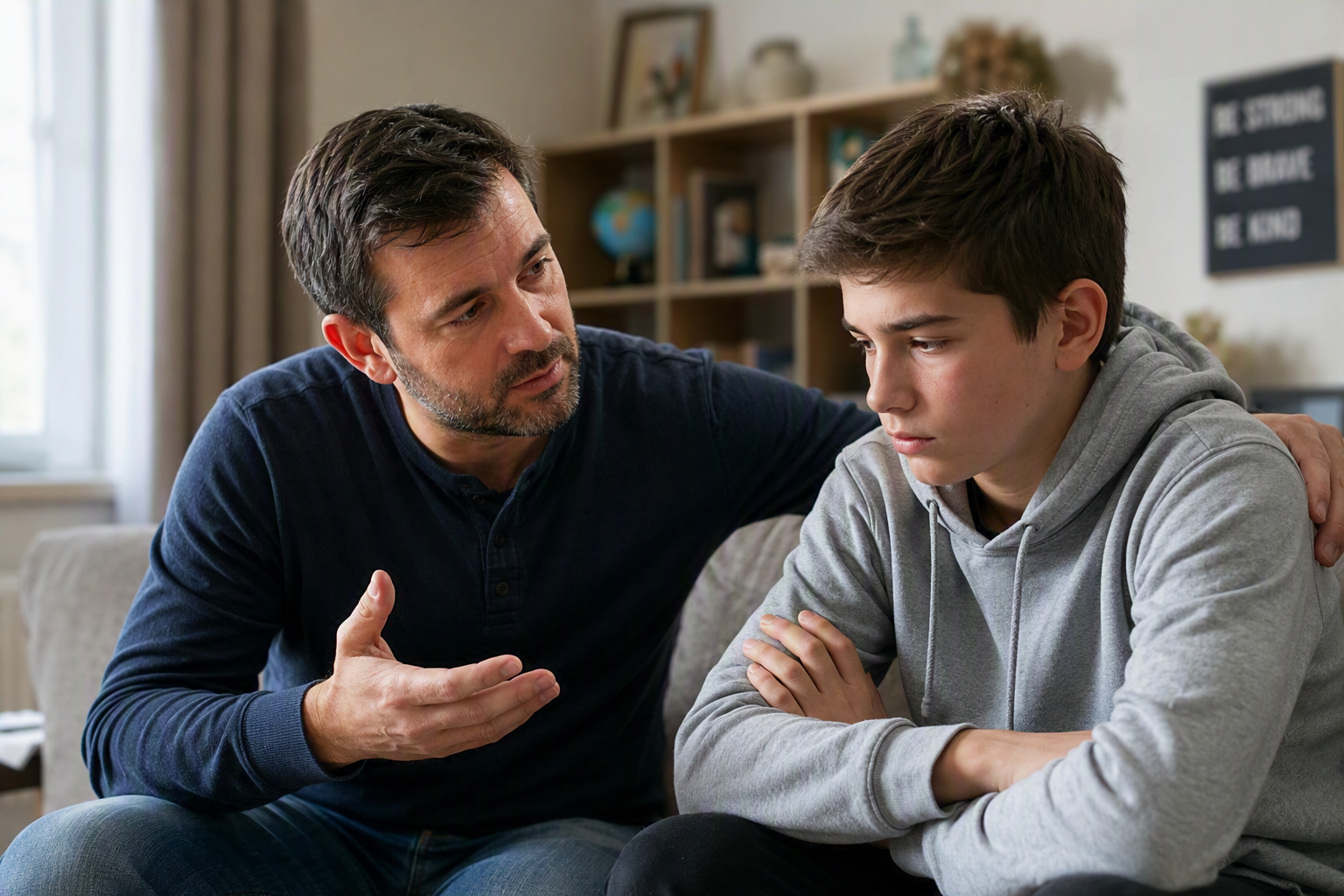
When Anger Meets Puberty: Understanding the preteen and young teenage – Boy

One of the most challenging periods for many families occurs when a boy enters puberty. Parents often describe feeling as though their once cheerful, affectionate child has become easily frustrated, argumentative, explosive, or emotionally distant seemingly overnight. While anger is not an inevitable part of adolescence, increased irritability and emotional intensity are common during the transition from childhood to adolescence. Understanding why this happens can help parents respond effectively and preserve a healthy relationship with their son.

Understanding What Is Happening

Around age 11 to 13, boys experience significant biological, emotional, and social changes. Testosterone levels increase, physical changes begin to emerge, and the brain undergoes substantial restructuring. During this period, the emotional centers of the brain develop more rapidly than the areas responsible for judgment, impulse control, and emotional regulation (Steinberg, 2014; National Institute of Mental Health, 2023).

As a result, a 12-year-old boy may experience emotions much more intensely than he did as a child while simultaneously lacking the skills needed to manage those emotions effectively. What appears to be defiance or disrespect may actually be emotional overwhelm.

Puberty can also create feelings of confusion and insecurity. Boys may worry about their appearance, athletic abilities, academic performance, friendships, or fitting in socially. Many boys have difficulty expressing vulnerable emotions such as embarrassment, fear, disappointment, sadness, or anxiety. Instead, these emotions are often expressed through irritability or anger (American Academy of Pediatrics, 2024).

Why Anger Often Becomes the “Go-To” Emotion

Anger is frequently referred to as a “secondary emotion.” This means it often covers more vulnerable feelings underneath.

For example:

  • A boy who feels embarrassed may become angry.
  • A boy who feels rejected may become angry.
  • A boy who feels anxious may become angry.
  • A boy who feels powerless may become angry.

Many boys grow up receiving social messages that it is acceptable to show anger but not acceptable to show sadness, fear, or emotional pain. Consequently, anger becomes the emotion they know how to display most readily (Siegel & Bryson, 2014).

When parents focus only on stopping the angry behavior without exploring the feelings underneath, opportunities for connection and growth may be missed.

Signs That Anger May Be Related to Puberty

Normal developmental anger may include:

  • Increased irritability
  • Mood swings
  • Arguing more frequently
  • Frustration with rules
  • Emotional overreactions
  • Needing more privacy
  • Greater sensitivity to criticism

However, parents should seek professional support if anger is accompanied by:

  • Physical aggression
  • Threats of harm to self or others
  • Property destruction
  • Significant changes in sleep or appetite
  • Persistent depression
  • School refusal
  • Substance use
  • Social withdrawal
  • Self-harming behaviors

These signs may indicate underlying mental health concerns requiring assessment and intervention (American Academy of Child & Adolescent Psychiatry, 2024).

What Parents Can Do to Help

1. Stay Calm During Emotional Storms

One of the most powerful tools a parent possesses is emotional regulation. When parents become angry in response to a child’s anger, the situation often escalates.

Instead of saying:

“Calm down right now!”

Try saying:

“I can see you’re really upset. Let’s talk when you’re ready.”

A calm response helps the adolescent nervous system begin to settle. Children often borrow emotional regulation from the adults around them before they develop it themselves (Siegel & Bryson, 2014).

2. Look Beyond the Behavior

When a child becomes angry, ask yourself:

  • What happened before this?
  • Is he hurt?
  • Is he embarrassed?
  • Is he feeling left out?
  • Is he worried about something?

Understanding the underlying emotion does not excuse inappropriate behavior, but it does help address the true problem.

3. Teach Emotional Vocabulary

Many boys simply lack the language to describe their emotional experiences.

Help them identify feelings such as:

  • Frustrated
  • Disappointed
  • Nervous
  • Embarrassed
  • Lonely
  • Left out
  • Overwhelmed

Research demonstrates that helping children name emotions improves emotional regulation and self-awareness (Siegel & Bryson, 2014).

4. Maintain Consistent Boundaries

Empathy and accountability should exist together.

Parents can communicate:

“It’s okay to be angry. It’s not okay to yell at people.”

Or:

“It’s okay to feel frustrated. It’s not okay to punch a wall.”

Children need to know that emotions are always acceptable, but certain behaviors are not.

5. Prioritize Physical Activity

Physical activity has consistently been shown to reduce stress, improve mood regulation, and decrease emotional reactivity among adolescents (Centers for Disease Control and Prevention, 2024).

Encourage activities such as:

  • Basketball
  • Football
  • Hiking
  • Martial arts
  • Strength training
  • Biking
  • Running

Many boys process stress more effectively through movement than through conversation alone.

6. Protect Sleep

Sleep deprivation can significantly worsen irritability, impulsivity, and emotional regulation difficulties.

The American Academy of Sleep Medicine recommends that children aged 6 to 12 receive 9 to 12 hours of sleep per night (Paruthi et al., 2016).

Parents can help by:

  • Limiting electronics before bed
  • Establishing consistent bedtime routines
  • Keeping devices out of bedrooms overnight
  • Maintaining regular sleep schedules

7. Keep Communication Open

Many parents become discouraged when their son gives one-word answers.

Don’t give up.

Instead of asking:

“How was school?”

Try:

“What was the best part of your day?”

Or:

“What was the most annoying thing that happened today?”

Questions that invite discussion often receive better responses.

8. Model Healthy Anger Management

Children learn more from what parents do than from what parents say.

Demonstrate healthy coping strategies:

  • Taking a walk
  • Deep breathing
  • Talking through problems
  • Taking a break before responding
  • Using respectful communication

Your child is constantly learning how to handle big emotions by watching you.

The Importance of Connection

One of the biggest mistakes parents make is assuming that angry behavior means their child no longer needs them. In reality, adolescence is a time of increased independence and increased need for parental support.

A 12-year-old boy may push a parent away verbally while desperately needing reassurance, structure, understanding, and connection.

The goal is not to eliminate anger. Anger is a normal human emotion. The goal is to help children develop the skills necessary to express anger safely, understand its causes, and respond constructively.

With patience, consistency, and support, most boys learn to navigate these difficult years successfully. Parents who remain calm, connected, and emotionally available provide one of the strongest protective factors against future behavioral and emotional difficulties.

Final Thoughts for Parents

If your son is struggling with anger during puberty, remember this: his behavior is communication. Behind the slammed door, the argumentative tone, or the emotional outburst is often a young person trying to make sense of a rapidly changing body, brain, and world.

Meet the emotion before correcting the behavior. Listen before lecturing. Stay connected even when it feels difficult.

The relationship you build during these years can become the foundation that guides your son safely into adulthood.

About the Author

John S. Collier, MSW, LCSW-S is a Licensed Clinical Social Worker Supervisor and the Executive Director of Southeast Kentucky Behavioral Health, LLC. With extensive experience in behavioral health, trauma-informed care, child and adolescent mental health, family systems, and organizational leadership, Mr. Collier has dedicated his career to helping children, adolescents, adults, and families navigate life’s challenges while building healthier and more resilient communities.

Throughout his clinical career, Mr. Collier has worked with children and adolescents experiencing emotional and behavioral difficulties, including anxiety, depression, trauma-related disorders, attention-deficit/hyperactivity disorder (ADHD), oppositional behaviors, anger management concerns, and family relationship challenges. His approach emphasizes understanding the underlying causes of behavior rather than focusing solely on symptoms, helping families develop practical strategies that strengthen communication, emotional regulation, and healthy relationships.

As a clinical supervisor, educator, and advocate for quality behavioral healthcare, Mr. Collier is committed to translating complex psychological and developmental concepts into practical guidance that parents and caregivers can readily understand and implement. His work reflects a belief that informed, supported, and empowered families play a critical role in promoting positive outcomes for children and adolescents.

In addition to his clinical practice and leadership responsibilities, Mr. Collier is the author of The Mind’s Trestle Board, where he regularly writes about mental health, personal growth, resilience, grief, family relationships, child development, and behavioral health topics. His writing combines evidence-based research with real-world clinical experience to provide readers with meaningful insights and actionable strategies.

Through his work, Mr. Collier continues to advocate for compassionate, person-centered care while helping individuals and families build the skills necessary to thrive through life’s challenges and transitions.

“Every behavior tells a story. When we seek to understand the story behind the behavior, we create opportunities for healing, growth, and connection.”
— John S. Collier, MSW, LCSW-S


References

American Academy of Child and Adolescent Psychiatry. (2024). Anger and children. Retrieved from https://www.aacap.org

American Academy of Pediatrics. (2024). HealthyChildren.org: Understanding puberty and adolescent development. Retrieved from https://www.healthychildren.org

Centers for Disease Control and Prevention. (2024). Physical activity guidelines for children and adolescents. Retrieved from https://www.cdc.gov

National Institute of Mental Health. (2023). The teen brain: Still under construction. Retrieved from https://www.nimh.nih.gov

Paruthi, S., Brooks, L. J., D’Ambrosio, C., Hall, W. A., Kotagal, S., Lloyd, R. M., … Wise, M. S. (2016). Recommended amount of sleep for pediatric populations: A consensus statement of the American Academy of Sleep Medicine. Journal of Clinical Sleep Medicine, 12(6), 785-786.

Siegel, D. J., & Bryson, T. P. (2014). No-drama discipline: The whole-brain way to calm the chaos and nurture your child’s developing mind. New York, NY: Bantam Books.

Steinberg, L. (2014). Age of opportunity: Lessons from the new science of adolescence. Boston, MA: Houghton Mifflin Harcourt.