Welcome to SOUTHEAST KENTUCKY BEHAVIORAL HEALTH
🇺🇸 In Honor and Remembrance of September 11 🇺🇸

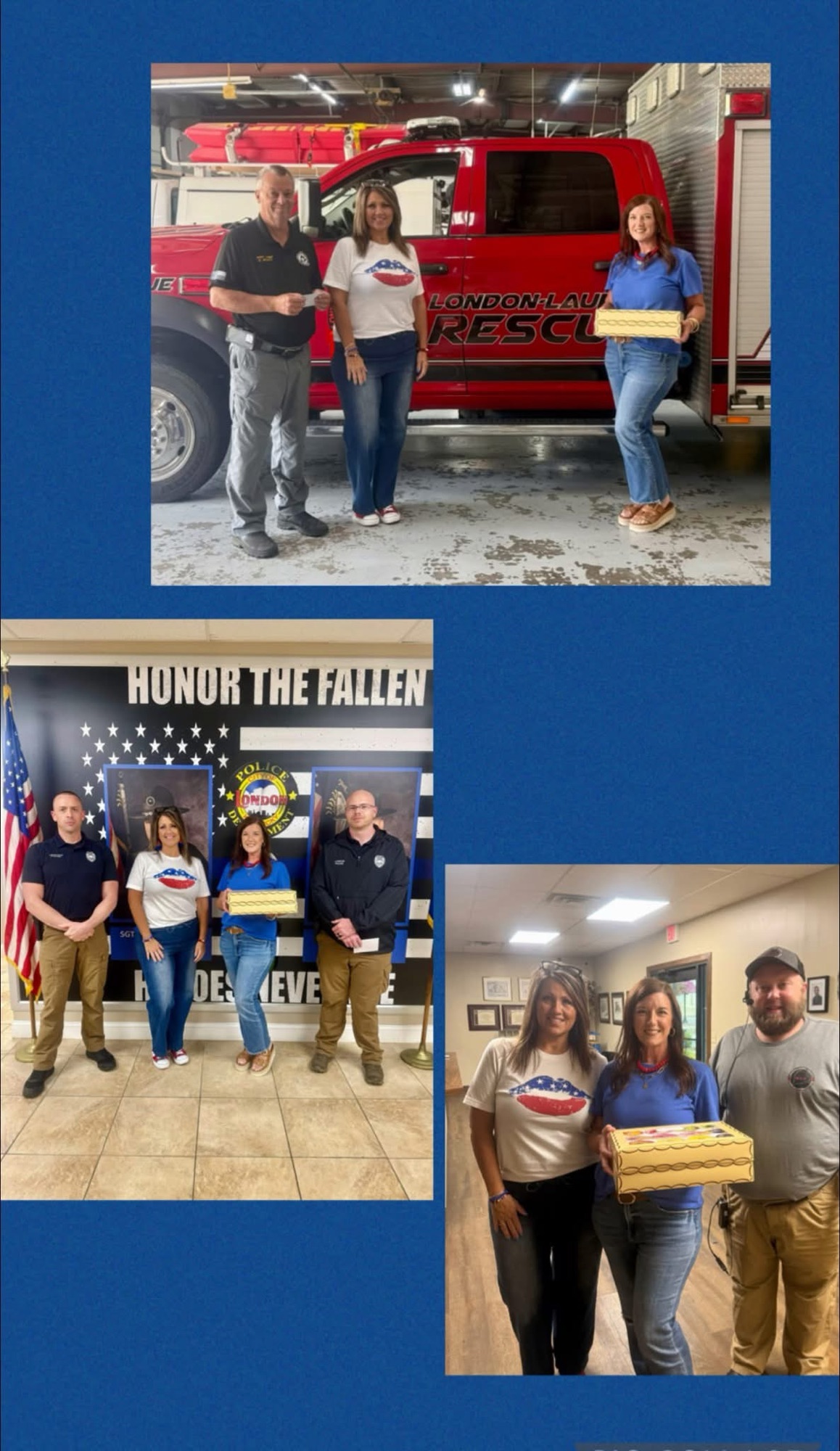
Sabrina Henson and Kellyjo Falkowski, two members of Southeast Kentucky Behavioral Health team in London, Kentucky, had the honor of visiting several local first responder offices on this important day of remembrance.

September 11 is a day to remember the innocent lives lost, honor the heroes who made the ultimate sacrifice, and recognize the courage and selflessness of first responders everywhere. We wanted to personally thank some of the brave men and women who serve and protect our local community each day.

Although we wish we could do more to express our appreciation, we were honored to provide them with fresh donuts as a small token of our gratitude.

To all first responders: Thank you for answering the call, running toward danger, and faithfully serving others. We see you, we appreciate you, and we are forever grateful for your service—not only today, but every day. A big Thank You to our amazing boss and supportive leader John S. Collier, MSW, LCSW S for making this day possible.

We will never forget. ❤️🤍💙

September11 #NeverForget #HonorTheFallen #FirstResponderAppreciation #CommunityStrong #SEKYBH

The Mercy of Open Hands: Book 3 of 5 in the Expressions Behind His Silence series released.

From author and licensed clinical social worker John S. Collier comes a powerful new series of books exploring love, loss, faith, emotional healing, and personal growth. With honesty shaped by both professional experience and a life marked by hardship, perseverance, and grace, Collier invites readers to examine the hidden places of the heart. Each book blends practical wisdom with vivid metaphor, offering encouragement to those learning to release the past, rebuild their identity, establish healthier relationships, and trust God through uncertain seasons. This is more than a collection of books—it is a journey from merely surviving life’s storms to discovering the strength, purpose, and peace needed to live fully again.

https://a.co/d/0gTmck1t

Expressions from Behind His Silence: Valume 3: Thwe Mercy of Open Hands

Some endings do not arrive with anger. They arrive with open hands.

The Mercy of Open Hands, Volume Three of the Expressions from Behind His Silence series, follows a man through heartbreak, acceptance, forgiveness, and the difficult grace of release.

Through intimate, reflective poetry, John S. Collier explores what it means to love someone without possessing them, to carry grief without becoming bitter, and to let go without denying that the love was real.

These poems speak to the moment when holding on begins to wound more than losing—and to the quiet courage required to choose peace.

This collection is for anyone learning that surrender is not weakness, forgiveness does not erase the past, and sometimes the most loving thing the heart can do is open its hands.

What Is True Narcissism? Understanding a Term That Society Uses Too Freely

By John S. Collier, MSW, LCSW-S

Few psychological terms have become as overused in modern society as the word narcissist. Spend a few minutes scrolling through social media, and you are likely to encounter countless videos, articles, and self-proclaimed experts explaining how to identify the narcissists in your life. An ex-spouse is labeled a narcissist. A demanding boss is called a narcissist. A parent who disappointed their child is suddenly a narcissist. Even someone who posts too many selfies may find themselves carrying the label.

The question that deserves attention is simple: What is true narcissism? More importantly, why are we so quick to apply the label to people whose behavior we dislike, misunderstand, or disagree with?

The answer is more complex than most people realize.

The Difference Between Narcissistic Traits and Narcissistic Personality Disorder

The first thing we must understand is that narcissism exists on a spectrum. Most people possess at least some narcissistic traits. Healthy self-esteem involves recognizing our strengths, taking pride in our accomplishments, and believing that we are worthy of love and respect. In fact, without a certain degree of self-focus, people would struggle to advocate for themselves, pursue goals, or maintain personal boundaries.

Having confidence does not make someone a narcissist.

Wanting recognition for hard work does not make someone a narcissist.

Feeling hurt when criticized does not make someone a narcissist.

True narcissism becomes problematic when an individual’s need for admiration, validation, and control consistently outweighs their ability to empathize with others. Narcissistic traits become a disorder only when they are rigid, deeply ingrained, and cause significant impairment in relationships, work, and daily functioning.

Many people demonstrate narcissistic behaviors occasionally. Very few meet the clinical criteria for Narcissistic Personality Disorder (NPD).

What Is Narcissistic Personality Disorder?

Narcissistic Personality Disorder is a recognized mental health condition described in the Diagnostic and Statistical Manual of Mental Disorders (DSM-5). Individuals with NPD typically exhibit a pervasive pattern of grandiosity, a strong need for admiration, and a lack of empathy that begins in early adulthood and is present across many areas of life.

Some common characteristics include:

An exaggerated sense of self-importance

Fantasies of unlimited success, power, brilliance, or beauty

A belief that they are special or unique

A need for excessive admiration

A sense of entitlement

Exploitative behavior toward others

Difficulty recognizing or caring about others’ feelings

Envy of others or belief that others envy them

Arrogant or haughty attitudes and behaviors

What is important to understand is that these characteristics are not occasional. They are persistent patterns that influence nearly every significant relationship and interaction.

A person may act selfishly during a stressful period. Another person may struggle to apologize when they feel threatened. Those behaviors alone do not indicate a personality disorder.

Why We Are Labeling Everyone a Narcissist

Human beings naturally search for explanations when relationships become painful. When someone hurts us, disappoints us, or behaves in a way we cannot understand, assigning a label can provide a sense of closure.

The term narcissist often becomes a convenient explanation for complex human behavior.

Instead of saying:

“My partner struggles with accountability.”

“My coworker has poor interpersonal skills.”

“My parent was emotionally unavailable.”

“My friend tends to make everything about themselves.”

We simply say:

“They’re a narcissist.”

The label offers certainty. Unfortunately, certainty is not always accuracy.

The reality is that people can be selfish without being narcissistic. They can be immature without having a personality disorder. They can make harmful decisions without being clinically narcissistic.

Sometimes people act from fear, insecurity, trauma, poor emotional intelligence, or unresolved pain. These explanations may not excuse harmful behavior, but they often provide a more accurate understanding of what is occurring.

The Hidden Insecurity Behind Narcissism

One of the greatest misconceptions about narcissism is that narcissists have extremely high self-esteem. In reality, many individuals with significant narcissistic traits possess surprisingly fragile self-esteem beneath the surface.

The confidence they display is often more like armor than genuine self-worth.

Because their self-image is so vulnerable, they become highly sensitive to criticism, rejection, or perceived disrespect. They may respond with anger, defensiveness, blame, or attempts to regain control.

The grandiosity frequently seen in narcissism is not always evidence of strength. Sometimes it represents an effort to protect deep feelings of inadequacy.

This does not excuse harmful behavior. However, it helps us understand that narcissism is often rooted in emotional wounds rather than genuine superiority.

The Danger of Misusing Mental Health Labels

As mental health awareness has increased, so has the misuse of mental health terminology.

People now casually use terms such as:

Narcissist

Bipolar

OCD

Trauma

Gaslighting

Triggered

While increased awareness can be positive, there is also a danger in reducing complex conditions to everyday insults or buzzwords.

When we inaccurately label others, several problems emerge:

First, we may overlook the true causes of their behavior.

Second, we can contribute to stigma surrounding legitimate mental health conditions.

Third, we may avoid examining our own role in difficult relationships.

Sometimes the healthiest question is not, “Is this person a narcissist?” but rather, “Is this relationship healthy for me?”

The answer to the second question is often far more useful.

Moving Toward Understanding Instead of Labeling

The desire to understand human behavior is natural. However, understanding requires curiosity rather than assumptions.

Instead of immediately diagnosing people from a distance, we might ask:

What motivates this behavior?

What insecurities could be influencing this person?

Is this an ongoing pattern or an isolated incident?

How does this relationship affect my well-being?

What boundaries do I need to establish?

These questions encourage reflection rather than judgment.

The goal should never be to excuse harmful behavior. Rather, it should be to understand it accurately.

Final Thoughts

True narcissism is much more than selfishness, arrogance, confidence, or a difficult personality. It is a complex pattern of thinking, feeling, and relating to others that extends far beyond the occasional flaws that all human beings possess.

In a world increasingly focused on labels, perhaps we should spend less time trying to diagnose the people around us and more time seeking to understand them.

Not everyone who hurts us is a narcissist.

Not everyone who disagrees with us is toxic.

Not everyone who struggles with empathy has a personality disorder.

Sometimes people are simply imperfect human beings doing the best they can with the emotional tools they have developed throughout their lives.

The challenge for all of us is learning the difference.

About the Author

John S. Collier, MSW, LCSW-S is a Licensed Clinical Social Worker Supervisor, behavioral health executive, and advocate for mental health awareness and community well-being. As the Executive Director of Southeast Kentucky Behavioral Health, LLC, he has dedicated his career to helping individuals, families, and communities navigate life’s challenges through evidence-based mental health services, compassionate care, and practical solutions.

With extensive experience in clinical social work, behavioral health administration, crisis intervention, community mental health, and leadership development, Mr. Collier brings a unique perspective that bridges both clinical knowledge and real-world application. His work has focused on empowering individuals to improve their emotional health, strengthen relationships, develop resilience, and achieve meaningful personal growth.

In addition to his clinical and administrative roles, Mr. Collier is passionate about educating the public on mental health topics, reducing stigma, and helping people better understand the complexities of human behavior. Through his writing, he seeks to translate psychological concepts into practical, accessible information that readers can apply in their everyday lives.

His articles explore a wide range of subjects, including mental health, human behavior, grief and loss, relationships, emotional wellness, resilience, trauma, personal development, and the impact of social and cultural trends on psychological well-being.

Mr. Collier believes that greater understanding leads to greater compassion and that meaningful change begins when individuals are willing to look beyond labels, assumptions, and judgment to better understand themselves and others.

“The goal is not simply to explain behavior, but to promote understanding, encourage growth, and inspire healthier relationships with ourselves and those around us.”
– John S. Collier, MSW, LCSW-S

References

American Psychiatric Association. (2022). Diagnostic and Statistical Manual of Mental Disorders (5th ed., text rev.). American Psychiatric Publishing.

Cain, N. M., Pincus, A. L., & Ansell, E. B. (2008). Narcissism at the crossroads: Phenotypic description of pathological narcissism across clinical theory, social/personality psychology, and psychiatric diagnosis. Clinical Psychology Review, 28(4), 638-656.

Miller, J. D., Campbell, W. K., & Pilkonis, P. A. (2007). Narcissistic personality disorder: Relations with distress and functional impairment. Comprehensive Psychiatry, 48(2), 170-177.

Pincus, A. L., & Lukowitsky, M. R. (2010). Pathological narcissism and narcissistic personality disorder. Annual Review of Clinical Psychology, 6, 421-446.

Turbulent ocean waves crashing under dark storm clouds with sunset light
Surviving the Affair

Article Two: When Forgiveness Feels Impossible

The Betrayed Spouse Who Cannot Forgive

There are few moments in life that permanently divide time into “before” and “after.” The discovery of an affair is one of them.

Many betrayed spouses remember the exact moment they found out. It becomes etched into memory with remarkable clarity. They remember where they were standing, the expression on their spouse’s face, the phone call, the text message, the photograph, the receipt, or the confession that forever changed their world. The details become frozen in time because betrayal is not simply painful—it is traumatic.

For many people, the greatest struggle after an affair is not deciding whether to stay or leave. It is the overwhelming realization that they cannot forgive. They may desperately want to forgive. Their faith may tell them they should forgive. Friends may encourage forgiveness. Their spouse may plead for forgiveness.

Yet every time they attempt it, the memories return. The images replay. The questions begin again. The anger resurfaces. Forgiveness seems to disappear as quickly as it came.

If this describes your experience, you are not abnormal. You are traumatized. Understanding the difference is the first step toward healing.


Betrayal Is More Than Heartbreak

When someone you trust violates the foundation of your relationship, the injury reaches far beyond hurt feelings. An affair attacks several of our deepest psychological needs simultaneously:

  • Safety
  • Trust
  • Identity
  • Security
  • Self-worth
  • Emotional attachment
  • Future expectations

The person who once represented comfort suddenly becomes the source of fear. The person who promised protection becomes the one who caused the injury. This contradiction places the brain into survival mode.

Researchers have increasingly recognized betrayal trauma as a unique form of psychological injury because the source of comfort becomes the source of danger. This creates confusion that often resembles post-traumatic stress disorder (PTSD).


The What-If Loop

One of the most exhausting symptoms of betrayal is what therapists often call the “What-If Loop.”

The mind searches endlessly for answers.

  • What if I had noticed sooner?
  • What if I had been more affectionate?
  • What if I had worked less?
  • What if I had looked different?
  • What if they loved the other person more?

The questions become relentless. Unfortunately, the human brain mistakenly believes that if it can answer every question, it will somehow eliminate the pain. It rarely does. Instead, each answer usually creates three new questions. Healing begins when we recognize that certainty is not always available. Sometimes recovery requires learning to live without complete explanations.


The Mind Replays What the Eyes Never Saw

Many betrayed spouses become haunted by mental movies. They imagine conversations. Hotel rooms. Vacations. Private messages. Laughter. Physical intimacy. These images may never have actually been witnessed, yet they feel vividly real. This is how trauma attempts to fill in missing information. The brain dislikes incomplete stories. It creates them. Unfortunately, the stories are usually worse than reality. This explains why intrusive thoughts continue months or even years after disclosure. They are symptoms of trauma—not weakness.


Anger Is Often Love’s Last Defense

People frequently apologize for being angry.

  • “I know I shouldn’t still be this angry.”
  • “I’ve prayed about it.”
  • “I’ve tried to let it go.”
  • “I don’t want to feel this way anymore.”

Anger often protects something much more vulnerable. Beneath the anger is grief. Beneath the grief is love. Beneath the love is loss. When we understand anger as protection instead of failure, we stop fighting our emotions and begin listening to them. Anger asks important questions:

  • “Am I safe?”
  • “Can I trust again?”
  • “Will this happen again?” These questions deserve honest answers.

Why Forgiveness Cannot Be Forced

Forgiveness is one of the most misunderstood concepts in both psychology and Christianity. Forgiveness is not pretending it didn’t happen. It is not forgetting. It is not excusing betrayal. It is not immediately trusting again. It is not removing consequences. Forgiveness is gradually releasing the desire to remain emotionally imprisoned by another person’s actions. That process often takes considerable time. When people pressure themselves into premature forgiveness, they frequently experience what psychologists call pseudo-forgiveness.

Outwardly they say,

“I forgive you.”

Internally, nothing has healed. The resentment simply becomes hidden. Authentic forgiveness grows naturally from healing. It rarely precedes it.


The Difference Between Forgiveness and Reconciliation

Many betrayed spouses fear that forgiving means they must remain in the marriage. It does not. Forgiveness concerns your heart. Reconciliation concerns the relationship. The two are related but not identical.

Reconciliation requires:

  • Genuine remorse
  • Complete honesty
  • Transparency
  • Consistent trustworthy behavior
  • Patience
  • Accountability
  • Mutual commitment

One person can forgive. Two people must reconcile.


Common Triggers

Recovery rarely follows a straight line. Many seemingly ordinary experiences suddenly reopen emotional wounds.

Common triggers include:

  • Anniversary dates
  • Holidays
  • Love songs
  • Hotel advertisements
  • Social media
  • Text notification sounds
  • Unexpected schedule changes
  • Certain perfumes or colognes
  • Particular restaurants
  • Movies involving infidelity

Triggers do not mean healing has failed. They simply remind us that the nervous system remembers what the mind wishes it could forget.


Tools for Healing

Healing requires more than waiting for time to pass. Intentional practices help the brain regain emotional stability. Consider these strategies:

  • Work with a therapist trained in betrayal trauma or couples counseling.
  • Practice grounding exercises when intrusive thoughts become overwhelming.
  • Develop healthy sleep, nutrition, and exercise routines.
  • Limit repetitive questioning that no longer produces useful information.
  • Build a support system of emotionally healthy people.
  • Journal difficult emotions rather than suppressing them.
  • Establish boundaries that increase emotional safety.
  • Pray honestly rather than pretending to be spiritually stronger than you feel.

Healing rarely happens accidentally. It happens intentionally.


A Christian Perspective on Forgiveness

Jesus calls believers to forgive. He also never minimizes sin. Throughout Scripture we see both mercy and justice. Repentance and restoration. Truth and grace. Forgiveness does not require pretending evil never occurred. Rather, forgiveness entrusts justice to God while refusing to allow bitterness to define one’s future.

Romans 12:19 reminds believers:

“Do not take revenge, my dear friends, but leave room for God’s wrath…”

Forgiveness becomes possible not because betrayal was small. It becomes possible because Christ has shown us that even great wounds can be redeemed. That redemption, however, is often a journey—not a single moment.


A Therapist’s Reflection

One of the most common statements I hear in my office is this:

“I don’t know if I’ll ever forgive them.”

My response often surprises people. I tell them not to make forgiveness today’s assignment. Today’s assignment is breathing. Sleeping. Eating. Staying emotionally safe. Understanding what happened. Learning that trauma changes the brain. Finding healthy support.

Forgiveness may come months later. Sometimes years later. Sometimes forgiveness arrives quietly—not because the memories disappeared, but because the memories no longer control your life.

Healing is rarely about forgetting. It is about remembering differently. The affair may always remain part of your story. It does not have to remain the author of your future.


About the Author

John S. Collier, MSW, LCSW is a licensed clinical social worker, psychotherapist, author, educator, and speaker with decades of experience helping individuals, couples, and families navigate relationship conflict, trauma, grief, anxiety, depression, and life transitions. Drawing upon years of clinical practice, he specializes in helping people understand the emotional wounds created by betrayal while offering practical, evidence-based strategies for healing and growth. His writing combines psychological research, clinical experience, and Christian principles to provide readers with hope, insight, and realistic pathways toward emotional recovery and healthier relationships.

John S. Collier, MSW, LCSW-S

Executive Director | Clinical Social Worker | Community Advocate

For more than two decades, John S. Collier has dedicated his career to strengthening individuals, families, and communities through compassionate behavioral healthcare, leadership, and advocacy. As the founder and Executive Director of Southeast Kentucky Behavioral Health, LLC, he has played a significant role in expanding access to mental health, case management, and community-based support services throughout Eastern Kentucky.

A graduate of the University of Kentucky College of Social Work, Mr. Collier earned his Master of Social Work degree in 2004 and subsequently became a Licensed Clinical Social Worker in the Commonwealth of Kentucky. Throughout his career, he has remained committed to serving individuals across the lifespan, including children, adolescents, adults, older adults, couples, and families.

Professional Leadership

As Executive Director of Southeast Kentucky Behavioral Health, Mr. Collier oversees a growing multidisciplinary behavioral health organization providing outpatient therapy, targeted case management, positive behavior support services, and community-based supports. He also maintains clinical and supervisory responsibilities, serving in multiple leadership and professional capacities within the organization, including clinical supervision, positive behavior support, staff development, program development, and community outreach.

His professional work includes:

  • Clinical psychotherapy and behavioral health treatment
  • Positive Behavior Support planning and consultation
  • Clinical supervision and staff development
  • Community mental health advocacy
  • Program development and organizational leadership
  • Behavioral assessment and intervention planning
  • Service coordination for individuals with complex behavioral and developmental needs

Clinical Philosophy

Mr. Collier’s clinical philosophy centers on treating the whole person rather than merely addressing symptoms. He utilizes evidence-based approaches while emphasizing dignity, respect, empowerment, and individualized treatment planning. His work incorporates cognitive-behavioral principles, trauma-informed care, person-centered planning, family involvement, and strengths-based interventions designed to help individuals reach their fullest potential. [sekybh.com],

He is particularly passionate about increasing access to behavioral healthcare in rural communities and ensuring individuals receive services that are practical, meaningful, and tailored to their unique strengths and needs. [sekybh.com]

Community Involvement

Beyond his clinical work, Mr. Collier has demonstrated a strong commitment to community engagement throughout his career. His efforts have included public education, outreach initiatives, advocacy for mental health awareness, and collaboration with schools, healthcare providers, and community organizations. He believes strong communities are built when mental health services are accessible, stigma is reduced, and individuals are empowered to succeed. [sekybh.com]

Author, Educator, and Advocate

In addition to his clinical and leadership roles, Mr. Collier has contributed to professional and community discussions through writing and education. Publicly available information indicates that he has been a published author in areas related to mental health, Freemasonry, and poetry. His work reflects a commitment to personal growth, community service, and the advancement of behavioral health knowledge.

Personal Values

Throughout his professional journey, Mr. Collier has remained grounded in the core values of social work: service, integrity, competence, dignity and worth of every person, the importance of human relationships, and social justice. Colleagues, clients, and community partners know him for his commitment to helping others achieve meaningful and lasting change while fostering an environment of compassion, respect, and accountability. This dedication continues to guide both his leadership and clinical practice today.

Contact Information

Southeast Kentucky Behavioral Health, LLC
202 West 7th Street
London, Kentucky 40741
Phone: (606) 657-0532 Ext. 101

John@sekybh.com

References

American Psychiatric Association. (2022). Diagnostic and Statistical Manual of Mental Disorders (5th ed., text rev.). American Psychiatric Association Publishing.

Baucom, D. H., Snyder, D. K., & Gordon, K. C. (2009). Helping Couples Get Past the Affair: A Clinician’s Guide. Guilford Press.

Glass, S. P. (2003). Not “Just Friends”: Rebuilding Trust and Recovering Your Sanity After Infidelity. Free Press.

Gordon, K. C., Baucom, D. H., & Snyder, D. K. (2004). An integrative intervention for promoting recovery from extramarital affairs. Journal of Marital and Family Therapy, 30(2), 213–231.

Johnson, S. M. (2019). Attachment Theory in Practice. Guilford Press.

Snyder, D. K., Baucom, D. H., & Gordon, K. C. (2007). Getting Past the Affair. Guilford Press.

Spring, J. A. (2012). After the Affair (2nd ed.). Harper.

The Holy Bible, New International Version. (2011). Zondervan.