
Welcome to SOUTHEAST KENTUCKY BEHAVIORAL HEALTH
When Love Stays After Betrayal: The Difficult Path of the Faithful Partner

Infidelity is one of the most painful experiences a person can endure in a romantic relationship. For many couples, the discovery of an affair leads to separation or divorce. However, some couples decide to remain together and attempt to rebuild the relationship. While this decision can reflect commitment, hope, and a desire for healing, the faithful partner often faces an incredibly difficult emotional journey. Rebuilding trust after betrayal requires confronting deep wounds, navigating intense emotional turmoil, and learning how to redefine the relationship moving forward.

The Shock of Betrayal

When a partner discovers infidelity, the initial reaction is often shock. The faithful partner may struggle to reconcile the person they believed they knew with the actions that caused such deep harm. Psychologists describe this reaction as betrayal trauma, a psychological response that occurs when someone we depend on for emotional security violates that trust (Freyd, 1996).

The faithful partner may replay memories in their mind, wondering when the betrayal began, whether warning signs were missed, or whether certain moments were lies. Even seemingly small details—texts, late nights at work, unexplained absences—can take on new meaning in hindsight.

This stage often includes feelings such as:

disbelief anger humiliation sadness confusion anxiety about the future

Even if the unfaithful partner expresses remorse and commits to repairing the relationship, the emotional damage does not disappear overnight.

The Loss of Trust

Trust is one of the foundational pillars of a healthy relationship. When infidelity occurs, that pillar can collapse almost instantly. According to relationship researcher John Gottman, trust functions as the emotional safety net that allows couples to feel secure with one another. Once broken, it requires significant effort and time to rebuild.

For the faithful partner, daily life can become filled with uncertainty. Questions that never existed before begin to arise:

Where are they really going? Who are they texting? Are they telling the truth now? Could this happen again?

This constant questioning can lead to hypervigilance. The faithful partner may check phones, question schedules, or feel anxious whenever their partner is unavailable. These behaviors are often not about control but about a desperate attempt to restore a sense of safety.

Emotional Rollercoasters

Healing after infidelity rarely follows a straight line. Instead, the faithful partner often experiences emotional swings that can feel overwhelming.

One day they may feel hopeful and willing to work on the relationship. The next day, memories of the betrayal may resurface and bring waves of anger or grief.

Common emotional responses include:

intrusive thoughts about the affair sudden triggers connected to the betrayal feelings of inadequacy or self-doubt resentment toward the unfaithful partner fear of being hurt again

These emotional cycles are normal responses to betrayal. Research shows that individuals recovering from infidelity often experience symptoms similar to post-traumatic stress, including rumination and emotional triggers (Gordon, Baucom, & Snyder, 2004).

The Struggle With Self-Worth

One of the most painful consequences of infidelity is how it can affect the faithful partner’s sense of self-worth. Many individuals begin to question their own value, wondering if they were somehow not “enough.”

Questions such as these often arise:

Was I not attractive enough? Did I fail as a partner? Why did they choose someone else?

These thoughts can be deeply damaging. In reality, infidelity is usually connected to the choices, emotional struggles, or boundaries of the unfaithful partner rather than deficiencies in the faithful partner (Glass, 2003). However, the emotional impact can still lead the faithful partner to internalize blame.

Learning to separate personal worth from a partner’s actions is a crucial part of healing.

The Burden of Forgiveness

When a couple decides to stay together after infidelity, the faithful partner often carries the difficult responsibility of deciding whether forgiveness is possible. Forgiveness does not mean forgetting the betrayal or pretending it never happened. Instead, it involves gradually releasing the hold that the betrayal has over one’s emotions.

This process can take months or even years. True forgiveness requires several conditions:

genuine remorse from the unfaithful partner transparency and honesty moving forward consistent behavioral change patience during the healing process

Without these elements, forgiveness can feel forced or incomplete.

Rebuilding the Relationship

If the couple continues working toward reconciliation, the relationship must often be rebuilt from the ground up. In many ways, the old relationship—the one that existed before the affair—no longer exists.

Instead, the couple must create something new.

Rebuilding may involve:

honest conversations about the betrayal couples counseling establishing new boundaries increased emotional transparency consistent accountability

The faithful partner must slowly observe whether the unfaithful partner’s actions match their words. Over time, consistent honesty and reliability can help restore a sense of safety.

Living With Lingering Scars

Even when relationships successfully recover from infidelity, the experience often leaves emotional scars. Certain dates, locations, or memories may always carry reminders of the betrayal.

However, scars are not the same as open wounds. With time, communication, and genuine effort from both partners, many couples find that healing is possible.

For the faithful partner, the journey involves learning to trust again—not only their partner, but also themselves. They must learn that their value was never defined by someone else’s betrayal.

Conclusion

When a partner chooses to stay after infidelity, they embark on one of the most emotionally challenging paths a relationship can face. The faithful partner must navigate pain, rebuild trust, confront self-doubt, and determine whether forgiveness is possible.

Yet within this difficult process lies the possibility of growth. Some couples emerge with deeper communication, stronger emotional awareness, and a renewed commitment to honesty.

Healing from betrayal is not easy. It requires patience, vulnerability, and courage. But for those willing to face the pain and rebuild together, reconciliation can become not just an attempt to save a relationship—but an opportunity to transform it.

About the Author

John S. Collier, MSW, LCSW is a behavioral health therapist and writer from London, Kentucky. With years of experience working with individuals, couples, and families, he focuses on helping people navigate relationship struggles, trauma, emotional healing, and personal growth. His writing combines clinical insight with practical guidance to help readers better understand the complexities of human relationships and emotional resilience.

References

Freyd, J. J. (1996). Betrayal Trauma: The Logic of Forgetting Childhood Abuse. Harvard University Press.

Glass, S. (2003). Not “Just Friends”: Rebuilding Trust and Recovering Your Sanity After Infidelity. Free Press.

Gordon, K. C., Baucom, D. H., & Snyder, D. K. (2004). An integrative intervention for promoting recovery from extramarital affairs. Journal of Marital and Family Therapy, 30(2), 213–231.

Gottman, J. M., & Silver, N. (2015). The Seven Principles for Making Marriage Work. Harmony Books.
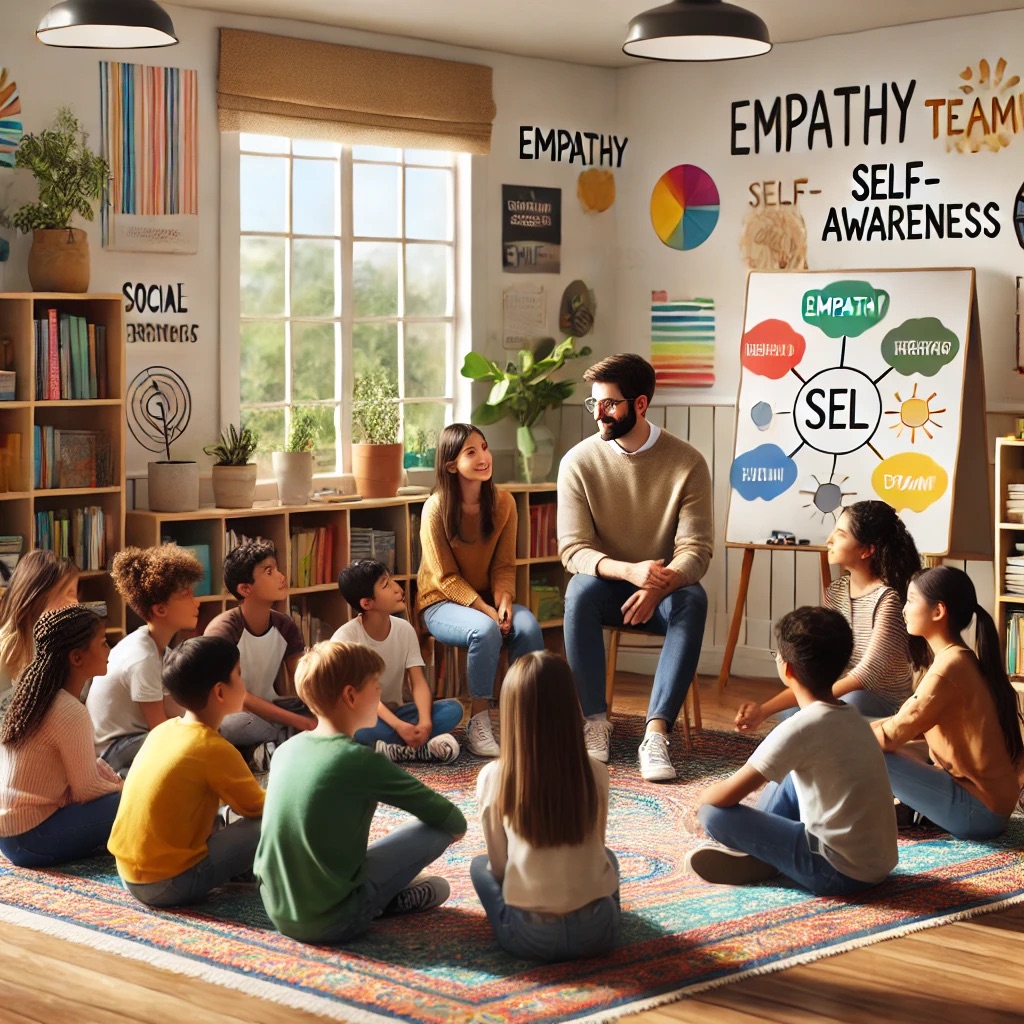
Social Emotional Learning: A Comprehensive Overview

Social Emotional Learning (SEL) has gained prominence as an integral component of education. Defined by the Collaborative for Academic, Social, and Emotional Learning (CASEL), SEL involves the process of acquiring and applying knowledge, attitudes, and skills to understand and manage emotions, achieve positive goals, demonstrate empathy, establish and maintain relationships, and make responsible decisions (CASEL, 2023).

The growing recognition of SEL stems from its demonstrated impact on students’ academic performance, mental health, and future success. This article delves into the five core components of SEL, its benefits, and the practical implications of integrating SEL into educational systems.

Core Components of Social Emotional Learning

CASEL identifies five core competencies that form the foundation of SEL programs:

1. Self-Awareness: The ability to recognize one’s emotions, thoughts, and values and understand how they influence behavior. Self-awareness also involves accurately assessing personal strengths and weaknesses.

2. Self-Management: Skills related to regulating emotions, setting and achieving goals, and managing stress.

3. Social Awareness: The capacity to empathize with others, appreciate diversity, and understand social norms.

4. Relationship Skills: Abilities to establish and maintain healthy relationships, communicate effectively, and resolve conflicts constructively.

5. Responsible Decision-Making: The process of making ethical and constructive choices about personal and social behavior.

These competencies provide a framework for creating supportive environments where students can thrive both academically and personally.

Benefits of Social Emotional Learning

1. Academic Performance

Research consistently shows that SEL enhances academic outcomes. A meta-analysis of 213 SEL programs revealed an average academic performance gain of 11 percentile points for students participating in SEL programs compared to their peers (Durlak et al., 2011).

2. Behavioral Improvements

SEL reduces behavioral problems such as aggression and disruptive behaviors. Programs that teach emotional regulation and conflict resolution help students respond to challenges more constructively (Jones et al., 2019).

3. Mental Health and Well-Being

Students exposed to SEL demonstrate lower levels of anxiety and depression and higher levels of emotional resilience (Taylor et al., 2017). These programs equip students with coping mechanisms to navigate stress and adversity effectively.

4. Long-Term Success

The skills fostered by SEL extend beyond the classroom. Emotional intelligence, teamwork, and decision-making are essential in the workplace and personal life, leading to higher rates of employment and life satisfaction (Weissberg et al., 2015).

Implementation Strategies for Educators

1. Embedding SEL in Curriculum

SEL can be integrated into daily lessons across subjects by incorporating group discussions, collaborative projects, and reflective writing assignments.

2. Professional Development for Teachers

Training educators to model and teach SEL competencies is critical for program success. Teachers need resources and strategies to address diverse student needs.

3. Family and Community Engagement

Involving families and communities in SEL initiatives ensures consistency in fostering social and emotional skills outside the classroom.

4. Data-Driven Practices

Regular assessment of SEL programs helps educators refine their approaches and demonstrate measurable outcomes.

Challenges and Considerations

While SEL offers numerous benefits, challenges such as lack of funding, teacher resistance, and the need for cultural adaptation must be addressed. Policymakers and educators must prioritize creating equitable SEL programs that consider diverse cultural and socioeconomic backgrounds.

Conclusion

Social Emotional Learning is a vital component of modern education, addressing the holistic development of students. By teaching students to navigate emotions, relationships, and decisions, SEL not only enhances academic success but also equips students with lifelong skills. Future research and policy efforts should focus on scaling SEL initiatives and addressing challenges to ensure all students benefit from these transformative programs.

This article is written by John S. Collier, MSW, LCSW. Mr. Collier has over 25 years experience in the social work field. He currently serves as the executive director and outpatient behavioral health therapist at Southeast Kentucky Behavioral health based out of London Kentucky. He may be reached by phone at 606-657-0532 extension 101 or by email at john@sckybh.com

References

• Collaborative for Academic, Social, and Emotional Learning (CASEL). (2023). What is SEL? Retrieved from https://casel.org

• Durlak, J. A., Weissberg, R. P., Dymnicki, A. B., Taylor, R. D., & Schellinger, K. B. (2011). The impact of enhancing students’ social and emotional learning: A meta-analysis of school-based universal interventions. Child Development, 82(1), 405-432.

• Jones, S. M., Bailey, R., & Kahn, J. (2019). The science and practice of social and emotional learning: Implications for state policymaking. The Aspen Institute.

• Taylor, R. D., Oberle, E., Durlak, J. A., & Weissberg, R. P. (2017). Promoting positive youth development through school-based social and emotional learning interventions: A meta-analysis of follow-up effects. Child Development, 88(4), 1156-1171.

• Weissberg, R. P., Durlak, J. A., Domitrovich, C. E., & Gullotta, T. P. (2015). Social and emotional learning: Past, present, and future. Handbook of Social and Emotional Learning: Research and Practice, 3-19.

This article underscores the transformative potential of SEL in education and beyond, offering a roadmap for educators, policymakers, and communities to prioritize holistic development.

Managing the Gap Between Perception, Expectations, and Reality in Marriage: A Psychological Perspective

Marriage often begins with a blend of excitement, hope, and expectations about the roles partners will play. For many women, the concept of a husband is shaped by cultural norms, personal upbringing, and media portrayals, which can lead to a distinct perception of what a partner “should” be. However, the reality of married life often reveals that individuals bring unique traits, flaws, and complexities into the relationship that may not align with those preconceived ideals. The process of reconciling this gap is central to building a healthy, enduring partnership.

Perceptions and Expectations of a Husband

The perception of an ideal husband varies across cultures and individuals. Studies suggest that traditional expectations of a husband often include emotional support, provision of financial security, and shared domestic responsibilities (Fowers, 1998). These perceptions are shaped by societal roles and personal experiences, including family dynamics witnessed during childhood. For instance, a woman raised in a household with a nurturing and present father may expect similar traits in her spouse.

Media also plays a significant role in shaping these perceptions. Romantic comedies and novels often depict husbands as highly attentive, emotionally available, and consistently fulfilling their partner’s needs. While such portrayals can be aspirational, they may inadvertently set unrealistic benchmarks that are difficult for real individuals to meet.

Adjusting to the Reality of Marriage

Marriage, as psychologists emphasize, is a journey of understanding and acceptance rather than perfection. When a husband does not fit the initial mold envisioned by his spouse, the process of adjustment requires several critical steps:

1. Acknowledging Differences: Research shows that the ability to tolerate differences in personality and behavior is key to marital satisfaction (Gottman & Silver, 1999). Recognizing that no partner can fully embody every ideal trait helps reduce feelings of disappointment.

2. Developing Realistic Expectations: Unrealistic expectations can lead to dissatisfaction and conflict. A study by Fletcher et al. (2000) highlights the importance of developing realistic views of a partner’s strengths and weaknesses, which fosters a sense of acceptance.

3. Improving Communication: Open communication is crucial for bridging the gap between expectations and reality. Partners who express their feelings, needs, and concerns constructively are better equipped to address misaligned expectations.

4. Cultivating Empathy and Patience: Adjusting to a partner’s traits requires empathy and patience. Understanding the reasons behind certain behaviors—whether shaped by past experiences, stressors, or personal insecurities—encourages a compassionate perspective.

5. Shared Growth and Compromise: Successful marriages often involve mutual growth. Both partners must be willing to compromise and adapt to each other’s evolving needs (Karney & Bradbury, 1995).

The Role of Cognitive Reframing

Cognitive reframing is a psychological technique that can help individuals manage unmet expectations. This approach involves shifting one’s mindset from focusing on a partner’s shortcomings to appreciating their positive traits. For example, instead of fixating on a husband’s lack of romantic gestures, a wife might focus on his consistent efforts to provide stability and support. Cognitive reframing has been shown to increase relationship satisfaction and reduce conflict (Fincham & Beach, 1999).

Building Resilience in the Marriage

The ability to adapt to the realities of marriage is closely tied to emotional resilience. Resilient couples are better equipped to navigate disappointments and build a partnership that transcends initial expectations. Key strategies for fostering resilience include:

• Fostering Gratitude: Regularly expressing gratitude for one another’s contributions strengthens emotional bonds.

• Seeking Professional Support: In cases where expectations and reality create significant distress, couples therapy can provide valuable tools for resolving conflicts and rebuilding trust.

• Focusing on the Bigger Picture: Long-term marital success often depends on focusing on shared values, goals, and commitments rather than minor discrepancies in behavior or personality.

Conclusion

The journey from perception to acceptance is a hallmark of marital growth. While initial expectations about a husband may be shaped by societal norms and personal ideals, the reality of marriage often requires flexibility, empathy, and open communication. By embracing their partner’s unique qualities and addressing differences constructively, women can build a fulfilling partnership that transcends unrealistic ideals. Ultimately, the strength of a marriage lies not in perfection but in the shared commitment to understanding, growth, and love.

This article has been written by John S. Collier, MSW, LCSW. John has over 25 years in the social work field. He currently serves as the executive Director and outpatient provider at Southeast Kentucky Behavioral health based out of London Kentucky. John may be reached at 606-657-0532 extension 101 or by email at john@sekybh.com

References

• Fincham, F. D., & Beach, S. R. (1999). Conflict in marriage: Implications for working with couples. Annual Review of Psychology, 50(1), 47–77.

• Fletcher, G. J., Simpson, J. A., & Thomas, G. (2000). The measurement of perceived relationship quality components: A confirmatory factor analytic approach. Personality and Social Psychology Bulletin, 26(3), 340–354.

• Fowers, B. J. (1998). The limits of a technical concept of a good marriage: Exploring the role of virtue in communication skills. Journal of Marital and Family Therapy, 24(1), 15–28.

• Gottman, J. M., & Silver, N. (1999). The seven principles for making marriage work. Three Rivers Press.

• Karney, B. R., & Bradbury, T. N. (1995). The longitudinal course of marital quality and stability: A review of theory, methods, and research. Psychological Bulletin, 118(1), 3–34.