Welcome to SOUTHEAST KENTUCKY BEHAVIORAL HEALTH

All posts by John S. Collier, MSW, LCSW-S

September 11: A Day of Remembrance, Gratitude, and Reflection

By John S. Collier, MSW, LCSW-S

Every generation has moments that become permanently etched into memory. For many Americans, September 11, 2001, is one of those moments. It is a day marked by sorrow, sacrifice, courage, and unity. Twenty-five years later, we still remember where we were, how we felt, and the profound impact that day had on our nation and the world.

On the morning of September 11, 2001, nineteen terrorists hijacked four commercial aircraft. Two planes were flown into the Twin Towers of the World Trade Center in New York City, one struck the Pentagon, and a fourth crashed in Pennsylvania after passengers courageously fought back against the hijackers. Nearly 3,000 people lost their lives in what remains the deadliest foreign attack on American soil. Yet while the events of that day revealed unimaginable evil, they also revealed something else: the remarkable strength of the human spirit.

We remember the firefighters who climbed stairwells while others were descending to safety. We remember the police officers who rushed toward danger. We remember emergency medical personnel, military members, volunteers, and ordinary citizens who placed the lives of strangers above their own. More than 2,000 police officers and nearly 1,000 firefighters responded to the World Trade Center attacks, joining countless others in rescue and recovery efforts. Their actions remind us that heroism is not always found in grand speeches or celebrated victories. Often, it is found in quiet acts of service, in selfless sacrifice, and in the willingness to help another human being despite personal risk.

For me, September 11 carries an additional significance. It is the day my son was born.

Over the years, people have often asked what it was like to welcome a child into the world on a day overshadowed by national tragedy. The answer is difficult to put into words. While television screens showed devastation, uncertainty, and heartbreak, I was also witnessing one of the most meaningful moments of my life. The contrast was profound. A day of collective grief became, for me, a day forever intertwined with the gift of new life.

As my son grew older, each birthday became more than a celebration. It became an opportunity to pause and remember. Before the cake is cut, before gifts are opened, before the laughter begins, there is reflection. Reflection on those who never came home. Reflection on the families whose lives changed forever. Reflection on the heroes whose bravery continues to inspire generations.

The passage of time does not diminish the significance of September 11. If anything, it increases our responsibility to remember. A growing number of Americans were born after the attacks and have no personal memory of the events. The National September 11 Memorial & Museum has emphasized the importance of preserving the stories of loss, courage, compassion, and service for future generations so that the promise to “never forget” remains meaningful. Remembering is not about reliving tragedy. It is about honoring the humanity that emerged in its wake.

It is about remembering the office worker who helped a colleague down dozens of flights of stairs. It is about the passenger who made one final phone call to loved ones before confronting unimaginable danger. It is about the first responder who continued searching for survivors long after hope had faded. It is about the families who found the strength to carry on despite overwhelming loss.

Their stories teach us that courage is contagious. Compassion matters. Service matters. Community matters.

In a world that often feels divided, September 11 reminds us of a time when Americans stood together. Differences that normally separated people seemed insignificant in the face of shared grief and shared purpose. Neighbors helped neighbors. Communities rallied together. Strangers became family.

Those lessons remain relevant today.

As we observe another anniversary of September 11, may we remember the victims with dignity. May we honor the survivors with respect. May we thank the first responders, military personnel, medical professionals, volunteers, and countless others whose sacrifices demonstrated the very best of humanity.

And may we never lose sight of what they showed us: that even in our darkest hours, courage endures, compassion survives, and the human spirit remains stronger than fear.

Today, I remember those who were lost.

Today, I thank those who served.

And today, as I celebrate another year of my son’s life, I am reminded that remembrance and gratitude can exist side by side, honoring the past while appreciating the precious gift of the present.

About the Author

John S. Collier, MSW, LCSW-S is the Executive Director of Southeast Kentucky Behavioral Health (SEKYBH) and a Licensed Clinical Social Worker Supervisor with extensive experience in behavioral health, community services, clinical leadership, and organizational development. Throughout his career, he has been dedicated to strengthening individuals, families, and communities through compassionate care, advocacy, and service.

As a behavioral health professional, John believes that some of life’s most difficult moments often reveal the resilience, courage, and humanity that connect us all. His writing frequently explores themes of hope, remembrance, personal reflection, and the enduring strength of the human spirit.

In this article, John’s reflections on September 11 are both historical and deeply personal. September 11, 2001, is not only a day of national remembrance, but also the day his son was born. This unique intersection of public tragedy and personal joy has shaped his perspective on gratitude, service, sacrifice, and the importance of honoring those whose lives and actions continue to inspire future generations.

When not leading organizational initiatives or advocating for improved behavioral health services across Kentucky, John enjoys writing articles, poetry, and community-focused content that encourages reflection, understanding, and meaningful human connection.


Author Contact

John S. Collier, MSW, LCSW-S
Executive Director
Southeast Kentucky Behavioral Health (SEKYBH)
London, Kentucky

“We honor the past not by dwelling in tragedy, but by remembering the lives, sacrifices, and lessons that continue to guide us forward.” – John S. Collier


References

National Commission on Terrorist Attacks Upon the United States. (2004). The 9/11 Commission Report: Final Report of the National Commission on Terrorist Attacks Upon the United States. U.S. Government Printing Office. National September 11 Memorial & Museum. (2026). September 11, 2001 Historical Exhibition. Retrieved from the National September 11 Memorial & Museum. National September 11 Memorial & Museum. (2026). Marking the 25th Anniversary. Retrieved from the National September 11 Memorial & Museum. National September 11 Memorial & Museum. (2026). Homepage and Educational Resources. Retrieved from the National September 11 Memorial & Museum.
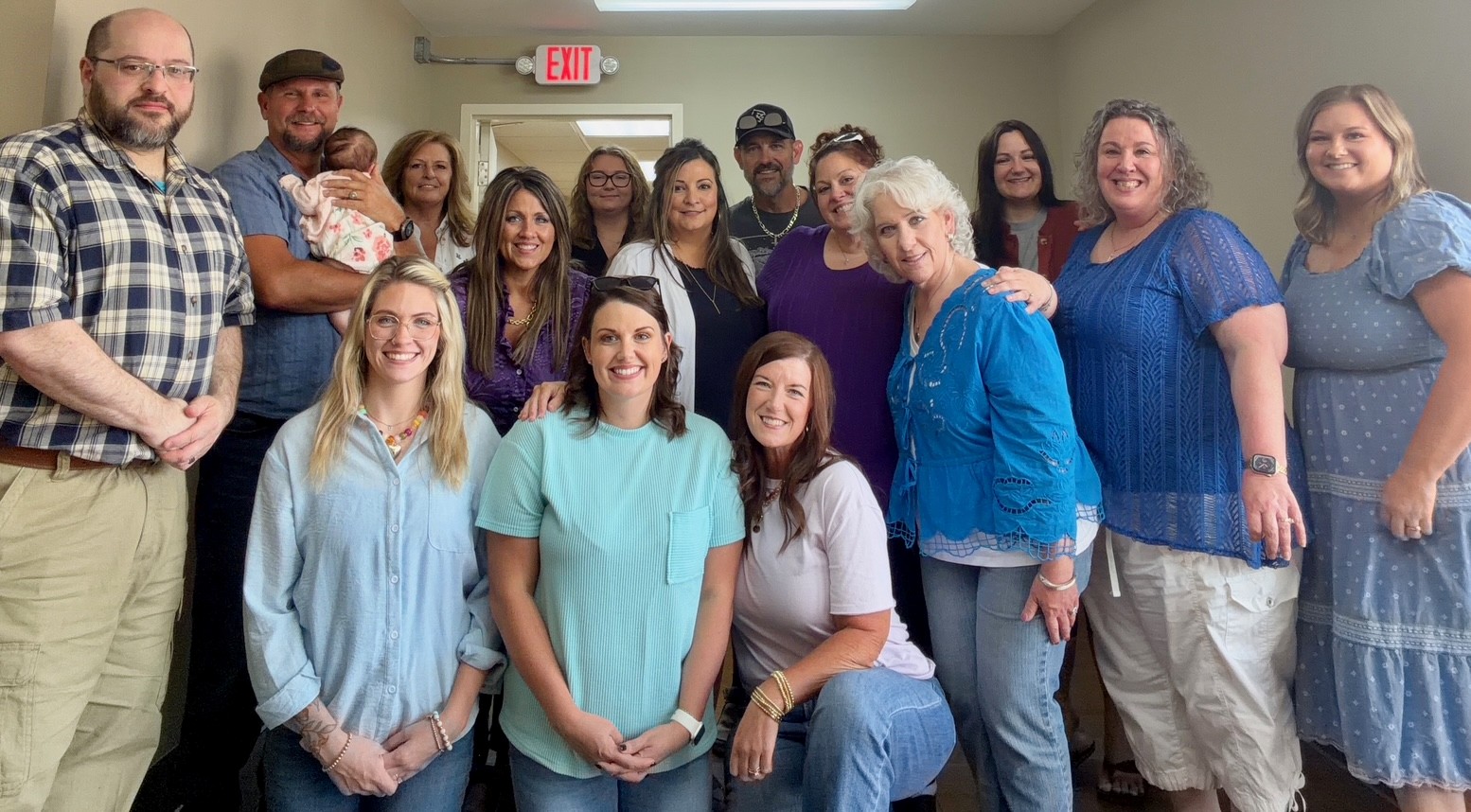
More Than a Potluck: Building Community One Meal at a Time

Every day at Southeast Kentucky Behavioral Health, we come together for a common purpose: serving others. We support individuals, families, and communities through difficult moments, life transitions, challenges, and victories. Yet, as important as that work is, there is something equally important that often happens behind the scenes.

Today was not a staff meeting. It was not a training. It was not about productivity reports, documentation requirements, budgets, or deadlines.

Today was simply a potluck.

And sometimes, the simplest moments are the most meaningful.

As organizations grow, it can become easy to focus solely on the work. Calendars fill up. Emails accumulate. Responsibilities multiply. Before long, the people who spend hours each day working alongside one another can become little more than names on a schedule or voices in a meeting.

That is why days like today matter.

They remind us that we are more than coworkers. We are a team. We are a community. We are people who genuinely care about one another.


Throughout the afternoon, conversations flowed freely around the table. There were stories shared, laughter exchanged, and moments of connection that had nothing to do with job titles or responsibilities. For a little while, everyone simply had the opportunity to be themselves.

In behavioral health, we often talk about the importance of relationships. We encourage our clients to build support systems, strengthen social connections, and lean into community. It would be difficult to teach those values if we did not practice them ourselves.

The truth is that caring for people starts by caring for each other.

And today was one of those opportunities.


A shared meal may seem like a small thing, but there is something powerful about sitting together without an agenda. No presentations. No formal discussions. Just people enjoying one another’s company and taking a brief pause from the demands of the day.

These moments strengthen trust. They foster friendships. They remind us that no one stands alone.

At SEKYBH, we often talk about being a family-oriented organization, and events like today’s potluck are one of the ways we bring that belief to life.

Not because anyone is required to participate. Not because it appears in a policy manual. But because relationships matter.


One of the most beautiful things about today’s gathering was seeing people from different departments, backgrounds, experiences, and roles spending time together. In the office, we each have unique responsibilities. Some provide direct clinical services. Others support operations, billing, administration, or coordination.

Yet at the table, those distinctions faded away.

Nobody was above anyone else. Nobody was more important than anyone else. We were simply people sharing food, stories, and a few hours together.

That spirit reflects one of the core values of our organization. Every person contributes to our mission. Every role matters.

Every member of our team helps make Southeast Kentucky Behavioral Health what it is.


As we looked around the room today, it was impossible not to appreciate the dedication and compassion represented there. The same people laughing together over lunch are the same people who spend countless hours helping individuals navigate some of life’s most difficult challenges.

They advocate. They encourage. They teach. They support. They care. And they deserve opportunities to be cared for as well.


One especially meaningful aspect of today’s event was the reminder that our organization extends beyond work itself. Families were present. Children were welcomed. Life happened naturally around the room.

It reminded all of us that while we may wear professional titles, we are also parents, spouses, partners, friends, siblings, and neighbors.

We bring our whole selves into the work we do.

And today gave us an opportunity to celebrate those parts of ourselves as well.


Not everyone was able to attend today’s gathering, and we certainly missed those who could not be there. We hope there will be many more opportunities in the future for everyone to come together and enjoy moments like these.

Because while our mission focuses on behavioral health and community wellness, that mission begins right here, within our own walls.

It begins with kindness. It begins with connection. It begins with taking care of one another.

At Southeast Kentucky Behavioral Health, we believe that healthy workplaces are built upon healthy relationships. Today’s potluck was a simple reminder of that truth.

The food was wonderful. The conversations were meaningful. The company was even better. To everyone who attended, brought a dish, shared a laugh, helped set up, helped clean up, or simply took a moment to sit and enjoy the time together, thank you.

Days like today remind us of something important: We are not just colleagues working in the same building. We are a team. We care for one another. We support one another.

And together, we continue building a workplace where every person belongs.

Until next time, may we continue caring for others while never forgetting to care for each other.

– John S. Collier, MSW, LCSW-S
Executive Director, Southeast Kentucky Behavioral Health, LLC

Labor Day Office Closure Notice

📢 Southeast Kentucky Behavioral Health, LLC

In observance of Labor Day, our offices will be closed on Monday, September 7.

Today, we honor and celebrate the hard work, dedication, and contributions of workers across our communities.

✅ We will resume normal business hours the following day, Tuesday, September 8.

If you are experiencing a mental health emergency, please call 911 or go to your nearest emergency room. You may also contact 988 for immediate mental health crisis support.

We wish everyone a safe, relaxing, and enjoyable Labor Day weekend!

❤️ Thank you for allowing Southeast Kentucky Behavioral Health, LLC to serve our community.

#LaborDay #SEKYBH #MentalHealthMatters #CommunityCare #BehavioralHealth

What Is True Narcissism? Understanding a Term That Society Uses Too Freely

By John S. Collier, MSW, LCSW-S

Few psychological terms have become as overused in modern society as the word narcissist. Spend a few minutes scrolling through social media, and you are likely to encounter countless videos, articles, and self-proclaimed experts explaining how to identify the narcissists in your life. An ex-spouse is labeled a narcissist. A demanding boss is called a narcissist. A parent who disappointed their child is suddenly a narcissist. Even someone who posts too many selfies may find themselves carrying the label.

The question that deserves attention is simple: What is true narcissism? More importantly, why are we so quick to apply the label to people whose behavior we dislike, misunderstand, or disagree with?

The answer is more complex than most people realize.

The Difference Between Narcissistic Traits and Narcissistic Personality Disorder

The first thing we must understand is that narcissism exists on a spectrum. Most people possess at least some narcissistic traits. Healthy self-esteem involves recognizing our strengths, taking pride in our accomplishments, and believing that we are worthy of love and respect. In fact, without a certain degree of self-focus, people would struggle to advocate for themselves, pursue goals, or maintain personal boundaries.

Having confidence does not make someone a narcissist.

Wanting recognition for hard work does not make someone a narcissist.

Feeling hurt when criticized does not make someone a narcissist.

True narcissism becomes problematic when an individual’s need for admiration, validation, and control consistently outweighs their ability to empathize with others. Narcissistic traits become a disorder only when they are rigid, deeply ingrained, and cause significant impairment in relationships, work, and daily functioning.

Many people demonstrate narcissistic behaviors occasionally. Very few meet the clinical criteria for Narcissistic Personality Disorder (NPD).

What Is Narcissistic Personality Disorder?

Narcissistic Personality Disorder is a recognized mental health condition described in the Diagnostic and Statistical Manual of Mental Disorders (DSM-5). Individuals with NPD typically exhibit a pervasive pattern of grandiosity, a strong need for admiration, and a lack of empathy that begins in early adulthood and is present across many areas of life.

Some common characteristics include:

An exaggerated sense of self-importance

Fantasies of unlimited success, power, brilliance, or beauty

A belief that they are special or unique

A need for excessive admiration

A sense of entitlement

Exploitative behavior toward others

Difficulty recognizing or caring about others’ feelings

Envy of others or belief that others envy them

Arrogant or haughty attitudes and behaviors

What is important to understand is that these characteristics are not occasional. They are persistent patterns that influence nearly every significant relationship and interaction.

A person may act selfishly during a stressful period. Another person may struggle to apologize when they feel threatened. Those behaviors alone do not indicate a personality disorder.

Why We Are Labeling Everyone a Narcissist

Human beings naturally search for explanations when relationships become painful. When someone hurts us, disappoints us, or behaves in a way we cannot understand, assigning a label can provide a sense of closure.

The term narcissist often becomes a convenient explanation for complex human behavior.

Instead of saying:

“My partner struggles with accountability.”

“My coworker has poor interpersonal skills.”

“My parent was emotionally unavailable.”

“My friend tends to make everything about themselves.”

We simply say:

“They’re a narcissist.”

The label offers certainty. Unfortunately, certainty is not always accuracy.

The reality is that people can be selfish without being narcissistic. They can be immature without having a personality disorder. They can make harmful decisions without being clinically narcissistic.

Sometimes people act from fear, insecurity, trauma, poor emotional intelligence, or unresolved pain. These explanations may not excuse harmful behavior, but they often provide a more accurate understanding of what is occurring.

The Hidden Insecurity Behind Narcissism

One of the greatest misconceptions about narcissism is that narcissists have extremely high self-esteem. In reality, many individuals with significant narcissistic traits possess surprisingly fragile self-esteem beneath the surface.

The confidence they display is often more like armor than genuine self-worth.

Because their self-image is so vulnerable, they become highly sensitive to criticism, rejection, or perceived disrespect. They may respond with anger, defensiveness, blame, or attempts to regain control.

The grandiosity frequently seen in narcissism is not always evidence of strength. Sometimes it represents an effort to protect deep feelings of inadequacy.

This does not excuse harmful behavior. However, it helps us understand that narcissism is often rooted in emotional wounds rather than genuine superiority.

The Danger of Misusing Mental Health Labels

As mental health awareness has increased, so has the misuse of mental health terminology.

People now casually use terms such as:

Narcissist

Bipolar

OCD

Trauma

Gaslighting

Triggered

While increased awareness can be positive, there is also a danger in reducing complex conditions to everyday insults or buzzwords.

When we inaccurately label others, several problems emerge:

First, we may overlook the true causes of their behavior.

Second, we can contribute to stigma surrounding legitimate mental health conditions.

Third, we may avoid examining our own role in difficult relationships.

Sometimes the healthiest question is not, “Is this person a narcissist?” but rather, “Is this relationship healthy for me?”

The answer to the second question is often far more useful.

Moving Toward Understanding Instead of Labeling

The desire to understand human behavior is natural. However, understanding requires curiosity rather than assumptions.

Instead of immediately diagnosing people from a distance, we might ask:

What motivates this behavior?

What insecurities could be influencing this person?

Is this an ongoing pattern or an isolated incident?

How does this relationship affect my well-being?

What boundaries do I need to establish?

These questions encourage reflection rather than judgment.

The goal should never be to excuse harmful behavior. Rather, it should be to understand it accurately.

Final Thoughts

True narcissism is much more than selfishness, arrogance, confidence, or a difficult personality. It is a complex pattern of thinking, feeling, and relating to others that extends far beyond the occasional flaws that all human beings possess.

In a world increasingly focused on labels, perhaps we should spend less time trying to diagnose the people around us and more time seeking to understand them.

Not everyone who hurts us is a narcissist.

Not everyone who disagrees with us is toxic.

Not everyone who struggles with empathy has a personality disorder.

Sometimes people are simply imperfect human beings doing the best they can with the emotional tools they have developed throughout their lives.

The challenge for all of us is learning the difference.

About the Author

John S. Collier, MSW, LCSW-S is a Licensed Clinical Social Worker Supervisor, behavioral health executive, and advocate for mental health awareness and community well-being. As the Executive Director of Southeast Kentucky Behavioral Health, LLC, he has dedicated his career to helping individuals, families, and communities navigate life’s challenges through evidence-based mental health services, compassionate care, and practical solutions.

With extensive experience in clinical social work, behavioral health administration, crisis intervention, community mental health, and leadership development, Mr. Collier brings a unique perspective that bridges both clinical knowledge and real-world application. His work has focused on empowering individuals to improve their emotional health, strengthen relationships, develop resilience, and achieve meaningful personal growth.

In addition to his clinical and administrative roles, Mr. Collier is passionate about educating the public on mental health topics, reducing stigma, and helping people better understand the complexities of human behavior. Through his writing, he seeks to translate psychological concepts into practical, accessible information that readers can apply in their everyday lives.

His articles explore a wide range of subjects, including mental health, human behavior, grief and loss, relationships, emotional wellness, resilience, trauma, personal development, and the impact of social and cultural trends on psychological well-being.

Mr. Collier believes that greater understanding leads to greater compassion and that meaningful change begins when individuals are willing to look beyond labels, assumptions, and judgment to better understand themselves and others.

“The goal is not simply to explain behavior, but to promote understanding, encourage growth, and inspire healthier relationships with ourselves and those around us.”
– John S. Collier, MSW, LCSW-S

References

American Psychiatric Association. (2022). Diagnostic and Statistical Manual of Mental Disorders (5th ed., text rev.). American Psychiatric Publishing.

Cain, N. M., Pincus, A. L., & Ansell, E. B. (2008). Narcissism at the crossroads: Phenotypic description of pathological narcissism across clinical theory, social/personality psychology, and psychiatric diagnosis. Clinical Psychology Review, 28(4), 638-656.

Miller, J. D., Campbell, W. K., & Pilkonis, P. A. (2007). Narcissistic personality disorder: Relations with distress and functional impairment. Comprehensive Psychiatry, 48(2), 170-177.

Pincus, A. L., & Lukowitsky, M. R. (2010). Pathological narcissism and narcissistic personality disorder. Annual Review of Clinical Psychology, 6, 421-446.